
You are here: Home1 / Resource2 / Technical Guidance3 / Spiral vs Braided Hydraulic Hose: Key Differences, Applications, and How...
Spiral vs Braided Hydraulic Hose: Key Differences, Applications, and How to Choose
Hydraulic hoses play a critical role in transmitting power in hydraulic systems. Among the most common types are spiral hydraulic hoses and braided hydraulic hoses. While both are designed for high-pressure applications, they differ significantly in structure, performance, and ideal use cases. Understanding these differences helps engineers and buyers choose the right hose for safety, efficiency, and long-term reliability.
Product Overview: Spiral vs Braided Hydraulic Hoses
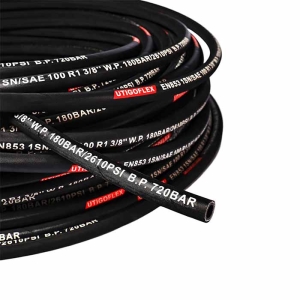
What is Braided Hydraulic Hoses
Braided hoses are reinforced with one or more layers of high-tensile steel wire braid. They are flexible, lightweight, and widely used in medium- to high-pressure hydraulic systems.
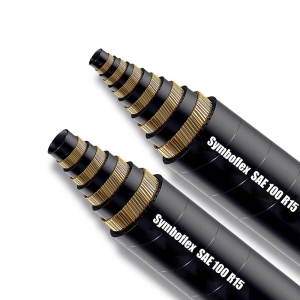
What is Spiral Hydraulic Hoses
Spiral hoses use multiple layers of spiraled steel wire reinforcement. This construction provides exceptional strength and impulse resistance, making them suitable for ultra-high-pressure and heavy-duty applications.
Key Differences in Construction & Performance
| Parameter | Braided Hydraulic Hose | Spiral Hydraulic Hose |
| Reinforcement | Steel wire braid | Spiral steel wire |
| Typical Pressure Range | Medium to high | Very high |
| Flexibility | Higher | Lower |
| Impulse Resistance | Moderate | Excellent |
| Common Standards | SAE 100R1 / R2 | SAE 100R12 / R13 / R15 |
| Weight | Lighter | Heavier |
Application-Based Recommendations
- Choose braided hoses for construction equipment, agricultural machinery, forklifts, and general industrial hydraulics where flexibility and ease of installation are important.
- Choose spiral hoses for mining equipment, high-pressure hydraulic presses, oil & gas machinery, and heavy-duty earthmoving equipment where extreme pressure and shock loads are present.
How to Choose?
- Determine Working Pressure
- If the system operates at extremely high pressures (e.g., exceeding 3000 PSI/21 MPa) with frequent pressure pulses (such as during heavy machinery start/stop cycles), prioritize braided hoses. Their construction offers a higher safety factor and extended service life.
- For systems operating at low to medium pressures, woven hoses are typically sufficient and more cost-effective.
- Consider Installation Space and Routing
- If installation space is extremely confined and requires tight hose bends (small bend radius), braided hoses are the only option due to their superior flexibility.
- If the hose can follow a relatively straight path and space permits a larger bend radius, both hose types are viable. In this case, prioritize based on pressure requirements.
- Budget and Lifespan
- Budget-conscious with moderate pressure: Braided hoses offer lower costs and are the economical choice.Pursuing peak performance and maximum longevity: In heavy-duty and harsh conditions, while spiral-wound hoses are more expensive, their superior durability and pulse resistance deliver extended lifespans. This significantly reduces downtime and replacement costs, potentially making them more economical in the long run.
We compared 1/2-inch steel braided hose (SAE 100R2) with steel spiral hose (SAE 100R12):
| Characteristics | Steel Braided Hose(SAE 100R2) | Steel Spiral Hose (SAE 100R12) | Conclusion |
| Work pressure | About 27.5 MPa (4000 PSI) | About 28 MPa (4060 PSI) | The steel spiral hose operates at higher pressure. |
| Minimum bending radius | About 180 mm | About 180 mm | Both have the same minimum bending radius, but the braided hose is slightly more flexible and pliable. |
| Burst Pressure | About 110.0 MPa(15956 PSI) | About 112.0 MPa(16240 PSI) | Steel spiral hoses can withstand greater burst pressures. |
| Weight/Flexibility | 0.68 kg/m. Lighter in weight and softer to the touch | 0.83 kg/m. Heavier, with a stiff feel | Braided hose is easy to install. |
Common Mistakes When Choosing Hydraulic Hoses
-
- Mistake 1: Selecting hydraulic hoses based solely on working pressure
Recommendation: Hydraulic systems generate instantaneous high-pressure pulses during valve cycling. Frequent cycling can cause fatigue failure in hoses. Therefore, selecting hoses with high pulse endurance is recommended.
-
- Mistake 2: Ignoring the minimum bend radius of hydraulic hoses
Recommendation: Owing to space constraints, neglecting the minimum bend radius can obstruct flow or cause wall rupture. It is advisable to allow sufficient curvature in advance or substitute with 90° or 45° elbow fittings.
-
- Mistake 3: Selecting braided hoses when spiral hoses are required
Recommendation: Blindly prioritizing high strength over installation flexibility. For applications emphasizing service life with low flexibility demands, prioritize spiral hydraulic hoses. Braided hydraulic hoses should only be selected for low-pressure systems operating in confined spaces or areas with frequent movement.
-
- Mistake 4: Ignoring industry standards and certifications when selecting hydraulic hoses
Recommendation: Specialized environments require hoses with specific certifications. For instance, underground mining demands anti-static and flame-retardant properties (MSHA-certified), while corrosive environments necessitate UV resistance. Therefore, thoroughly research required standards/certifications for the operational environment before selection.

