
Best Hose Materials for Food Transfer: PVC vs Rubber vs Silicone
In food and beverage processing, choosing the right hose material is critical for product safety, hygiene, and operational efficiency. Food transfer hoses must meet strict requirements for cleanliness, flexibility, chemical resistance, and regulatory compliance.
Among the most commonly used materials, PVC, rubber, and silicone stand out. Each has its own strengths and limitations depending on the application. In this article, we compare these three materials to help you choose the best hose for food transfer.
Key Requirements for Food Transfer Hoses
Before comparing materials, it’s important to understand what a food-grade hose must provide:
- Compliance with FDA, EU, or other food safety regulations
- Non-toxic, odorless, and tasteless material
- Smooth inner surface to prevent bacterial growth
- Resistance to cleaning chemicals and sanitizing processes
- Suitable temperature and pressure ratings
How Should One Select the Material for Food-Grade Hoses?
What is PVC Food-Grade Hose
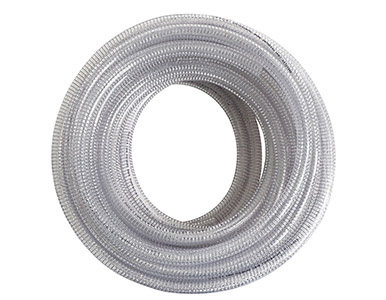
PVC (Polyvinyl Chloride) hoses are widely used in food and beverage applications due to their affordability and versatility.
Advantages of PVC Hoses:
- Lightweight and easy to handle
- Transparent options allow visual flow inspection
- Cost-effective for large-scale use
- Good resistance to mild acids, alkalis, and alcohols
- Available with FDA-approved formulations
Limitations:
- Limited temperature range compared to rubber and silicone
- Can stiffen in cold environments
- Not ideal for hot liquids or steam cleaning
Typical Applications:
- Beverage transfer (water, juice, beer)
- Dairy processing at low temperatures
- Gravity-fed or low-pressure food transfer
Rubber Food-Grade Hoses
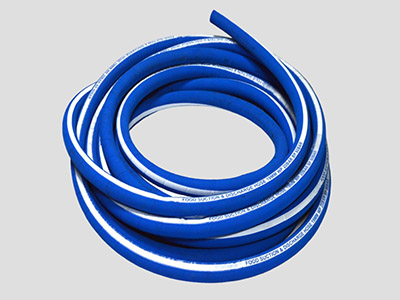
Food-grade rubber hoses (often made from EPDM or NBR) are known for their durability and pressure resistance.
Advantages of Rubber Hoses:
- Excellent flexibility and kink resistance
- Higher pressure ratings than PVC
- Good resistance to abrasion and mechanical stress
- Suitable for CIP (Clean-In-Place) systems
- Handles a wider temperature range
Limitations:
- Heavier than PVC and silicone
- Opaque, making visual inspection difficult
- May retain odor or taste if not properly formulated
Typical Applications:
- Milk and dairy transfer
- Edible oils and fats
Silicone Food-Grade Hoses
Advantages of Silicone Hoses:
- Excellent temperature resistance (hot and cold)
- Completely odorless and tasteless
- Extremely smooth inner surface
- Superior flexibility, even at low temperatures
- Ideal for repeated sterilization and steam cleaning
Limitations:
- Higher cost compared to PVC and rubber
- Lower abrasion resistance
- Generally lower pressure rating unless reinforced
Typical Applications:
- Hot liquid and steam transfer
- Pharmaceutical and hygienic food processing
- Brewing and fermentation systems
Food-Grade Hose Material Comparison Chart
| Feature | PVC (Polyvinyl Chloride) | Rubber (EPDM / NBR) | Silicone |
| Core Advantage | Cost-effective, crystal clear, lightweight | Extreme durability, high pressure resistance | Bio-inert, extreme temp range, ultra-flexible |
| Ideal Fluids | Water, juice, non-fatty liquids | Milk, edible oils, abrasive media (grains) | Purified water, fine chemicals, high-proof spirits |
| Temp Range | Low (-10°C to 60°C) | Medium (-30°C to 120°C) | High (-60°C to 200°C) |
| Pressure Rating | Low (drops significantly as temp rises) | Very High (suitable for heavy-duty) | Moderate (requires braided reinforcement) |
| Oil Resistance | Poor (stiffens due to plasticizer migration) | Excellent (NBR) / Moderate (EPDM) | Good |
| Cleaning Method | Cold or lukewarm water wash only | Supports CIP & medium-pressure steam | Supports SIP, Autoclave & high-temp steam |
| Compliance | FDA, REACH | FDA, 3-A, EU Food Grade | FDA, USP Class VI, 3-A, BFR |
| Service Life | Short (tends to yellow or harden) | Long (abrasion & weather resistant) | Very Long (UV & oxidation resistant) |
| Relative Cost | Economical | Mid-range | Premium |

