
You are here: Home1 / Blog2 / Product Knowledge3 / BSP vs NPT Hydraulic Fittings: Differences and How to Choose
BSP vs NPT Hydraulic Fittings: Differences and How to Choose
When selecting hydraulic fittings, choosing the correct thread standard is critical for ensuring leak-free connections, system safety, and long-term performance. Two of the most commonly used thread types worldwide are BSP (British Standard Pipe) and NPT (National Pipe Taper).
For engineers and procurement teams working with hydraulic hose assemblies, the confusion between BSP and NPT hydraulic fittings is one of the most common causes of leakage, damaged threads, and rejected installations. On paper they look similar. In real systems, they behave very differently.
This guide explains the practical differences between BSP and NPT fittings, why mixing them is risky, and how to choose the right option for your application — without overcomplicating the technical side.
What Is an Hydraulic Fitting?
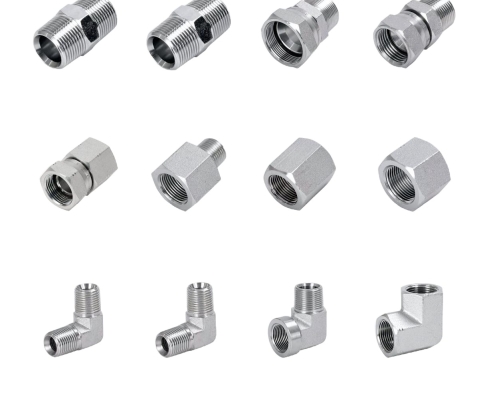
NPT (National Pipe Tapered) is a U.S. thread standard widely used in North America. It seals by thread deformation: the tapered male and female threads wedge tightly together as they are tightened.
Key characteristics:
- 60° thread angle
- Tapered thread design
- Seal formed by metal-to-metal thread interference
- Often requires thread sealant or PTFE tape
Because of its self-locking taper, NPT is common in:
- North American hydraulic equipment
- Industrial piping systems
- General fluid power applications
Practical Reality of NPT
NPT fittings can work reliably — but sealing depends heavily on correct installation. Overtightening can crack ports. Undertightening causes leaks. In maintenance environments, thread damage is a frequent issue.
Field experience shows that thread-based sealing systems are more sensitive to installer technique than face-seal designs.
What Is a BSP Hydraulic Fitting?
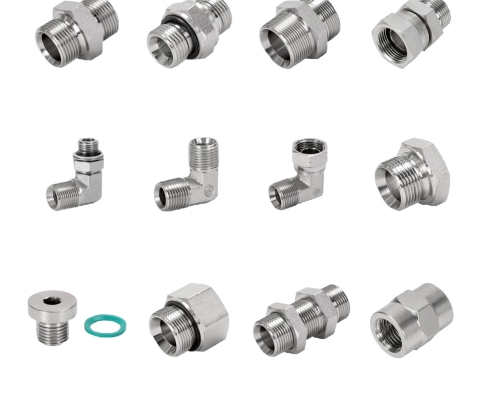
BSP (British Standard Pipe) fittings are widely used in Europe, Asia, and many international hydraulic systems. Unlike NPT, BSP comes in two versions:
- BSPP (parallel thread) – seals with a bonded washer or O-ring
- BSPT (tapered thread) – seals through thread interference
Key characteristics:
- 55° thread angle
- Different pitch from NPT
- Not interchangeable with NPT
BSPP is especially popular in hydraulic hose assemblies because the sealing surface is controlled and repeatable.
Why Many Engineers Prefer BSPP
A sealing washer or O-ring provides a predictable compression seal. That means:
- Less installer variability
- Reduced thread wear
- Easier maintenance
- More consistent leak control
In production environments, repeatability matters more than theoretical strength.
BSP vs NPT: Side-by-Side Comparison
| Feature | BSP Fittings | NPT Fittings |
| Thread angle | 55° | 60° |
| Thread type | Parallel or tapered | Tapered only |
| Sealing method | Washer / O-ring or thread | Thread interference |
| Interchangeable with each other | No | No |
| Installation sensitivity | Lower (BSPP) | Higher |
| Reusability | Good | Moderate |
| Risk of thread damage | Lower | Higher |
| Global usage | Europe / Asia | North America |
Important: Even if a BSP and NPT fitting can be forced together, the seal is unreliable and unsafe.
How to Choose Between BSP and NPT Fittings
Here are some practical guidelines to help you choose the right fitting:
1. Follow Equipment Specifications
Always check the manufacturer’s drawings or manuals. Most hydraulic equipment is designed for a specific thread standard.
2. Consider Your Market or Region
Exporting to Europe or Asia → BSP is more common
Operating in the U.S. or Canada → NPT is usually required
3. Identify Existing Threads Correctly
Use a thread gauge and caliper to measure:
Thread angle
Threads per inch (TPI)
Whether the thread is parallel or tapered
4. Match the Sealing Method
If the system uses O-rings or bonded washers, BSPP is likely
If it relies on thread sealant, NPT or BSPT may be used
Common Mistakes Buyers Make
- Assuming BSP and NPT are interchangeable
- Reusing damaged tapered threads
- Overusing thread sealant to compensate for poor fit
- Mixing suppliers with inconsistent tolerances
These shortcuts often lead to recurring maintenance problems.

