
You are here: Home1 / Resource2 / Technical Guidance3 / How to Choose the Right Hose Fittings for Your Industry Needs
How to Choose the Right Hose Fittings for Your Industry Needs
Choosing the right hose fittings is a critical step in ensuring the safety, efficiency, and longevity of any fluid transfer system. Whether you work in hydraulics, manufacturing, construction, or chemical processing, selecting unsuitable fittings can lead to leaks, downtime, or even system failure. As an experienced hose and fittings manufacturer, Utigoflex shares practical guidance to help you make the right decision for your industry needs.
1. Understand Your Application Requirements
The first step is to clearly define how the hose fittings will be used. Different industries require different industrial hose fittings based on operating conditions. Key factors include:
- Working pressure and peak pressure
- Operating temperature range
- Type of media (oil, water, air, chemicals, gas)
- Installation environment (indoor, outdoor, vibration, corrosion)
For example, hydraulic hose fittings used in heavy machinery must withstand high pressure and vibration, while fittings in food or chemical industries must meet stricter material and safety standards.
2. Choose the Right Material
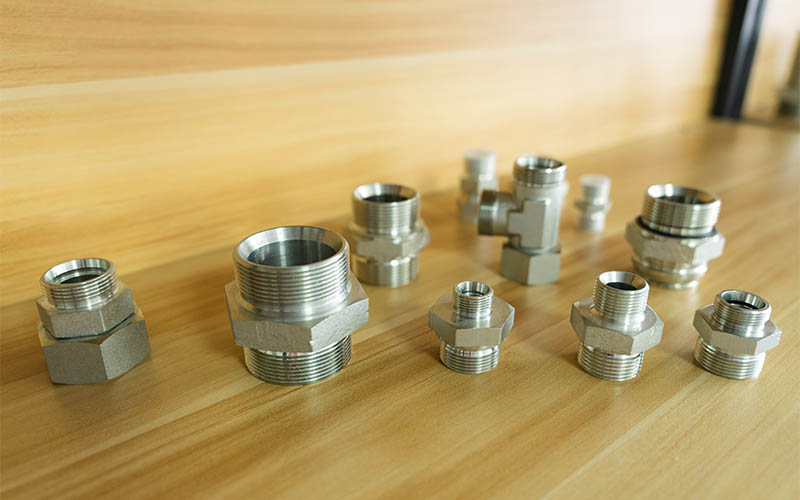
Hose fittings are typically made from carbon steel, stainless steel, brass, or aluminum. Each material offers distinct advantages:
- Carbon steel fittings: High strength and cost-effective, suitable for hydraulic systems and standard industrial environments.
- Stainless steel hose fittings: Priced 3-5 times higher than carbon steel. However, they are the only corrosion-resistant option for chemical processing, offshore platforms, or food processing industries.
- Brass fittings: Suitable for low-pressure air or water systems.
At Utigoflex, we assist customers in selecting the most appropriate material by balancing performance, durability, and cost according to specific application requirements.
3. Ensure Compatibility with Hose Type and Standards
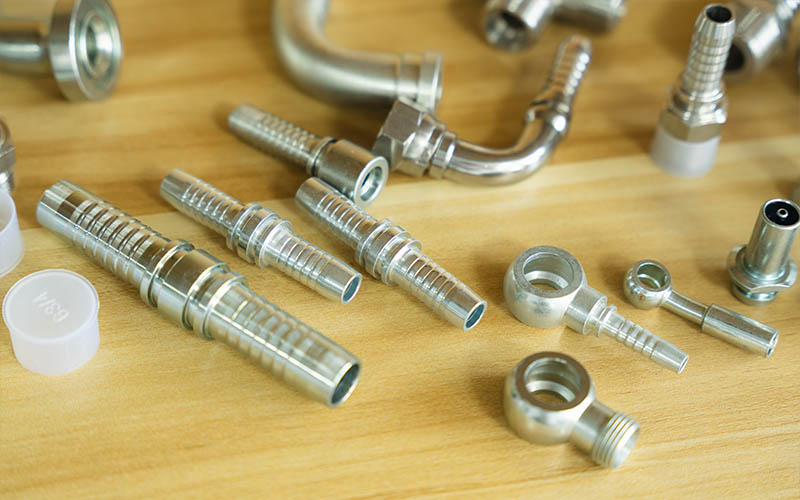
Hose fittings can be categorized into hose connectors and pipe connectors, meaning not all hose connectors offer universal compatibility. Always ensure the connector type matches the hose construction, dimensions, and standards.
- Common standards include BSP, NPT, JIC, ORFS, and metric fittings.
- Common types include: integral hose fittings, snap-on hose fittings, internal lock hose fittings, detachable hose fittings and hydraulic fittings, DIN ferrule fittings, metric thread fittings, British standard thread fittings, American standard thread fittings, British standard thread pipe fittings, American standard thread pipe fittings, etc.
Using mismatched hoses and fittings may cause leaks or premature failure. Choosing a reliable manufacturer like Utigoflex ensures product compatibility and compliance with international standards.
4. Consider Installation and Maintenance
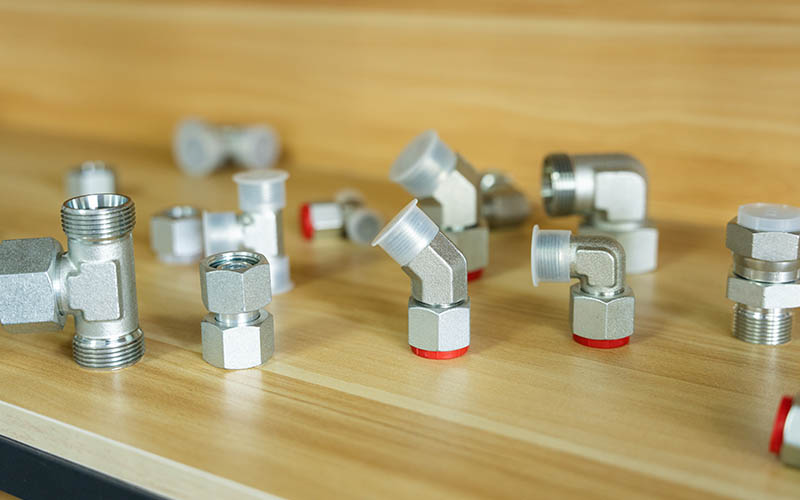
Installation convenience and long-term maintainability are often overlooked. Reusable fittings reduce long-term costs, while crimp fittings provide stronger, more secure connections in high-pressure systems. Selecting the appropriate solution enhances efficiency and minimizes downtime. Additionally, note the following:
- Avoid using sealants or homemade fillers at connection points, as they may cause blockages or pressure irregularities.
- Install correctly the first time; avoid repeated disassembly and reassembly, as this can damage sealing surfaces and cause leaks.
- Always perform pressure testing after installation to check for oil leaks and verify proper pressure handling.
- Consider the surrounding environment (temperature, corrosion, etc.), as high temperatures or corrosive conditions can affect fitting lifespan.
Conclusion
| Category / Project | Key Points | Why it matters |
|---|---|---|
| 1. Workload Matching | The joint shall be capable of withstanding a working pressure commensurate with the system pressure. | Ensure safety and prevent the risk of leakage or rupture |
| 2. Selection of internal diameter | Common design flow velocity range: 5–7.5 m/s (maximum not exceeding 10 m/s) | Matching the flow velocity to avoid excessive or unstable flow resistance |
| 3. Hose length | The length of a single hose section should not be excessively short, and should generally not be less than 5 metres. | Too short will affect usability; too long will impact wiring and performance. |
| 4. Compatibility with equipment pressure | The joint must meet the mechanical strength requirements of the high-pressure section of the equipment. | Avoid compromising system efficiency and lifespan due to mismatched strength |
| 5. Jointing material | Common materials: Carbon steel (such as #45, #35, #20, 08F, etc.) | For high-pressure systems, it is recommended to select high-strength materials to enhance safety. |
| 6. Surface treatment | Typically, zinc plating (Cr³⁺) is employed, though alternative processes such as nickel-zinc coatings are also utilised. | Determines corrosion resistance and service life (salt spray test hours may be referenced) |
| 7. Standards and Specifications | Common standards: SAE, Eaton, etc. | Standards vary across different countries and industries; selecting matching standards facilitates maintenance and enhances versatility. |
Selecting the right hose fittings is not just about size—it’s about safety, performance, and long-term reliability. By understanding your application, choosing the correct material, ensuring standard compatibility, and planning for maintenance, you can significantly improve system performance. With professional support and high-quality solutions from Utigoflex, you can confidently choose hose fittings that meet your industry needs and drive long-term value.
Utigoflex offers a wide range of adapters, each available in various thread types and sizes. If you cannot find the adapter you need, please contact us so we can assist you in locating it

