• Facebook
  • Youtube
  • Instagram
  • WhatsApp
Give us a call now: 13510833230
Utigoflex
  • Home
  • About Us
  • Product
    • Hydraulic Hose
      • Braided Steel Wire Hydraulic Hose
        • SAE 100 R1 / DIN EN 853 1SN
        • SAE 100 R2 AT / DIN EN 853 2SN
        • SAE 100 R5 Steel Wire Braided Hydraulic Hose
        • SAE 100 R16 Steel Wire Braided Hydraulic Hose
        • SAE 100 R17 Steel Wire Braided Hydraulic Hose
        • EN 857 1SC Steel Wire Braided Hydraulic Hose
        • EN 857 2SC Steel Wire Braided Hydraulic Hose
      • Spiraled Steel Wire Hydraulic Hose
        • SAE 100 R9 Steel Wire Spiraled Hydraulic Hose
        • SAE 100 R12 Steel Wire Spiraled Hydraulic Hose
        • SAE 100 R13 Steel Wire Spiraled Hydraulic Hose
        • SAE 100 R15 Steel Wire Spiraled Hydraulic Hose
        • EN 856 4SH Steel Wire Spiraled Hydraulic Hose
        • EN 856 4SP Steel Wire Spiraled Hydraulic Hose
      • Thermoplastic Hydraulic Hose
        • SAE 100 R7 Thermoplastic Hydraulic Hose
        • SAE 100 R8 Thermoplastic Hydraulic Hose
        • SAE 100 R14 Stainless Steel Wire Braided with PT
      • Braided Textile Hydraulic Hose
        • SAE 100 R3
        • SAE 100 R4 Textile Braided Hydraulic Hose
        • SAE 100 R6
        • EN 854 1TE/2TE/3TE Textile Braided Hydraulic Hose
    • Rubber Hose
      • EPDM Air & Water Hose
      • Chemical Suction & Discharge Hose
      • Steam Hose
      • Fuel & Diesel Delivery Hose
      • Fuel & Diesel Suction Hose
      • LPG/CNG Rubber Hose
      • Drilling Hose
      • Air Compressor Hose
      • High pressure Washing Hose
      • Marine High Pressure Oil Conveying Hose
      • Sand Blast Rubber Hose
      • Suction & Discharge Hose
      • Concrete Delivery Hose
      • Composite Hose
      • Food Grade Hose
      • EPDM Hot Water Hose
      • Stainless Steel Flexible Hose
    • PVC Hose
      • PVC Garden Hose
      • PVC Layflat Hose
      • Multi–Purpose PVC Air Hose – Matt Surface
      • Multi–Purpose PVC Air Hose – Shining Surface
      • Smooth Surface PVC Steel Wire Hose
      • PVC Fiber Hose
      • PVC High Pressure Spray Hose
      • PVC Corrugated Suction Hose
      • PVC Grit Hose
      • PVC Kink–Proof Suction Hose
      • PVC Interlocked Hose
      • Fuel Drop Hose
    • Industrial Hose
      • ANFO Explosive Loading Hose
      • Air Hose
      • Fuel & Oil Delivery Hose
      • Chemical Hose
      • Layflat Fire Hose
      • Welding Hose
      • High Pressure Spray Hose
      • PU Suction Hose
      • PU Anti Static Suction Hose
      • PU Step Hose
      • Polypropylene Drain Hose
    • Air Duct Hose
      • PU Air Duct
      • PU Air Duct With Black Strip
      • PVC Air Duct
      • TPR (TPE) Air Duct
      • TPR (TPE) Air Duct With Green Strip
      • Silicone Coated Glass Fiber Duct
      • Portable Ventilation Duct
      • Clamped High Temperature Duct
      • Clamped Polyester Duct
      • Clamped Tarpaulin Duct
      • EPDM Fume Exhaust Hose
    • Food Grade Hose
      • Food Grade Rubber Hose
      • Smooth Surface PVC Spiral Hose
      • Smooth Surface PVC Steel Wire Hose
      • PVC Fiber Hose
    • Pneumatic Hose
      • Nylon tubing
      • PU Pneumatic Hose
    • Hydraulic Fittings
    • Hose Camlocks
    • Hose Clamps
    • Crimping/Cutting Machine
      • Crimping Machine
      • Cutting Machine
  • Resources
    • Download Center
    • Technical Guides
    • Blog
      • Product Knowledge
      • Company News
  • Contact Us
  • Search
  • Menu Menu
You are here: Home1 / Blog2 / Product Knowledge3 / JIC vs ORFS Fittings: Which One Is Better for High Pressure?

JIC vs ORFS Fittings: Which One Is Better for High Pressure?

When designing or maintaining high-pressure hydraulic systems, engineers must consider not only the type of hose to use but also the appropriate fittings to pair with it. Consequently, engineers and procurement specialists frequently encounter this question: JIC fittings or ORFS fittings—which delivers superior performance in high-pressure environments?

The short answer: both are good, but they solve different problems.

As a hydraulic hose and fittings manufacturer working with construction, industrial, and fluid power customers, we see this comparison frequently. The right answer depends on pressure level, vibration, installation conditions, and long‑term reliability requirements.

This guide explains the real‑world differences between JIC fitting and ORFS fittings, helping you select the best option for demanding hydraulic applications.

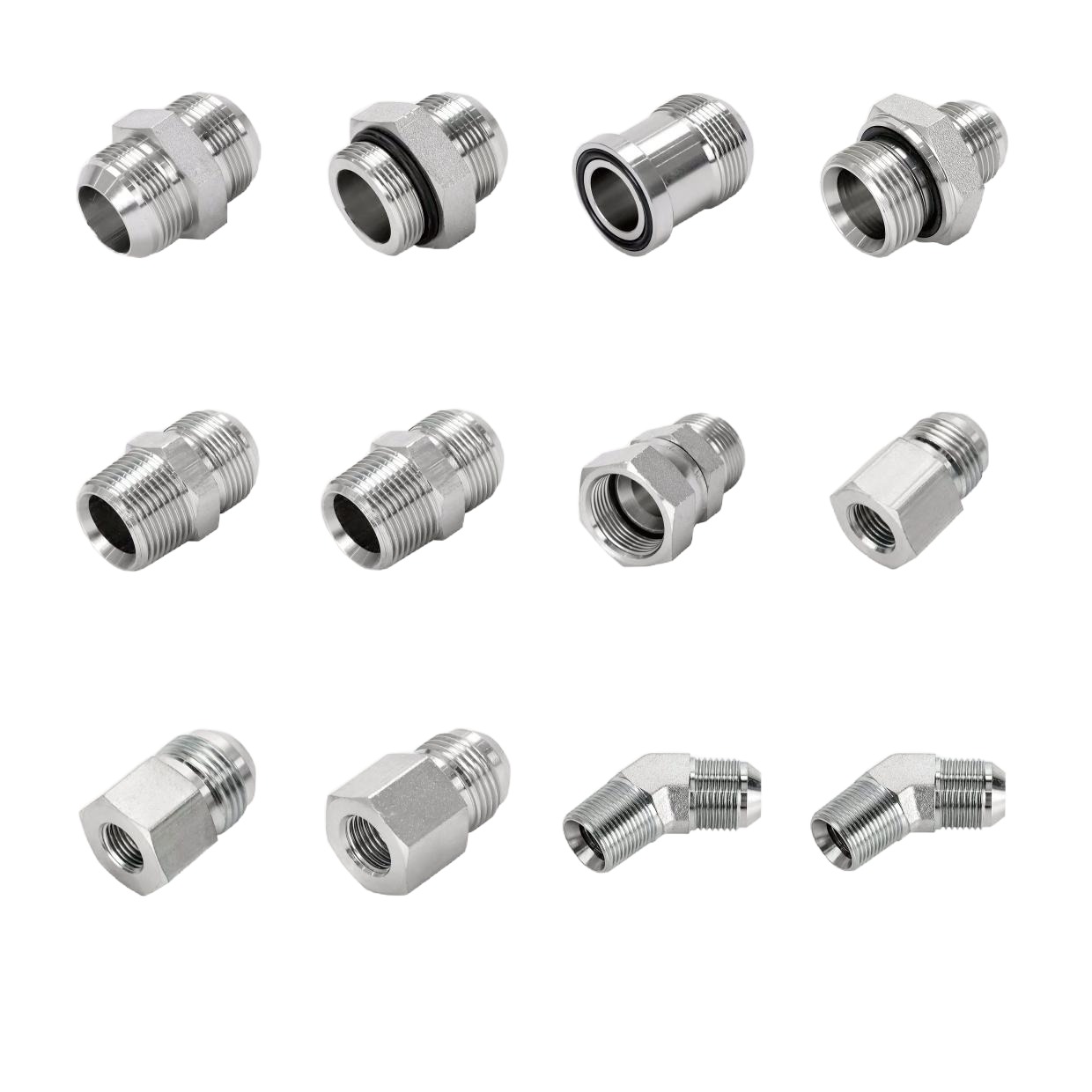
What Is a JIC Fitting?

A JIC fitting uses a 37‑degree flare design that seals through metal‑to‑metal contact. It follows SAE J514 standards and has been a staple of hydraulic systems for decades.

Because of their simple structure, JIC fittings are widely used in:

  • Agricultural equipment
  • Construction machinery
  • Mobile hydraulics
  • General industrial systems

JIC Fittings

Why JIC Fittings Are So Popular

There’s a reason JIC fittings are everywhere:

  • Easy to install and service
  • Widely available worldwide
  • Interchangeable across many brands
  • Lower upfront cost

For many medium to high‑pressure systems, JIC fittings perform reliably when installed correctly.

Where JIC Fittings Can Struggle

The sealing surface is metal‑to‑metal. That means:

  • Installation angle matters
  • Surface damage affects sealing
  • Vibration can gradually loosen the joint

In very high‑pressure systems or heavy vibration environments, even a tiny misalignment can increase the risk of seepage over time. Industry maintenance data often shows that small hydraulic leaks are among the top causes of unplanned downtime in mobile equipment — and fittings are a common failure point.

What Are ORFS Fittings?

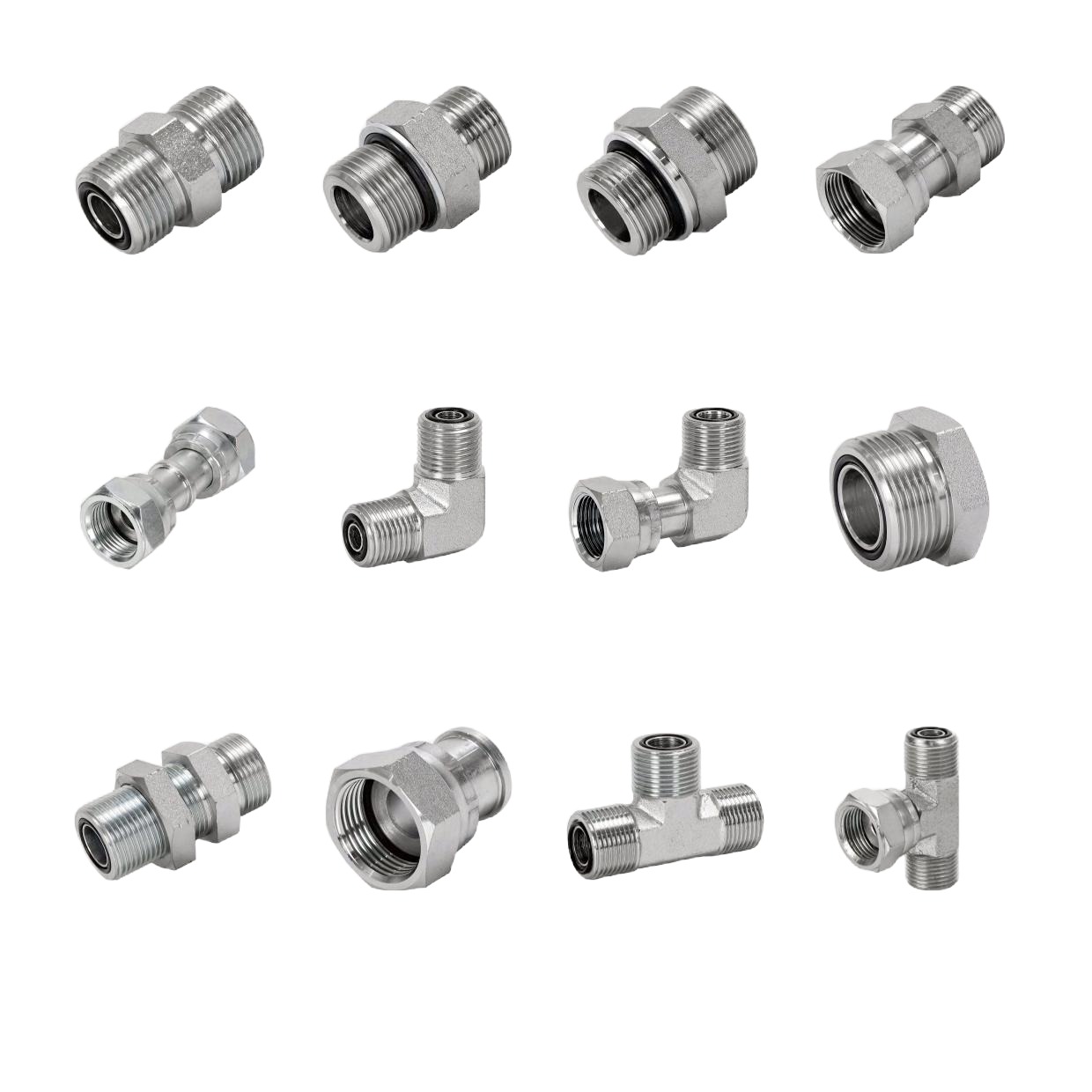
ORFS fittings (O‑Ring Face Seal) use a flat face with an elastomer O‑ring seated in a precision groove. When tightened, the O‑ring compresses and creates a strong, leak‑resistant seal.

Instead of relying on metal deformation, ORFS fittings rely on controlled O‑ring compression. This difference dramatically improves sealing consistency.
ORFS Fittings

Why ORFS Fittings Excel in High Pressure

ORFS fittings are designed specifically for modern hydraulic systems where pressures continue to increase and leakage tolerance continues to decrease.

Key strengths:

  • Excellent resistance to vibration
  • Superior sealing under pressure spikes
  • Reliable performance in thermal cycling
  • Reduced risk of micro‑leaks

In industries such as construction, mining, and industrial power units, ORFS fittings are often chosen where leak‑free performance is a safety or environmental requirement.

The Trade‑Off

ORFS fittings typically cost more than JIC fittings. However, many engineers look beyond purchase price and consider:

  • Reduced maintenance
  • Fewer retightening cycles
  • Lower downtime risk
  • Cleaner operating environment

Over the life of the equipment, ORFS often wins on total cost of ownership in demanding applications.

JIC vs ORFS Fittings: Side‑by‑Side Comparison

For quick decision‑making, the table below summarizes the most important differences.

Feature JIC Fitting ORFS Fittings
Seal type 37° metal‑to‑metal flare Flat face O‑ring seal
Leak resistance Good Excellent
Vibration tolerance Moderate High
Pressure performance Medium to high High to very high
Installation sensitivity High Low
Reusability Good Excellent
Cost Lower initial cost Higher initial cost
Long‑term reliability Moderate Very high

Practical rule: If your system cannot tolerate leaks, ORFS fittings are usually the safer engineering choice.

Real‑World Selection: What Engineers Actually Consider

In practice, engineers rarely choose fittings based on pressure rating alone. The decision usually comes down to a mix of real‑world conditions:

1. System Pressure Trend

Modern hydraulic systems frequently exceed pressure levels common 20 years ago. As pressure rises, the tolerance for sealing imperfection drops sharply.

2. Vibration and Shock Load

Mobile machinery experiences constant vibration. Over thousands of cycles, even small movement can weaken metal‑to‑metal seals.

3. Maintenance Accessibility

If a fitting is hard to reach, minimizing future adjustments becomes critical — another reason ORFS is often preferred in compact equipment designs.

4. Environmental Regulations

In some regions, fluid leakage is not just messy — it’s a compliance issue. Preventing leaks protects both equipment and liability.

Common Mistakes When Choosing Between JIC and ORFS

  • Selecting based only on price
  • Ignoring vibration exposure
  • Reusing damaged flare surfaces
  • Mixing incompatible components
  • Underestimating pressure spikes

These mistakes often show up months later as recurring leaks or hose failures.

Manufacturer Insight: Matching the Fitting to the Hose Assembly

From a hose manufacturer’s perspective, fittings cannot be selected in isolation. The hose structure, reinforcement type, and assembly quality all affect final performance.

A proper hydraulic hose assembly considers:

  • Hose pressure rating
  • Fitting compatibility
  • Crimp specifications
  • Application environment

This is why professional consultation during selection often prevents expensive field failures.

Conclusion

So, which is better for high pressure — JIC fitting or ORFS fittings?

If the system is moderately pressured and cost sensitive, JIC fittings remain a dependable and widely accepted solution.

If the system runs high pressure, heavy vibration, or requires strict leak control, ORFS fittings provide a larger safety margin and better long‑term reliability.

The best choice is not about which fitting is “stronger,” but which one matches your operating reality.

Choosing correctly improves safety, reduces downtime, and extends service life — and that’s what engineers and procurement teams ultimately care about.

Need help selecting fittings for a specific hydraulic hose assembly? Share your pressure range, application environment, and equipment type — we can recommend a practical configuration. Contact Us Now

byadministrator/February 4, 2026Jessi
Recent
  • How Hydraulic Hose Is ManufacturedHow Hydraulic Hose Is ManufacturedFebruary 28, 2026 - 10:00 am
  • Industrial Hose for Oil and Fuel TransferIndustrial Hose for Oil and Fuel TransferFebruary 27, 2026 - 8:01 am
  • How to Select Hose for Oil and Fuel TransferHow to Select Hose for Oil and Fuel Transfer: 6 Key Factors...February 27, 2026 - 2:28 am
  • What Is Hydraulic Hose Reinforcement BlogWhat Is Hydraulic Hose Reinforcement?February 26, 2026 - 2:48 am
  • Best Hose Materials for Food Transfer: PVC vs Rubber vs...February 12, 2026 - 6:37 am
  • Food Grade Hose Buying GuideFood Grade Hose Buying Guide: Materials, Certifications...February 10, 2026 - 6:04 am
  • BSP vs NPT Hydraulic Fittings: Differences and How to C...February 6, 2026 - 6:57 am
  • JIC vs ORFS FittingsJIC vs ORFS Fittings: Which One Is Better for High Pres...February 4, 2026 - 9:59 am
Popular
  • Engineering PlasticsApril 18, 2024 - 9:54 am
  • Factory informationApril 18, 2024 - 9:58 am
  • Hydraulic hose workshopApril 18, 2024 - 10:00 am
  • Hydraulic hosesApril 18, 2024 - 10:01 am
  • Packaging & WarehouseApril 18, 2024 - 10:01 am
  • Production lineApril 18, 2024 - 10:02 am
  • How to Choose the Right Industrial Hose for Your Applic...March 20, 2025 - 2:18 am
  • ANFO Explosive Loading HoseApril 3, 2025 - 4:24 am
Comments
  • Awaiting check payment Order status changed from Pending...December 19, 2022 - 2:54 am by WooCommerce
  • Awaiting check payment Order status changed from Pending...December 12, 2022 - 2:14 pm by WooCommerce
  • Awaiting check payment Order status changed from Pending...December 12, 2022 - 1:37 pm by WooCommerce
  • Order cancelled by customer. Order status changed from Pending...November 16, 2022 - 11:59 am by WooCommerce
  • Awaiting check payment Order status changed from Pending...October 30, 2022 - 7:20 am by WooCommerce
  • Unpaid order cancelled - time limit reached. Order status...October 14, 2022 - 8:46 am by WooCommerce
  • Unpaid order cancelled - time limit reached. Order status...September 6, 2022 - 7:40 pm by WooCommerce
  • Awaiting check payment Order status changed from Pending...September 6, 2022 - 5:49 pm by WooCommerce
Tags

Categories

  • Blog
  • Company News
  • Product Knowledge
  • Technical Guidance
  • Uncategorized
  • Facebook
  • X
  • LinkedIn
  • Youtube
  • Instagram
  • steven@utigoflexhose.com
  • FACEBOOK
  • Instagram
  • YOUTUBE
  • 13510833230

Company

    • About Us
    • Products
    • Resources
    • Contact Us

Product

  • Hydraulic Hose
  • Rubber Hose
  • PVC Hose
  • Industrial Hose
  • Air Duct Hose
  • Food Grade Hose
  • Pneumatic Hose

Technical Support

    • Plastic Hoses Catalogue
    • Rubber Hose Catalogue
    • Hydraulic Fittings Catalogue
    • Privacy Policy

Follow Us

Copyright @ Utigoflex | All rights reserved
Food Grade Hose Selection Guide for Processing EquipmentFood Grade Hose GuideBSP vs NPT Hydraulic Fittings: Differences and How to Choose
Scroll to top

This site uses cookies. By continuing to browse the site, you are agreeing to our use of cookies.

Agree & ContinueSettingsReject

Cookie and Privacy Settings


How we use cookies

We may request cookies to be set on your device. We use cookies to let us know when you visit our websites, how you interact with us, to enrich your user experience, and to customize your relationship with our website.

Click on the different category headings to find out more. You can also change some of your preferences. Note that blocking some types of cookies may impact your experience on our websites and the services we are able to offer.

Essential Website Cookies

These cookies are strictly necessary to provide you with services available through our website and to use some of its features.

Because these cookies are strictly necessary to deliver the website, refusing them will have impact how our site functions. You always can block or delete cookies by changing your browser settings and force blocking all cookies on this website. But this will always prompt you to accept/refuse cookies when revisiting our site.

We fully respect if you want to refuse cookies but to avoid asking you again and again kindly allow us to store a cookie for that. You are free to opt out any time or opt in for other cookies to get a better experience. If you refuse cookies we will remove all set cookies in our domain.

We provide you with a list of stored cookies on your computer in our domain so you can check what we stored. Due to security reasons we are not able to show or modify cookies from other domains. You can check these in your browser security settings.

Google Analytics Cookies

These cookies collect information that is used either in aggregate form to help us understand how our website is being used or how effective our marketing campaigns are, or to help us customize our website and application for you in order to enhance your experience.

If you do not want that we track your visit to our site you can disable tracking in your browser here:

Other external services

We also use different external services like Google Webfonts, Google Maps, and external Video providers. Since these providers may collect personal data like your IP address we allow you to block them here. Please be aware that this might heavily reduce the functionality and appearance of our site. Changes will take effect once you reload the page.

Google Webfont Settings:

Google Map Settings:

Google reCaptcha Settings:

Vimeo and Youtube video embeds:

Other cookies

The following cookies are also needed - You can choose if you want to allow them:

Privacy Policy

You can read about our cookies and privacy settings in detail on our Privacy Policy Page.

Privacy Policy
Accept settingsHide notification only
Skip to content
Open toolbar Accessibility Tools

Accessibility Tools

  • Increase TextIncrease Text
  • Decrease TextDecrease Text
  • GrayscaleGrayscale
  • High ContrastHigh Contrast
  • Negative ContrastNegative Contrast
  • Light BackgroundLight Background
  • Links UnderlineLinks Underline
  • Readable FontReadable Font
  • Reset Reset