
You are here: Home1 / Resource2 / Technical Guidance3 / Protecting Hydraulic Hoses: Tips for Extending Service Life
Protecting Hydraulic Hoses: Tips for Extending Service Life
Hydraulic hoses typically operate under high pressure, continuous motion, and harsh environmental conditions. Therefore, without proper protection and maintenance, hose failure can lead to costly downtime, fluid leaks, and serious safety hazards.
Drawing on over a decade of manufacturing and service experience, Utigoflex has compiled the following operational practices to extend the service life of hydraulic hoses.
1. Selecting the Right Hydraulic Hose for Your Application
Hydraulic hoses come in a wide variety to suit diverse applications, making the selection of the correct model a critical step. We typically recommend following the S.T.A.M.P.E.D. selection process, where STAMPED stands for Size, Temperature, Application, Material/Media, Pressure, Ends, and Delivery. Following this process facilitates the correct selection of hoses and/or fittings, thereby reducing the risk of failure due to misuse and extending the service life of hydraulic hoses.
Utigoflex hydraulic hoses are designed according to SAE and EN standards and undergo rigorous testing to ensure reliable performance in construction, agriculture, mining, and industrial systems.
2. Wear and External Damage Prevention
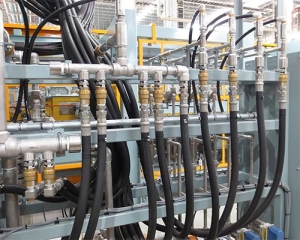
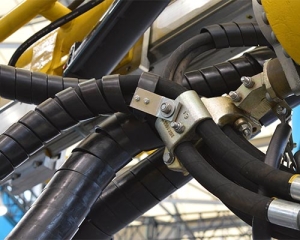
Wear and external damage rank among the most common causes of hose failure. Since hoses are typically exposed, wear is inevitable—often resulting from friction between hoses or the operating environment. Additionally, external factors can cause surface damage to hoses, eventually leading to rupture. Therefore, we recommend using protective sleeves, clamps, or routing hoses away from sharp corners to significantly reduce wear and external damage.
Utigoflex hoses feature a wear-resistant outer layer, providing enhanced protection in demanding environments and extending service life in harsh conditions.
3. Avoid Excessive Bending and Twisting
Improper installation, excessive bending, or twisting can degrade the strength of the hose’s reinforcement layer, leading to hose failure. Therefore, when installing hoses, plan a reasonable installation path in advance and strictly adhere to the minimum bend radius specifications. This will maximize the prevention of accidents caused by excessive bending and twisting that result in hose failure.
Utigoflex hoses feature an optimized flexibility design that simplifies your installation process while maintaining structural integrity. Our engineers also provide expert guidance to assist with hose selection and installation.
4. Controlling Temperature and Environmental Exposure
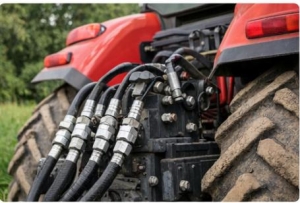
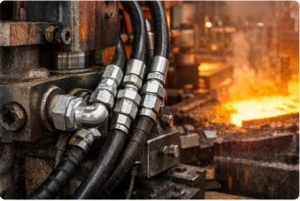
Among external factors causing hose failure, temperature, UV exposure, and chemical corrosion are significant contributors. Therefore, when selecting hydraulic hoses, it is essential to understand the temperature range, light resistance, and chemical compatibility of the specific hose model. Choosing hoses with appropriate temperature resistance and weather resistance is crucial.
Utigoflex hydraulic hoses utilize premium rubber formulations specifically engineered to withstand high temperatures, ozone erosion, and aging. This design extends hose service life and reduces long-term maintenance costs for customers.
5. Routine Inspection and Maintenance
Regular inspections of the hydraulic system help identify signs of hose wear, leakage, or deformation early. Replacing hoses before these issues arise prevents serious accidents.