
You are here: Home1 / Blog2 / Product Knowledge3 / Rubber Hose vs PVC Hose: Which Is Better for Industrial Use?
Rubber Hose vs PVC Hose: Which Is Better for Industrial Use?
Selecting the appropriate industrial hose is a critical factor for safety, efficiency, and long-term cost control. Rubber hoses and PVC hoses are frequently used in industrial applications.
As a leading Chinese hose manufacturer, Utigoflex has observed that many customers face a common dilemma for their projects: Should they choose rubber hoses or PVC hoses? Although both types are among the most commonly used in industries such as construction, manufacturing, agriculture, and fluid transfer systems, there are key differences between them that you need to know. Therefore, this article compares rubber hoses and PVC hoses in terms of performance, cost, and application scenarios to help you make an informed choice.
Product Overview: Rubber Hose and PVC Hose
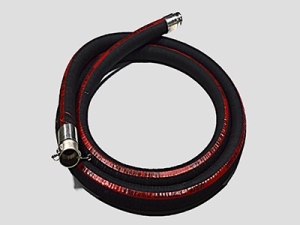
What Is a Rubber Hose?
A rubber hose is typically made from natural rubber or synthetic rubber (such as NBR, EPDM, or SBR), reinforced with textile or steel wire layers. Rubber hoses are known for their high flexibility, durability, and resistance to pressure and temperature.
They are commonly used as:
- Hydraulic hoses
- Industrial fluid transfer hoses
- Air, oil, and chemical hoses
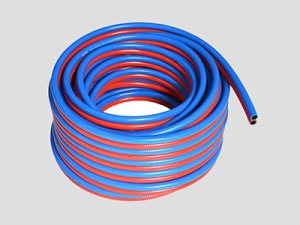
What Is a PVC Hose?
A PVC hose is made from polyvinyl chloride, often reinforced with polyester yarn or steel wire. PVC hoses are lightweight, transparent, and cost-effective, making them popular in general-purpose applications.
Typical uses include:
- Water suction and discharge
- Light-duty air or fluid transfer
- Agricultural irrigation
Rubber Hose vs PVC Hose: Key Differences
1. Performance and Durability
Rubber hoses outperform PVC hoses in demanding industrial environments. They offer:
- Better flexibility under pressure
- Higher resistance to abrasion and impact
- Wider temperature tolerance
PVC hoses may become stiff in cold conditions or soften under high temperatures, limiting their performance in heavy-duty applications.
Verdict: Rubber hose is better for high-performance industrial use.
2. Pressure and Temperature Resistance
- Rubber hoses are designed for high-pressure systems, including hydraulic and compressed air applications.
- PVC hoses generally handle lower working pressures and narrower temperature ranges.
For industries requiring safety and reliability, rubber hoses provide a higher safety margin.
3. Cost Considerations
- PVC hoses are typically more affordable due to lower material and manufacturing costs. For low-pressure, non-critical applications, PVC hoses offer good value.
- Rubber hoses have a higher initial cost, but their longer service life and reduced failure risk often result in lower total ownership cost over time.
Rubber Hose vs PVC Hose: Key Differences
1. Performance and Durability
Rubber hoses outperform PVC hoses in demanding industrial environments. They offer:
- Better flexibility under pressure
- Higher resistance to abrasion and impact
- Wider temperature tolerance
PVC hoses may become stiff in cold conditions or soften under high temperatures, limiting their performance in heavy-duty applications.
Verdict: Rubber hose is better for high-performance industrial use.
2. Pressure and Temperature Resistance
Pressure Resistance
| projects | Rubber Hose | PVC Hose |
|---|---|---|
| Working Pressure | High | Low to Medium |
| Pressure Surge | Excellent | Limited |
- Rubber hoses are typically designed for high-pressure systems and are commonly used in hydraulic and compressed air applications.
- PVC hoses generally handle lower working pressures and narrower temperature ranges.
Temperature Range
- Rubber: -40°C to +100°C (or higher)
- PVC: -10°C to +60°C
3. Cost Considerations
- PVC hoses are typically more affordable due to lower material and manufacturing costs. For low-pressure, non-critical applications, PVC hoses offer good value.
- Rubber hoses have a higher initial cost, but their longer service life and reduced failure risk often result in lower total ownership cost over time.
4. Application Scenarios
Chemical Industry: Due to the need to transport corrosive chemicals, high-temperature steam, and high-pressure fluids, hoses must meet stringent requirements for corrosion resistance, high-temperature resistance, and pressure resistance. Rubber hoses are better suited to fulfill these demands.
Typical Products:
Heavy Industry: Characterized by high pressure, high abrasion, large flow rates, and frequent mechanical impact. Thus, core requirements include abrasion resistance, tensile strength, and extremely high pressure tolerance. Rubber hoses better meet these demands.
Typical Products:
Light Industry: Typically used for conveying in food and beverage, pharmaceutical, and electronics assembly applications. These conditions feature high cleanliness, low/medium pressure, ambient temperature, and high flexibility requirements. The focus is on the hose’s non-toxicity, dimensional accuracy, and high flex fatigue life. PVC hoses better meet these requirements.
Typical Products:
| Application | Recommended Hose |
| Hydraulic systems | Drilling Hose |
| High-temperature fluids | EPDM Hot Water Hose |
| Water transfer | PVC Garden Hose |
| Light-duty air use | PVC Steel Wire Helix Duct |
| Heavy industrial environments | Concrete Delivery Hose |
At Utigoflex, we help customers select the right hose based on real operating conditions, not just price. So you can browse our product catalog or simply submit your requirements directly to us.
Frequently Asked Questions (FAQ)
Q1: Is a rubber hose always better than a PVC hose?
A: Not always. Rubber hoses are better for heavy-duty use, while PVC hoses are suitable for light-duty and cost-sensitive applications.
Q2: Can PVC hoses be used for industrial purposes?
A: Yes, but mainly for low-pressure and non-critical industrial applications.
Q3: Which hose lasts longer?
A: Rubber hoses generally have a longer service life under harsh conditions.
Q4: Are PVC hoses safe for high pressure?
A: No. PVC hoses are not recommended for high-pressure hydraulic systems.

