• Facebook
  • Youtube
  • Instagram
  • WhatsApp
Give us a call now: 13510833230
Utigoflex
  • Home
  • About Us
  • Product
    • Hydraulic Hose
      • Braided Steel Wire Hydraulic Hose
        • SAE 100 R1 / DIN EN 853 1SN
        • SAE 100 R2 AT / DIN EN 853 2SN
        • SAE 100 R5 Steel Wire Braided Hydraulic Hose
        • SAE 100 R16 Steel Wire Braided Hydraulic Hose
        • SAE 100 R17 Steel Wire Braided Hydraulic Hose
        • EN 857 1SC Steel Wire Braided Hydraulic Hose
        • EN 857 2SC Steel Wire Braided Hydraulic Hose
      • Spiraled Steel Wire Hydraulic Hose
        • SAE 100 R9 Steel Wire Spiraled Hydraulic Hose
        • SAE 100 R12 Steel Wire Spiraled Hydraulic Hose
        • SAE 100 R13 Steel Wire Spiraled Hydraulic Hose
        • SAE 100 R15 Steel Wire Spiraled Hydraulic Hose
        • EN 856 4SH Steel Wire Spiraled Hydraulic Hose
        • EN 856 4SP Steel Wire Spiraled Hydraulic Hose
      • Thermoplastic Hydraulic Hose
        • SAE 100 R7 Thermoplastic Hydraulic Hose
        • SAE 100 R8 Thermoplastic Hydraulic Hose
        • SAE 100 R14 Stainless Steel Wire Braided with PT
      • Braided Textile Hydraulic Hose
        • SAE 100 R3
        • SAE 100 R4 Textile Braided Hydraulic Hose
        • SAE 100 R6
        • EN 854 1TE/2TE/3TE Textile Braided Hydraulic Hose
    • Rubber Hose
      • EPDM Air & Water Hose
      • Chemical Suction & Discharge Hose
      • Steam Hose
      • Fuel & Diesel Delivery Hose
      • Fuel & Diesel Suction Hose
      • LPG/CNG Rubber Hose
      • Drilling Hose
      • Air Compressor Hose
      • High pressure Washing Hose
      • Marine High Pressure Oil Conveying Hose
      • Sand Blast Rubber Hose
      • Suction & Discharge Hose
      • Concrete Delivery Hose
      • Composite Hose
      • Food Grade Hose
      • EPDM Hot Water Hose
      • Stainless Steel Flexible Hose
    • PVC Hose
      • PVC Garden Hose
      • PVC Layflat Hose
      • Multi–Purpose PVC Air Hose – Matt Surface
      • Multi–Purpose PVC Air Hose – Shining Surface
      • Smooth Surface PVC Steel Wire Hose
      • PVC Fiber Hose
      • PVC High Pressure Spray Hose
      • PVC Corrugated Suction Hose
      • PVC Grit Hose
      • PVC Kink–Proof Suction Hose
      • PVC Interlocked Hose
      • Fuel Drop Hose
    • Industrial Hose
      • ANFO Explosive Loading Hose
      • Air Hose
      • Fuel & Oil Delivery Hose
      • Chemical Hose
      • Layflat Fire Hose
      • Welding Hose
      • High Pressure Spray Hose
      • PU Suction Hose
      • PU Anti Static Suction Hose
      • PU Step Hose
      • Polypropylene Drain Hose
    • Air Duct Hose
      • PU Air Duct
      • PU Air Duct With Black Strip
      • PVC Air Duct
      • TPR (TPE) Air Duct
      • TPR (TPE) Air Duct With Green Strip
      • Silicone Coated Glass Fiber Duct
      • Portable Ventilation Duct
      • Clamped High Temperature Duct
      • Clamped Polyester Duct
      • Clamped Tarpaulin Duct
      • EPDM Fume Exhaust Hose
    • Food Grade Hose
      • Food Grade Rubber Hose
      • Smooth Surface PVC Spiral Hose
      • Smooth Surface PVC Steel Wire Hose
      • PVC Fiber Hose
    • Pneumatic Hose
      • Nylon tubing
      • PU Pneumatic Hose
    • Hydraulic Fittings
    • Hose Camlocks
    • Hose Clamps
    • Crimping/Cutting Machine
      • Crimping Machine
      • Cutting Machine
  • Resources
    • Download Center
    • Technical Guides
    • Blog
      • Product Knowledge
      • Company News
  • Contact Us
  • Search
  • Menu Menu
You are here: Home1 / Blog2 / Product Knowledge3 / Smooth Surface vs Canvas Surface Hydraulic Hose: Pros & Cons

Smooth Surface vs Canvas Surface Hydraulic Hose: Pros & Cons

Hydraulic hoses are designed not only for pressure performance but also for durability and handling. One often overlooked difference is the outer surface finish. The two most common types—smooth surface and canvas surface hydraulic hoses—offer distinct advantages depending on application requirements. Understanding their differences helps users select the right hose for performance, longevity, and installation ease.

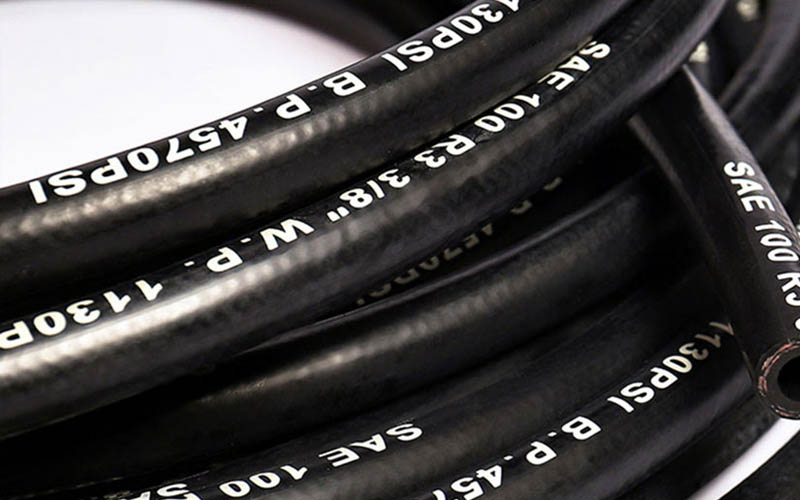
What Is a Smooth Surface Hydraulic Hose?

Smooth hydraulic hoses do not differ significantly in internal structure from other hydraulic hoses. The primary distinction lies in their surface treatment. Featuring a smooth outer surface design, they exhibit superior flexibility, making them easier to handle. Smooth-surface hydraulic hoses are highly suitable for applications requiring moderate abrasion resistance and where operational demands are not particularly stringent.

  • Pros:
    • Easy to clean and inspect
    • Their overall weight is lighter, facilitating easier transportation.
    • Lower friction, reducing abrasion when routed through clamps
    • Modern appearance, ideal for OEM equipment
  • Cons:
    • Slightly less resistant to severe external abrasion
    • Can show surface damage more visibly

Smooth Surface Hydraulic Hose

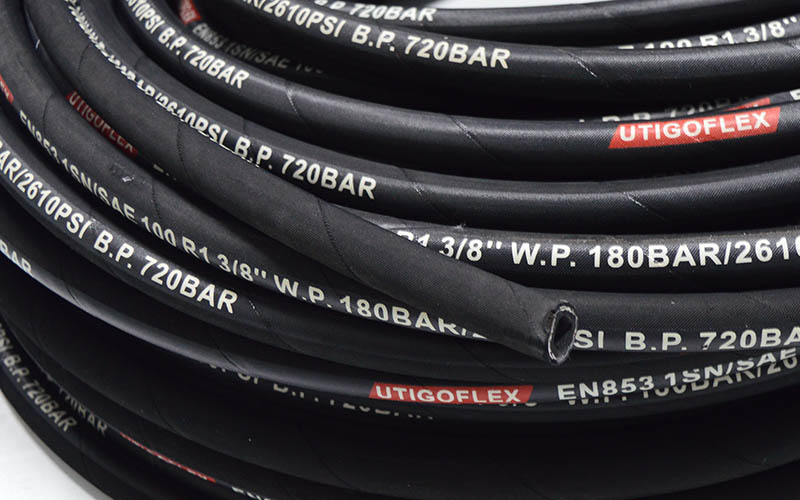
What Is a Canvas Surface Hydraulic Hose?

This is a hydraulic hose featuring a canvas layer bonded or wrapped around its outer surface, characterized by a coarse, textured canvas finish. It typically incorporates an additional canvas protective layer over the base hydraulic hose design. In stark contrast to smooth-surface hydraulic hoses, it offers superior abrasion resistance and mechanical damage protection, making it suitable for demanding industrial applications.

  • Pros:
    •  Excellent abrasion resistance
    • Better grip and reduced slippage
    • Suitable for harsh, dirty, or high-wear environments
  • Cons:
    • Harder to clean
    • Less flexible than smooth surface hoses
    • Rougher appearance

Canvas Surface Hydraulic Hose

Why Do Hydraulic Hoses Have Smooth and Canvas Surfaces?

The core rationale behind these two outer structure designs is to accommodate diverse industrial environments, operational conditions, and performance priorities. This enables hydraulic hoses to maximize service life and deliver optimal performance under specific common operating scenarios.

What are the differences between them?

  1. Flexibility:
    • Smooth Surface hydraulic hoses: Offer superior flexibility. The extrusion process ensures more uniform rubber thickness in the outer layer. Without a fabric braid layer, they achieve greater bending angles, facilitating installation in confined spaces.
    • Cabvas Surface Hydraulic Hose: Relatively stiffer. During vulcanization, tightly secured nylon wrapping bands exert immense pressure, bonding the layers exceptionally tightly. This dense structure enhances strength but slightly sacrifices flexibility.
  2. Abrasion Resistance:
    • Smooth-Surface Hydraulic Hose: Features a smooth surface with a low friction coefficient. This allows the hose to “slide over” rather than “catch” on machine edges or other hoses during friction, minimizing surface damage. It is also easier to clean.
    • Cabvas Surface Hydraulic Hose: Features a rough surface providing superior grip and mechanical protection. While it accumulates dust more readily, its surface texture—formed by extruded fabric bands—typically results in a thicker, more robust outer rubber layer. Consequently, cloth-covered hoses often demonstrate superior cut and tear resistance in harsh operating conditions.
  3. Allows for larger diameters:
    • Smooth-surface hydraulic hoses: Limited by manufacturing processes, these are commonly found in small to medium diameters (generally under 1 inch or DN25). This is because achieving precise outer diameter and flawless surface smoothness becomes challenging for smooth surfaces during extrusion coating at extremely large diameters.
    • Cabvas Surface Hydraulic Hose: The standard process for large-diameter hoses. For heavy-duty hoses with large diameters and ultra-high pressures (e.g., 2 inches and above), the fabric-wrapping method more effectively ensures bonding between the rubber layer and reinforcement layer (steel wire) through physical compression. Consequently, fabric-covered hoses are widely adopted in large industrial and construction machinery.
  4. Production Convenience:
    • Smooth-surface hydraulic hoses: Suited for automated mass production. Production typically involves continuous extrusion molding, offering high efficiency without requiring manual removal of the cover after vulcanization.
    • Cabvas Surface Hydraulic Hose: Production is more complex. It requires manual or semi-automatic winding of nylon cover tape, followed by removal after vulcanization. This process increases labor costs and processing time but allows the use of specialized rubber compounds unsuitable for extrusion molding.
EN 853 vs EN 856 Hydraulic Hose

Application-Based Recommendations

  1. Situations Where Smooth Surfaces Are Preferred Smooth surfaces are the better choice if your application exhibits the following characteristics:
    • Pulley and slide systems (e.g., forklifts, telescopic boom cranes): Hoses must frequently pass through pulleys or repeatedly extend and retract within slide channels. The low friction of smooth surfaces significantly reduces heat buildup and surface wear.
    • Automated equipment with confined spaces: When routing hoses within compact machinery, smooth surfaces prevent “grabbing” between hoses and allow smoother passage through holes during installation and replacement.
    • Environments requiring cleanliness (e.g., food processing, pharmaceuticals): Smooth surfaces resist dirt accumulation, are extremely easy to wipe down and sanitize, and meet hygiene standards.
    • Medium-low pressure, small-diameter tubing: Typically in lines under 1 inch, smooth surfaces offer greater cost-effectiveness and aesthetic appeal.
  2. Situations Where “Fabric-Covered Surface” Is Preferred If your application falls under the following categories, a fabric-covered surface (fabric-wrapped feel) is the safer choice:
    • Heavy-duty field operations (e.g., mining, excavators, forestry): Environments with significant friction from gravel and branches. The thicker outer rubber layer of the cloth-textured surface provides stronger “physical protection,” and minor surface scratches are less noticeable than on smooth surfaces.
    • Large-diameter or high-pressure main oil lines: When pipe diameters exceed 1.25 inches (DN32) or must withstand extremely high pressures, the cloth-textured process ensures the steel reinforcement layer bonds tightly with the rubber, preventing delamination under high-pressure impacts.
    • Applications requiring exceptional grip: On equipment with frequent manual maintenance and heavy oil contamination, the fabric-reinforced surface increases friction, enabling technicians to securely grasp the hose by hand or with tools even when oily.
    • Long-distance dragging applications: If the hose comes into direct contact with the ground while moving with machinery (e.g., certain mining transfer pumps), the fabric-reinforced surface offers greater structural strength and resistance to dragging.

Conclusion

Both smooth and canvas-covered hydraulic hoses offer distinct advantages. The correct choice depends on installation conditions, environmental exposure, and maintenance requirements. Selecting the appropriate surface type ensures extended service life and safer hydraulic system operation.
If you remain uncertain about your selection, please contact Utigoflex. Our professional sales team will provide expert guidance tailored to your needs. We also manufacture high-quality, high-performance hydraulic hose products. Feel free to reach out anytime.

byadministratorKathy/February 4, 2026
Recent
  • How Hydraulic Hose Is ManufacturedHow Hydraulic Hose Is ManufacturedFebruary 28, 2026 - 10:00 am
  • Industrial Hose for Oil and Fuel TransferIndustrial Hose for Oil and Fuel TransferFebruary 27, 2026 - 8:01 am
  • How to Select Hose for Oil and Fuel TransferHow to Select Hose for Oil and Fuel Transfer: 6 Key Factors...February 27, 2026 - 2:28 am
  • What Is Hydraulic Hose Reinforcement BlogWhat Is Hydraulic Hose Reinforcement?February 26, 2026 - 2:48 am
  • Best Hose Materials for Food Transfer: PVC vs Rubber vs...February 12, 2026 - 6:37 am
  • Food Grade Hose Buying GuideFood Grade Hose Buying Guide: Materials, Certifications...February 10, 2026 - 6:04 am
  • BSP vs NPT Hydraulic Fittings: Differences and How to C...February 6, 2026 - 6:57 am
  • JIC vs ORFS FittingsJIC vs ORFS Fittings: Which One Is Better for High Pres...February 4, 2026 - 9:59 am
Popular
  • Engineering PlasticsApril 18, 2024 - 9:54 am
  • Factory informationApril 18, 2024 - 9:58 am
  • Hydraulic hose workshopApril 18, 2024 - 10:00 am
  • Hydraulic hosesApril 18, 2024 - 10:01 am
  • Packaging & WarehouseApril 18, 2024 - 10:01 am
  • Production lineApril 18, 2024 - 10:02 am
  • How to Choose the Right Industrial Hose for Your Applic...March 20, 2025 - 2:18 am
  • ANFO Explosive Loading HoseApril 3, 2025 - 4:24 am
Comments
  • Awaiting check payment Order status changed from Pending...December 19, 2022 - 2:54 am by WooCommerce
  • Awaiting check payment Order status changed from Pending...December 12, 2022 - 2:14 pm by WooCommerce
  • Awaiting check payment Order status changed from Pending...December 12, 2022 - 1:37 pm by WooCommerce
  • Order cancelled by customer. Order status changed from Pending...November 16, 2022 - 11:59 am by WooCommerce
  • Awaiting check payment Order status changed from Pending...October 30, 2022 - 7:20 am by WooCommerce
  • Unpaid order cancelled - time limit reached. Order status...October 14, 2022 - 8:46 am by WooCommerce
  • Unpaid order cancelled - time limit reached. Order status...September 6, 2022 - 7:40 pm by WooCommerce
  • Awaiting check payment Order status changed from Pending...September 6, 2022 - 5:49 pm by WooCommerce
Tags

Categories

  • Blog
  • Company News
  • Product Knowledge
  • Technical Guidance
  • Uncategorized
  • Facebook
  • X
  • LinkedIn
  • Youtube
  • Instagram
  • steven@utigoflexhose.com
  • FACEBOOK
  • Instagram
  • YOUTUBE
  • 13510833230

Company

    • About Us
    • Products
    • Resources
    • Contact Us

Product

  • Hydraulic Hose
  • Rubber Hose
  • PVC Hose
  • Industrial Hose
  • Air Duct Hose
  • Food Grade Hose
  • Pneumatic Hose

Technical Support

    • Plastic Hoses Catalogue
    • Rubber Hose Catalogue
    • Hydraulic Fittings Catalogue
    • Privacy Policy

Follow Us

Copyright @ Utigoflex | All rights reserved
How to Choose the Right Hose Fittings for Your Industry NeedsHow to Choose the Right Hose Fittings for Your Industry NeedsFood Grade Hose GuideFood Grade Hose Selection Guide for Processing Equipment
Scroll to top

This site uses cookies. By continuing to browse the site, you are agreeing to our use of cookies.

Agree & ContinueSettingsReject

Cookie and Privacy Settings


How we use cookies

We may request cookies to be set on your device. We use cookies to let us know when you visit our websites, how you interact with us, to enrich your user experience, and to customize your relationship with our website.

Click on the different category headings to find out more. You can also change some of your preferences. Note that blocking some types of cookies may impact your experience on our websites and the services we are able to offer.

Essential Website Cookies

These cookies are strictly necessary to provide you with services available through our website and to use some of its features.

Because these cookies are strictly necessary to deliver the website, refusing them will have impact how our site functions. You always can block or delete cookies by changing your browser settings and force blocking all cookies on this website. But this will always prompt you to accept/refuse cookies when revisiting our site.

We fully respect if you want to refuse cookies but to avoid asking you again and again kindly allow us to store a cookie for that. You are free to opt out any time or opt in for other cookies to get a better experience. If you refuse cookies we will remove all set cookies in our domain.

We provide you with a list of stored cookies on your computer in our domain so you can check what we stored. Due to security reasons we are not able to show or modify cookies from other domains. You can check these in your browser security settings.

Google Analytics Cookies

These cookies collect information that is used either in aggregate form to help us understand how our website is being used or how effective our marketing campaigns are, or to help us customize our website and application for you in order to enhance your experience.

If you do not want that we track your visit to our site you can disable tracking in your browser here:

Other external services

We also use different external services like Google Webfonts, Google Maps, and external Video providers. Since these providers may collect personal data like your IP address we allow you to block them here. Please be aware that this might heavily reduce the functionality and appearance of our site. Changes will take effect once you reload the page.

Google Webfont Settings:

Google Map Settings:

Google reCaptcha Settings:

Vimeo and Youtube video embeds:

Other cookies

The following cookies are also needed - You can choose if you want to allow them:

Privacy Policy

You can read about our cookies and privacy settings in detail on our Privacy Policy Page.

Privacy Policy
Accept settingsHide notification only
Skip to content
Open toolbar Accessibility Tools

Accessibility Tools

  • Increase TextIncrease Text
  • Decrease TextDecrease Text
  • GrayscaleGrayscale
  • High ContrastHigh Contrast
  • Negative ContrastNegative Contrast
  • Light BackgroundLight Background
  • Links UnderlineLinks Underline
  • Readable FontReadable Font
  • Reset Reset