
You are here: Home1 / Resource2 / Technical Guidance3 / About Hose Types: A Quick Guide to Industrial Hoses
About Hose Types: A Quick Guide to Industrial Hoses
In modern industrial systems, industrial hoses serve as the “lifelines” for the transmission of fluids, gases, and materials; choosing the right hose directly impacts production line efficiency, operational safety, and long-term operating costs. Faced with the vast array of hose types available on the market, gaining a thorough understanding of their performance differences is the first step for companies to make informed decisions.
What Are Industrial Hoses?
Industrial hoses are flexible tubing systems specifically designed for various industrial environments. They are widely used in fields such as chemical processing, oil and gas, food production, construction, and ventilation and exhaust systems. They can be used to transport a wide variety of light materials and fumes, offering a diverse range of types and applications.
Selecting the right industrial hose not only significantly improves operational efficiency but, more importantly, effectively reduces the risk of downtime and equipment damage caused by hose rupture or failure.
Common Types of Industrial Hoses:
- Chemical Suction & Discharge Hose : For conveying liquids such as organic and inorganic acids, ketones, paints, esters, aromatic hydrocarbons, and aliphatic hydrocarbons (depending upon the inner lining)

- PU Suction Hose :As an suction and delivery hose, it is particularly suitable for gases, liquids, and abrasive solids such as dust, powders, chips, and granules.

- PU Anti Static Suction Hose: As an anti-static suction and conveying hose, it is particularly suitable for conveying flammable powders, granules, dust, mineral sand, gases, oils, chemical liquids, and abrasive solids such as dust, powders, debris, and granules. It is also suitable for industrial vacuum cleaners and particle conveying systems.
- Fuel & Oil Delivery Hose: This hose is ideally used for transmission of diesel, gasoline, lubricants and other mineral oils.
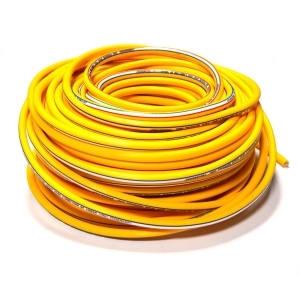
- PVC High Pressure Spray Hose: This hose is widely used in high pressure washer, pneumatic tools and air compressors. lt’s also used in agriculture for spraying of pesticide, fertilizer solution or fungicide.
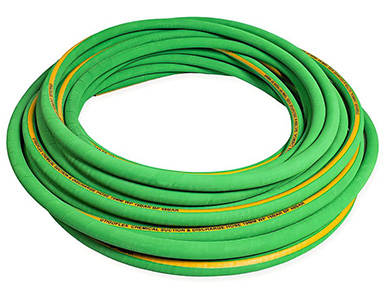
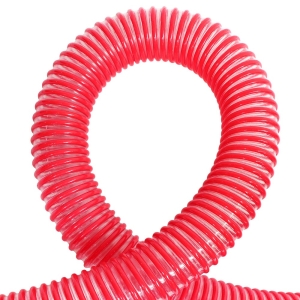
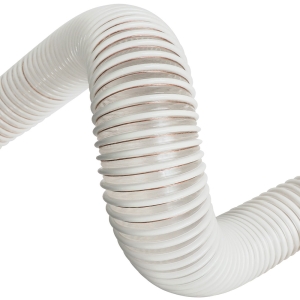
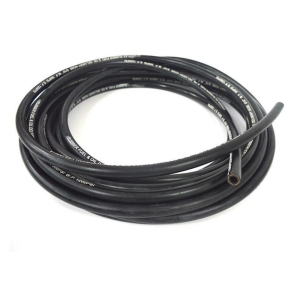
Core Materials of Industrial Hoses: A Comprehensive Analysis of Properties and Applications
Understanding the materials used in hoses is essential for selecting industrial hoses that will perform effectively in a given application.
| Material | Key Properties | Primary Applications | Typical Product Types |
| PVC | Lightweight, transparent, and cost-effective. Limited heat/solvent resistance. | Irrigation, drainage, and light-duty pneumatic tools. | PVC High Pressure Spray Hose, PVC Welding Hose |
| PU | Superior abrasion resistance, exceptional flexibility, and excellent memory (kink resistance). | Dust extraction, pneumatic automation, and abrasive media handling. | PU Air Ducting |
| EPDM | Outstanding resistance to heat, steam, ozone, and weathering. High electrical insulation. | Cooling systems, steam transfer, and chemical processing plants. | Chemical Suction and Discharge Hose |
| NBR | Excellent oil & fuel resistance. High durability against hydrocarbons and fats. | Fuel dispensing, oil & gas industry, and hydraulic systems. | Fuel & Oil Delivery Hoses |
| PTFE | The “Gold Standard”. Chemically inert. Performs from -70°C to +260°C. | Pharmaceuticals, aggressive chemicals, and semiconductor manufacturing. | PTFE Tubing |
| Silicone | Biocompatible, non-toxic, and odorless. Excellent UV and ozone resistance. | Food & Beverage, Medical, and Laboratory environments. | Silicone Coated Glass Fiber Duct |
Choose the Appropriate Type of Hose
Although the material is the core, when actually making a selection, you also need to pay attention to the structure of the hose. Generally, an industrial hose is composed of three parts: the inner rubber layer (determining corrosion resistance), the reinforcing layer (determining pressure resistance), and the outer rubber layer (determining resistance to environmental aging).
There is a classic “STAMPED” rule in the industry to ensure that the selection is correct:
- Size
- Temperature
- Application
- Media
- Pressure
- End fittings
- Delivery

