
You are here: Home1 / Blog2 / Product Knowledge3 / A Detailed Guide to Hydraulic Hose Standards: SAE, EN, ISO
A Detailed Guide to Hydraulic Hose Standards: SAE, EN, ISO
Hydraulic hoses are the most critical component of a hydraulic system, so selecting the right one is a major challenge for many engineers and procurement professionals. Choosing an unsuitable hydraulic hose can lead to a wide range of problems, ranging from downtime and production stoppages to serious safety incidents.
To ensure the safety, interchangeability, reliability, and consistent performance of hydraulic systems, hydraulic hose standards (SAE, EN, ISO) were established. These standards specify requirements for materials, construction, pressure ratings, pulse life, and dimensional tolerances, thereby preventing equipment failure, oil leaks, and personal injury.
In this guide, we will analyze the key differences between these standards, explain the harmonization of global standards, and provide you with a clear roadmap to help you select the right hose for your specific application.
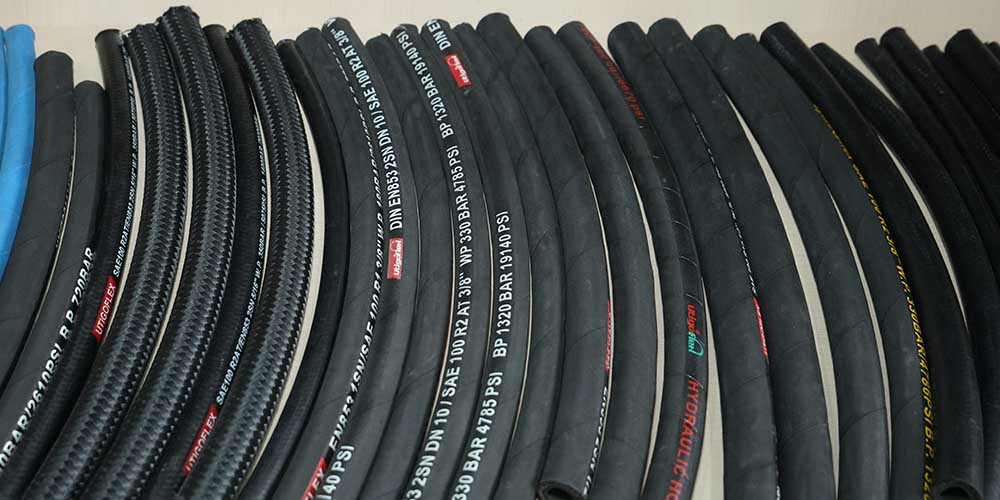
1. Why Establish Standards for Hydraulic Hoses?
Without uniform hydraulic hose standards, hydraulic systems would become a disaster. Standards primarily address three core issues:
- Interchangeability: Ensures that a hose purchased in China will fit perfectly with a German fitting or an American pump station.
- Safety: Specifies a minimum burst pressure (typically four times the working pressure) to prevent personal injury under high pressure.
- Performance Benchmarks: Establishes uniform minimum requirements for pulse life, abrasion resistance, and bend radius.
2. What are the Different Types of Hydraulic Hose Standards?
In the current global market, the most commonly used hydraulic hose standards are SAE, EN, and ISO, and each places different emphasis on the testing criteria for hydraulic hoses.
2.1 SAE Standards (Society of Automotive Engineers)
- Description: SAE J517 is the most widely used standard in North America and serves as a benchmark for the global construction machinery industry.
- Classification: Uses the “100R + Number” format (e.g., R1, R2, R12). It focuses on the combination of hose construction and pressure gradients.
- Representative Products: SAE 100R2AT (Double wire braid) and SAE 100R12 (Four-layer wire spiral).
- Application: Widely used in US-brand equipment (e.g., Caterpillar, John Deere) and maintenance markets in North America.
2.2 EN Standards (European Standards)
- Description: In Europe, hydraulic systems typically revolve around EN standards. While many models are equivalent to SAE, the testing processes are often more rigorous.
- Classification: Focuses on reinforcement structure and cover thickness. Common suffixes include “SN” (thin cover, non-skive) and “ST” (thick cover).
- Representative Products: EN 853 2SN and EN 856 4SP/4SH (High-pressure spiral hoses).
- Application: European original machinery (e.g., Liebherr), precision machine tools, and industrial equipment with strict space constraints.
2.3 ISO Standard (International Organization for Standardization)
- Description: It is the future-oriented global universal standard, particularly ISO 18752, which is redefining industry rules.
- Classification: Abandons traditional layer-based classification in favor of the “Constant Pressure” method, grading hoses by rated pressure (e.g., 21MPa, 35MPa).
- Representative Products: ISO 18752 Grade CC/DC.
- Application: New machine R&D for multinational OEMs. It simplifies inventory management across global supply chains.
3. What Tests Must Hydraulic Hoses Undergo?
To help engineers and procurement professionals navigate these complex international standards, we have compiled a technical comparison table focusing on the most critical testing dimensions based on ISO 1402 methodologies.
| Testing Dimension | SAE J517 (100R Series) | EN 853 / 856 / 857 | ISO 1436 / 3862 / 18752 |
|---|---|---|---|
| Proof Pressure (Static) | 2.0 x MWP | 1.5 or 2.0 x MWP (by type) | 1.5 or 2.0 x MWP (by type) |
| Holding Time | 30 – 60 seconds | 60 seconds / 3 minutes | 30s / 60s / 3 mins (by type) |
| Min. Burst Pressure | ≥ 4.0 x MWP | 4.0 or 4.5 x MWP (by type) | 4.0 or 4.5 x MWP (by type) |
| Test Temperature | Ambient (23 ± 5°C) | Ambient (23 ± 2°C) | Standard (ISO 23529) |
| Measurement Units | Imperial (PSI / Inch) | Metric (MPa / mm) | Metric (MPa / mm) |
| Impulse Cycles | 200,000 – 500,000 cycles | 150,000 – 400,000 cycles | 200,000 – 500,000 cycles |
| Change in Length | +2% to -4% | ± 4% (varies by type) | Length ≤ ±3%, O.D. ≤ ±5% |
| Exclusive Tests | Cold Bend (-40°C) | Abrasion / Ozone Resistance | Endurance Test (1000 hrs) |
* MWP: Maximum Working Pressure. Testing methodology complies with GB/T 5563 (Equivalent to ISO 1402).
Technical Methodology & Standard Traceability:
The data summarized above is extracted directly from official regulatory documents, including ISO 1402:2009, SAE J517:2020, and EN 853/856. Our internal quality control protocols strictly adhere to GB/T 5563-2013 (IDT ISO 1402), ensuring that all hose assemblies deliver superior performance in impulse durability and safety factors.
The data summarized above is extracted directly from official regulatory documents, including ISO 1402:2009, SAE J517:2020, and EN 853/856. Our internal quality control protocols strictly adhere to GB/T 5563-2013 (IDT ISO 1402), ensuring that all hose assemblies deliver superior performance in impulse durability and safety factors.
4. Standard-Compliant Solutions: Our Performance Series
1. Braided Steel Wire Hydraulic Hose Series (SAE 100 R2 AT / DIN EN 853 2SN):
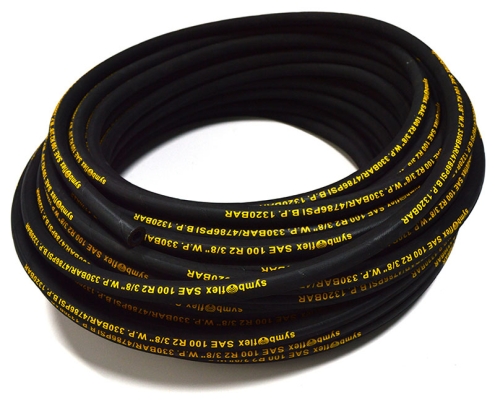
- Applicable Specs: DIN EN853 2SN, SAE J517 100 R2, ISO 1436-1 2SN
- Application: This hose is suitable for hydraulic lines and usual industrial systems.
- Feature: Good resistance to high pressure, oil abrasion, corrosion, weather, ozone, aging, sunlight and cut.
- Working Pressure: 8.0 ~ 41.5 Mpa(1160~ 6020 PSI)
- Burst Pressure: 32.0 ~ 165.0 Mpa(4640 ~ 24076 PSI)
- Temperature: Min working temperature is – 40°C, and the max working temperature is + 100°C.
2. Spiraled Steel Wire Hydraulic Hose(EN 856 4SH Hydraulic Hose):
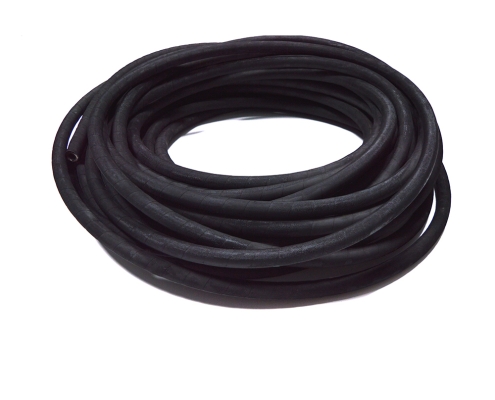
- Applicable Specs: DIN EN 856 4SH, ISO 3862-1 4SH.
- Application: It has excellent performance in delivering petroleum-based hydraulic fluids.
- Feature: Good resistance to high pressure, abrasion, corrosion, weather, ozone, aging, oil and cut.
- Working Pressure: 25.0 ~ 42.0 Mpa(3625~ 6090 PSI)
- Burst Pressure: 100 ~ 168 Mpa(14500~ 24360 PSI)
- Temperature: Min working temperature is – 40°C, and the max working temperature is + 100°C.
As a manufacturer and supplier of hydraulic hoses with 17 years of industry experience, Utigoflex offers a wide range of hydraulic hose products.
We support OEM and bulk industrial orders. Contact us for a free quote on hydraulic hose products.

