
You are here: Home1 / Blog2 / Product Knowledge3 / How to Select Hydraulic Hose: 4SP vs 4SH Hydraulic Hose
How to Select Hydraulic Hose: 4SP vs 4SH Hydraulic Hose
As widely used hydraulic hose types in high-pressure hydraulic systems, both EN 856 4SP and 4SH feature a four-layer high-strength spiral steel wire reinforcement structure. They offer excellent pressure resistance and pulse resistance, making them the mainstream choice for high-pressure hydraulic circuits. They are commonly used in construction machinery, mining equipment, and industrial hydraulics.
However, while EN 856 4SP and 4SH are structurally very similar, they differ significantly in certain characteristics, making them incompatible for interchangeable use. This often leaves many buyers and engineers unsure of which option to choose for their specific applications. Therefore, this article provides a detailed explanation of the differences between the two to help you make the right.
Learn about EN 856 4SP and EN 856 4SH Hydraulic Hoses
What is EN 856 4SP Hydraulic Hose?
The 4SP is a four-layer spiral steel-braided hose designed specifically for medium- and high-pressure applications. Its key advantages lie in its thinner wall thickness and superior flexibility.
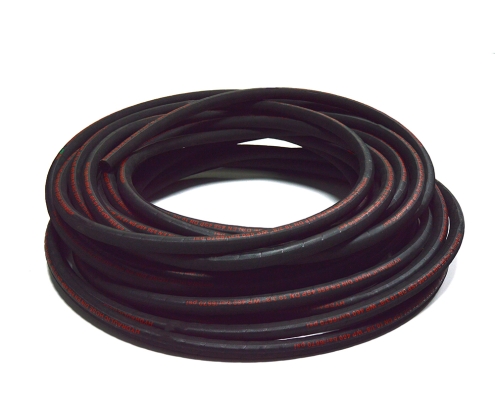
Structural Design of EN 856 4SP Hydraulic Hoses:
- Size: 6.3 ~ 51mm(1/4 ~ 2 inch)
- Hose ID: 6.2mm(Max: 7.0mm) ~ 50.4mm(Max: 52.0mm)
- Hose OD: 17.1mm(Max: 18.7mm) ~ 68.2(Max: 71.4mm)
- Tube: High quality black synthetic rubber.
- Reinforcement: Four layers of high tensile and high strength spiraled steel wire.
- Cover: Black synthetic rubber.
Technical Specifications of EN 856 4SP Hydraulic Hoses
- Wording Pressure: 16.5 ~ 45 Mpa / 2390 ~ 6525 PSI
- Burst Pressure: 66 ~ 180 Mpa / 9570 ~ 26100 PSI
- Min Bending Radius: 150 ~ 660 mm
What is EN 856 4SH Hydraulic Hose?
The 4SH is a heavy-duty hose engineered for extreme high-pressure and high-impact applications. It also features a four-layer steel-braided construction but utilizes thicker, higher-strength steel wires.
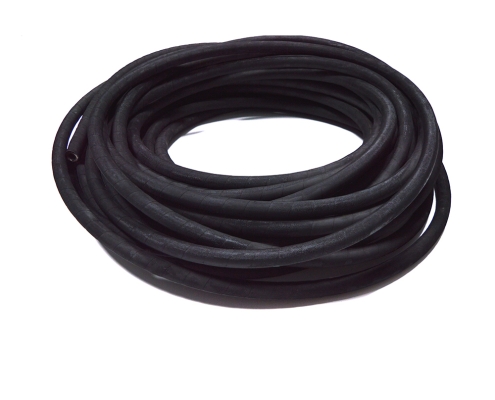
Structural Design of EN 856 4SH Hydraulic Hoses:
- Size: 19 ~ 51mm(3/4 ~ 2 inch)
- Hose ID: 18.6mm(Max: 19.8mm) ~ 50.4mm(Max: 52.0mm)
- Hose OD: 31.4mm(Max: 33.0mm) ~ 66.5(Max: 69.7mm)
- Tube: Black synthetic rubber.
- Reinforcement: Four layers of high tensile and high strength Spiraled steel wire.
- Cover: High quality black synthetic rubber.
Technical Specifications of EN 856 4SH Hydraulic Hoses
- Wording Pressure: 25.0 ~ 42.0 Mpa / 3625 ~ 6090 PSI
- Burst Pressure: 100 ~ 168 Mpa / 14500 ~ 24360 PSI
- Min Bending Radius: 280 ~ 700 mm
Key Differences: A Head-to-Head Comparison
| Comparison Item | EN 856 4SP Hydraulic Hose | EN 856 4SH Hydraulic Hose | Supplementary Notes / Industry Insights |
|---|---|---|---|
| Nominal Size Range | 6.3 ~ 51mm (1/4″ ~ 2″) | 19 ~ 51mm (3/4″ ~ 2″) | 4SP covers small to large diameters, while 4SH is designed exclusively for medium-to-large diameter high-pressure applications |
| Hose Inner Diameter (ID) | 6.2mm(Max: 7.0mm) ~ 50.4mm(Max: 52.0mm) | 18.6mm(Max: 19.8mm) ~ 50.4mm(Max: 52.0mm) | ID tolerances comply with EN 856 standards, ensuring perfect fitting compatibility with standard couplings |
| Hose Outer Diameter (OD) | 17.1mm(Max: 18.7mm) ~ 68.2mm(Max: 71.4mm) | 31.4mm(Max: 33.0mm) ~ 66.5mm(Max: 69.7mm) | 4SH features a more compact outer diameter at the same nominal size, ideal for space-constrained installation environments |
| Inner Tube | High-quality black synthetic rubber | Black synthetic rubber | Both are resistant to mineral hydraulic oils; 4SH inner tube typically offers superior temperature and impulse fatigue resistance |
| Reinforcement | Four layers of high-tensile, high-strength spiraled steel wire | Four layers of high-tensile, high-strength spiraled steel wire | Core structure is identical, but 4SH uses higher-spec steel wire with optimized winding tension for greater pressure redundancy |
| Outer Cover | Black synthetic rubber | High-quality black synthetic rubber | Both are oil, weather, and abrasion resistant; 4SH cover provides enhanced aging and impact resistance for heavy-duty use |
| Working Pressure | 16.5 ~ 45 MPa / 2390 ~ 6525 PSI | 25.0 ~ 42.0 MPa / 3625 ~ 6090 PSI | Small-diameter 4SP has a higher maximum pressure rating; medium-to-large diameter 4SH delivers more stable working pressure and superior impulse fatigue resistance |
| Burst Pressure | 66 ~ 180 MPa / 9570 ~ 26100 PSI | 100 ~ 168 MPa / 14500 ~ 24360 PSI | Both meet the mandatory 4:1 safety factor (burst pressure ≥ 4x working pressure) as required by EN 856 |
| Minimum Bending Radius | 150 ~ 660 mm | 280 ~ 700 mm | 4SP offers superior flexibility for complex routing; 4SH requires larger installation clearance due to its stiffer structure |
| Typical Applications | General construction machinery, hydraulic power units, medium-high pressure hydraulic systems | Heavy-duty construction equipment, mining machinery, high-pressure drilling, extreme-load hydraulic systems | 4SH is engineered for extreme high-pressure, high-impulse conditions, while 4SP is the universal choice for standard industrial/engineering scenarios |
| Core Advantages | Wide size coverage, excellent flexibility, cost-effective | Superior large-diameter pressure capacity, high impulse fatigue resistance, compact structure | 4SH is the upgraded variant of 4SP, optimized for heavy-duty applications; 4SP remains the mainstream general-purpose solution |
| Temperature Range (Industry Standard Supplement) | -40℃ ~ +100℃ (short-term +120℃) | -40℃ ~ +100℃ (short-term +120℃) | Complies with EN 856 standards; custom high/low temperature rubber compounds available upon request |
| Applicable Standards | EN 856 4SP / ISO 1436-1 4SP | EN 856 4SH / ISO 1436-1 4SH | Both are globally recognized European/international hydraulic hose standards, widely accepted in global markets |
How to Choose: 4 Questions to Ask
When deciding which hose to install, do not just look at the existing hose label—verify the system requirements.
1. What is the Maximum System Pressure?
Look at your system’s relief valve setting. If your system consistently spikes above 400 bar (5,800 PSI), you likely need 4SH. If you are operating comfortably between 280 and 400 bar, 4SP is usually sufficient and easier to route.
2. How Tight is the Routing?
If the hose must snake through a tight chassis, around moving parts, or through small cable carriers, 4SP is your best friend. Installing 4SH in a tight space may require adapters to prevent the hose from exceeding its bend radius.
3. What is the Impulse Duty?
Hydraulic systems with high-frequency pressure spikes (pulse pumps, hammer circuits) cause fatigue. Both hoses handle high impulse, but 4SH has a thicker wall and higher burst pressure margin, making it more resilient in severe impulse applications.
4. Does the Manufacturer Specify a Standard?
In many industries, OEM specifications dictate exactly which standard is required. If the machine manual calls for EN 856 (4SH), substituting with EN 857 (4SP) could void warranties or fail safety inspections—even if the pressure rating seems close.

