
You are here: Home1 / Blog2 / Product Knowledge3 / Fuel Delivery Hose vs. Fuel Suction Hose: Key Differences
Fuel Delivery Hose vs. Fuel Suction Hose: Key Differences & Uses
Introduction
Fuel transfer systems rely on hoses to transport gasoline, diesel, and other petroleum products safely and efficiently. However, not all fuel hoses are designed for the same operating conditions. Choosing the wrong type can cause hose collapse, leakage, reduced flow, or premature failure.
Two common options are fuel delivery hoses and fuel suction hoses. Delivery hoses primarily transport fuel under positive pressure, while suction hoses are designed to resist the vacuum created when a pump draws fuel from a tank.
Understanding their differences helps engineers, equipment manufacturers, and procurement teams select the right hose for fuel dispensing, tanker unloading, and industrial fuel transfer.
1. What Is a Fuel Delivery Hose?
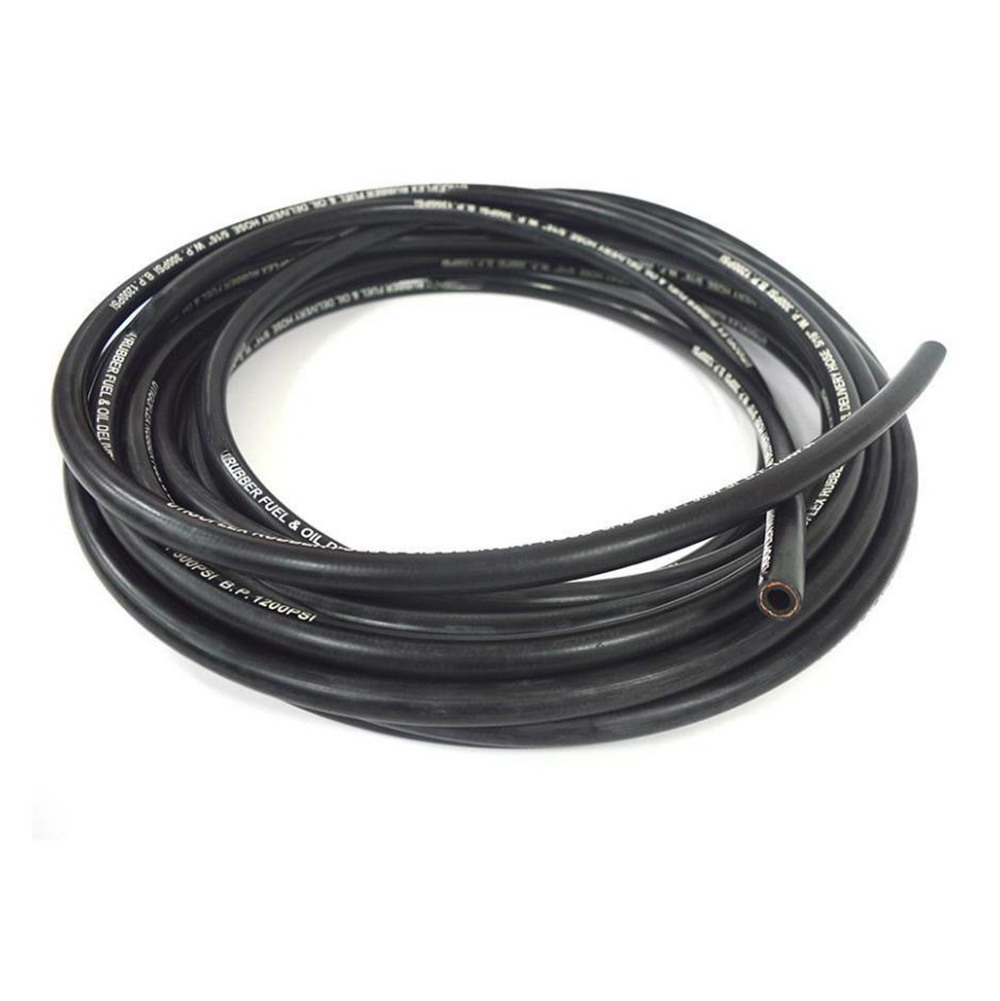
A fuel delivery hose transports fuel from a pump or supply source to a receiving point. It is commonly used in systems where fuel moves through the hose under positive pressure.
Typical applications include:
- Fuel dispensing stations
- Diesel refueling for trucks and heavy machinery
- Pump-to-tank fuel transfer
- Mobile refueling equipment
- Industrial fuel supply systems
A typical fuel delivery hose consists of a fuel-resistant inner tube, reinforcement layers, and a protective outer cover. The inner tube must be compatible with the fuel, while the reinforcement provides the strength needed to withstand the specified working pressure. The outer cover protects against abrasion, weather, and mechanical damage.
Depending on the application, reinforcement may include textile layers, steel wire, or other suitable materials. The correct design depends on the required pressure rating, flexibility, temperature, and installation conditions.
The key requirement is the ability to withstand the system’s working pressure without leakage or excessive expansion.
2. What Is a Fuel Suction Hose?
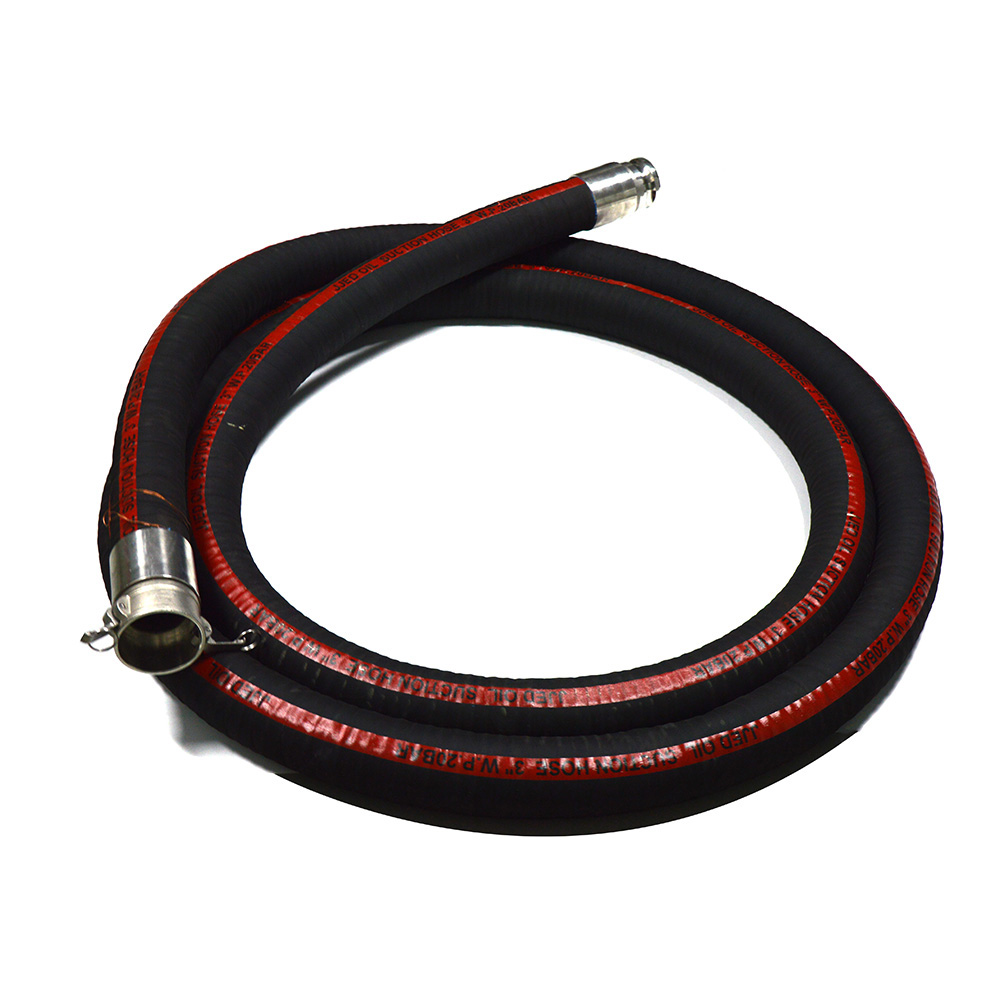
A fuel suction hose draws fuel from a tank, tanker, drum, or storage container toward a pump. During operation, the pump creates negative pressure inside the hose. Without adequate reinforcement, the hose may collapse and restrict fuel flow.
To prevent this, industrial fuel suction hoses commonly incorporate a spiral steel wire helix that helps the hose retain its shape under vacuum.
Typical applications include:
- Fuel pump inlet lines
- Tanker loading and unloading
- Diesel transfer from bulk storage tanks
- Fuel handling at construction and mining sites
- Industrial petroleum transfer systems
A typical hose may feature an oil-resistant NBR inner tube, textile reinforcement, steel wire helix, and a weather-resistant outer cover. Some designs also include conductive elements to help dissipate static electricity.
Utigoflex offers fuel suction hose solutions for petroleum transfer applications. When selecting a product, verify its fuel compatibility, temperature range, vacuum rating, and pressure specifications against the actual operating requirements.
The defining feature of a suction hose is its ability to resist collapse under the vacuum generated by the pump.
3. Fuel Delivery Hose vs. Fuel Suction Hose: Key Differences
| Feature | Fuel Delivery Hose | Fuel Suction Hose |
| Primary function | Transfers fuel under positive pressure | Draws fuel under vacuum |
| Main requirement | Pressure resistance | Vacuum resistance |
| Reinforcement | Textile, wire, or other specified materials | Commonly includes a steel wire helix |
| Typical applications | Fuel dispensing and tank filling | Pump inlets and tanker unloading |
| Vacuum resistance | Not guaranteed | Specified for suction service |
| Pressure capability | Depends on product rating | Depends on product rating |
Why does construction matter?
A delivery hose must withstand the internal force exerted by pressurized fuel. Its reinforcement helps prevent excessive expansion and rupture.
A suction hose faces a different challenge. When a pump creates a vacuum, atmospheric pressure pushes against the hose wall. Without suitable reinforcement, the hose may flatten, restrict flow, or cause pump starvation.
Important: Vacuum resistance does not automatically mean high positive-pressure resistance. Always check the manufacturer’s working-pressure and vacuum ratings.
4. Common Applications
Fuel delivery hose: dispensing and refueling
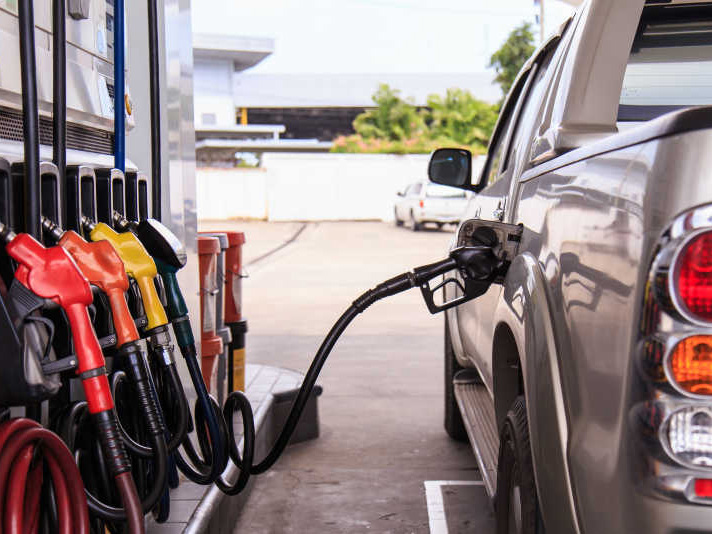
Delivery hoses connect pumps, dispensing equipment, and receiving tanks. They are commonly used at service stations, in diesel refueling equipment, and in industrial fuel supply systems.
The hose must meet the required pressure rating and fuel compatibility requirements. Flexibility and resistance to abrasion are also important when the hose is handled frequently.
Fuel suction hose: tanker unloading and tank intake
Suction hoses are used when pumps draw fuel from tankers, storage tanks, or other containers. Their reinforced construction helps maintain the flow path under negative pressure.
They are particularly useful in bulk fuel transfer systems where the pump and fuel source are connected by a flexible hose.
Combined suction and discharge operations
Some systems require a hose to handle both suction and discharge. In these cases, a purpose-built suction-and-discharge hose may be suitable, provided it has documented ratings for both vacuum and positive pressure.
5. How to Choose the Right Fuel Hose
Before purchasing a fuel hose, evaluate these six factors.
Fuel compatibility
Gasoline, diesel, kerosene, and blended fuels have different compatibility requirements. Nitrile rubber (NBR) is commonly used for petroleum resistance, but suitability depends on the fuel composition, temperature, and exposure conditions. Do not assume a hose suitable for diesel is automatically suitable for every gasoline blend.
Working pressure and vacuum
For delivery applications, check the normal working pressure and potential pressure surges. For suction applications, verify that the vacuum rating meets the pump’s maximum expected vacuum. If the hose serves both functions, confirm that it is rated for both.
Inside diameter and flow rate
The hose diameter affects flow capacity and pressure loss. Consider the required flow rate, hose length, pump capacity, and connection size when choosing the diameter.
Operating temperature and environment
Consider exposure to sunlight, cold weather, hot equipment, abrasion, and oil. Confirm that the hose’s temperature range and outer cover are suitable for the installation.
Static electricity protection
Fuel movement can generate static charge, creating an ignition hazard in the presence of flammable vapors. Depending on the application, conductive or static-dissipative hoses and appropriate bonding and grounding may be required. Confirm compliance with the relevant safety requirements.
Fittings and standards
Ensure that couplings, clamps, and connections are compatible with the hose and suitable for the intended service. Check applicable standards and certifications for the destination market.
For reliable selection, Utigoflex recommends evaluating the complete operating conditions rather than choosing a hose based on its name alone.
Conclusion
Fuel delivery hoses and fuel suction hoses serve different functions in fuel transfer systems. Delivery hoses are designed primarily for positive pressure, while suction hoses incorporate reinforcement to resist collapse under vacuum. Some hoses support both functions, but their ratings must be verified.
For equipment manufacturers, distributors, and industrial buyers, selecting the right hose starts with understanding the fuel, pressure conditions, temperature, and installation environment.
Build Your Safe Systems with Utigoflex
Utigoflex provides industrial hose solutions for fuel and petroleum transfer applications. Confirming the required specifications with your supplier helps improve operational reliability, reduce maintenance, and avoid unnecessary replacement costs.
Contact a qualified hose supplier with your operating requirements to identify the most suitable solution.
[Contact Utigoflex Today] to request a specialized quote or download our complete technical assembly catalog.

