
What Is a Fuel Drop Hose and Where Is It Used?
Fuel transfer systems require hoses that can safely handle petroleum-based liquids while resisting pressure, temperature changes, bending, and abrasion. A fuel drop hose is designed for transferring or dispensing fuels such as gasoline, diesel, kerosene, and fuel oil in industrial and commercial applications.
But what exactly is a fuel drop hose, where is it used, and how should you choose the right one?
What Is a Fuel Drop Hose?
A fuel drop hose is a flexible hose designed to transfer liquid fuel between pumps, storage tanks, dispensing equipment, vehicles, and other fuel-handling systems.
Unlike general-purpose hoses, fuel hoses are manufactured with materials specifically selected for compatibility with hydrocarbons and the intended fuel. A typical hose consists of:
- Fuel-resistant inner tube
- Reinforcement layer
- Abrasion- and weather-resistant cover
- Suitable fittings or couplings
The construction depends on the fuel type, pressure, temperature, application, and applicable standards.
For example, ISO 5772 specifies requirements for certain rubber and plastic hoses and hose assemblies used in measured fuel dispensing systems.

Where Are Fuel Drop Hoses Used?
1. Fuel Dispensing Stations
Fuel dispensing is one of the most common applications. The hose connects dispensing equipment to a nozzle and must withstand frequent handling, bending, and exposure to fuel.
Depending on the application and market, standards such as UL 330, UL 330A, or UL 330B may apply to fuel dispensing hose assemblies.

2. Diesel Fuel Dispensing
Diesel fuel hoses are commonly used for trucks, generators, agricultural machinery, construction equipment, and industrial vehicles.
The exact specification should be selected according to the fuel and operating conditions.
3. Bulk Fuel Transfer
Fuel hoses are also used to transfer fuel between storage tanks, pumps, delivery equipment, and receiving tanks.
Bulk fuel delivery systems can have different requirements from service-station dispensing systems, so the hose should be selected according to the specific application.
4. Construction and Mining Equipment
Construction and mining machinery often operates far from traditional fuel stations. Mobile refueling systems therefore use fuel hoses to supply diesel to excavators, loaders, dump trucks, drilling equipment, generators, and other equipment.
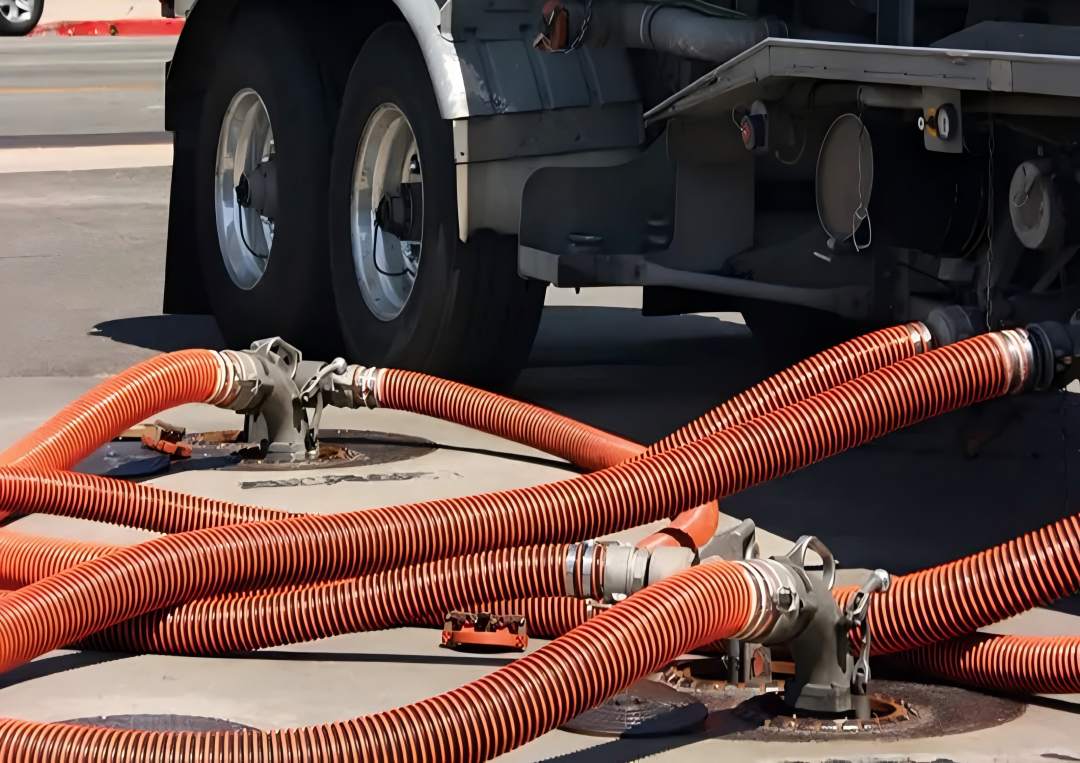
In these environments, hoses may be dragged, bent, exposed to dust, or subjected to mechanical impact. Abrasion resistance and flexibility are therefore particularly important.
For these demanding applications, Utigoflex can provide fuel hose solutions based on fuel type, hose dimensions, reinforcement, pressure rating, temperature range, and connection requirements.
Key Performance Requirements
Selecting a fuel drop hose requires more than choosing the correct diameter. Several technical factors should be considered.
1. Fuel Compatibility
The first consideration is the type of fuel.
Gasoline, diesel, kerosene, fuel oil, biodiesel, and ethanol-containing fuel blends may have different compatibility requirements. A hose suitable for one fuel should not automatically be assumed to be suitable for another.
Always confirm compatibility with the manufacturer’s specifications before use.
2. Working Pressure
The hose must have a suitable working-pressure rating for the system.
Pressure requirements can vary between fuel dispensing, bulk transfer, and other applications. The hose should also be evaluated for possible pressure surges and the requirements of the applicable standard.
3. Temperature Resistance
Fuel hoses may be used in hot or cold environments. Temperature affects flexibility, material performance, and service life.
Select a hose whose specified temperature range covers the actual operating conditions of the equipment.
4. Flexibility and Bend Radius
Fuel dispensing hoses are frequently moved during operation. Excessive bending can cause premature fatigue, while a hose that is too stiff may be difficult to handle.
The hose’s minimum bend radius should therefore be considered during installation and equipment design.
5. Abrasion and Weather Resistance
Outdoor fuel hoses may be exposed to sunlight, rain, dust, oil, and mechanical contact.
A durable outer cover helps protect the hose from external damage and can improve service life, particularly in mobile refueling applications.
Fuel Drop Hose vs. General-Purpose Hose
A general-purpose hose should not automatically be used for fuel transfer.
| Requirement | General-Purpose Hose | Fuel Drop Hose |
| Fuel compatibility | Application-dependent | Designed for specified fuels |
| Hydrocarbon resistance | May be limited | Important requirement |
| Pressure performance | Varies | Specified for application |
| Flexibility | General-purpose | Designed for fuel handling |
| Abrasion resistance | Varies | Important in many applications |
| Certification | Application-dependent | May require specific standards |
The correct hose should always be selected according to the actual fuel and operating environment.
How to Choose the Right Fuel Drop Hose
Before ordering a fuel drop hose, provide the manufacturer with the following information:
- Fuel type
Specify gasoline, diesel, biodiesel, kerosene, fuel oil, or another fuel. - Inside diameter
The hose ID affects flow capacity and system compatibility. - Working pressure
Provide the normal operating pressure and any relevant pressure surges. - Temperature range
Specify the minimum and maximum operating temperatures. - Hose length
Choose a length that allows sufficient movement without excessive slack. - Fittings and connections
Specify thread type, couplings, nozzle connections, or other interface requirements. - Applicable standards
Identify required certifications or standards before production. - Working environment
Indoor, outdoor, mobile, high-abrasion, or other conditions may require different hose constructions.
Providing complete information allows the manufacturer to recommend a hose based on the actual application rather than diameter alone.
Final Takeaway
A fuel drop hose is an important component in fuel dispensing and transfer systems. Its performance depends on fuel compatibility, pressure rating, temperature resistance, flexibility, abrasion resistance, fittings, and applicable standards.
A hose suitable for gasoline dispensing may not be suitable for diesel transfer or bulk fuel delivery. Therefore, selection should always be based on the complete operating environment.
Whether you need a hose for fuel dispensing, diesel transfer, mobile refueling, or industrial fuel handling, Utigoflex provides fuel hose solutions based on application requirements, dimensions, fuel type, pressure, temperature, reinforcement, and connection specifications.
For a quotation, provide the complete operating conditions and connection details. This helps ensure the selected fuel drop hose is properly matched to your fuel transfer system.
[Contact Utigoflex Today] to request a specialized quote or download our complete technical assembly catalog.

