
You are here: Home1 / Blog2 / Product Knowledge3 / Textile Reinforced Hose vs Wire Reinforced Hose: Differences
Textile Reinforced Hose vs Wire Reinforced Hose: What’s the Difference?
A hose may look simple from the outside, but its reinforcement determines much of what it can handle.
Pressure, flexibility, temperature, bending, vibration, and installation conditions are all influenced by the reinforcement layer inside the hose. Two common reinforcement approaches are textile reinforcement and wire reinforcement.
So, what actually separates them?
The answer is not simply “one is stronger.” Each construction is designed around different performance priorities.
First, Picture the Hose From the Inside
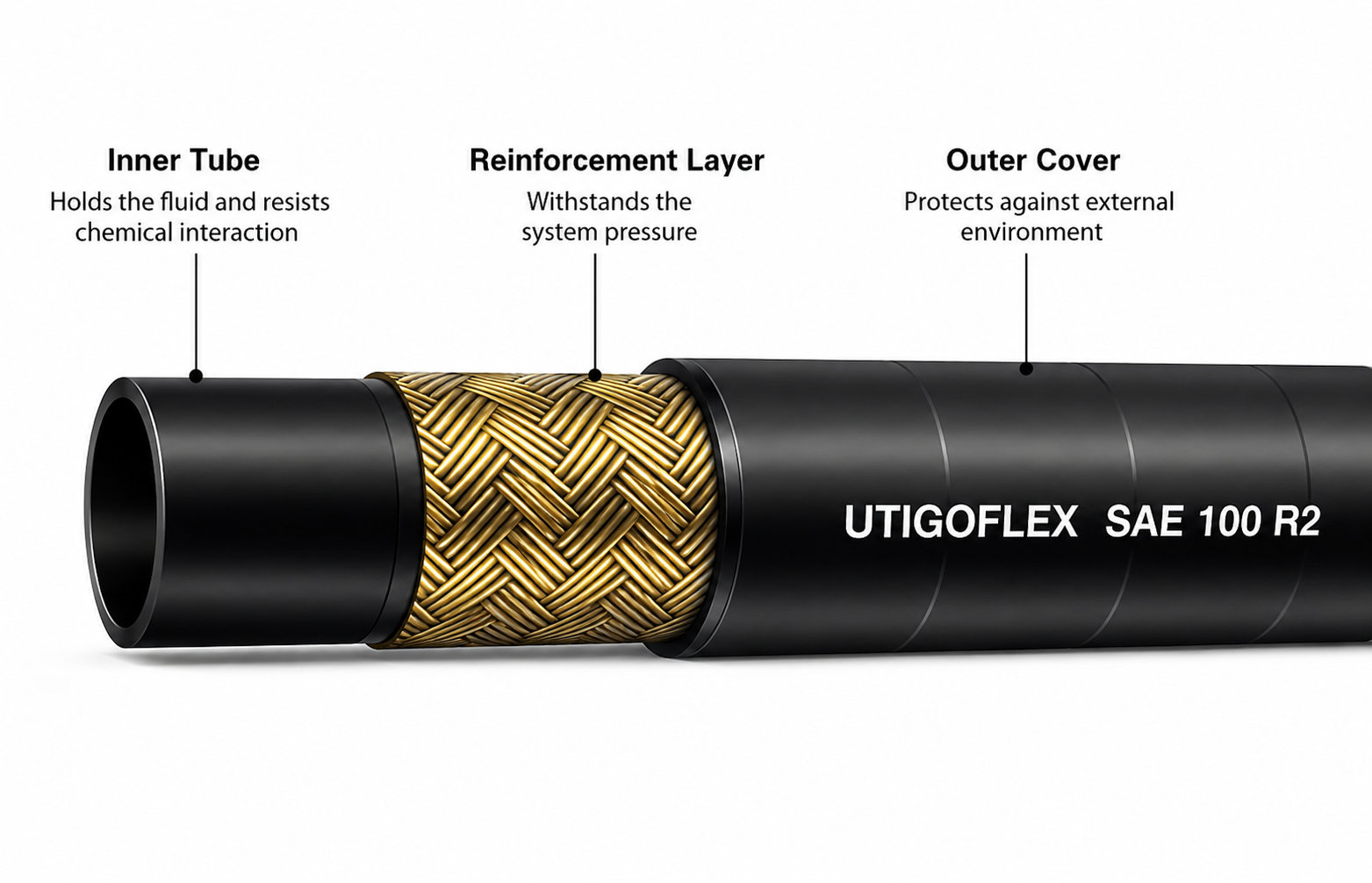
A reinforced hose is typically built from several layers:
Inner tube
↓
Reinforcement layer
↓
Outer cover
The inner tube is responsible for compatibility with the conveyed medium, while the outer cover protects the hose from the surrounding environment.
The reinforcement sits between them—and this is where the major difference begins.
Textile reinforcement
Textile fibers are embedded into the hose structure to provide pressure resistance while retaining a relatively flexible construction.
Common reinforcement materials can include polyester, nylon, rayon, or other engineered textile fibers, depending on the hose design.
Wire reinforcement
Wire—often steel wire—is incorporated into the hose to provide greater structural support and pressure resistance.
Wire reinforcement can take different forms, including braided or spiral constructions, depending on the intended application.
Different reinforcement. Different personality.
The Flexibility Test
Imagine two hoses installed in a space with several bends and limited room.
Which one is easier to route?
In many applications, textile reinforced hose offers greater flexibility and easier handling.
Its reinforcement structure can allow the hose to bend more readily, making it useful where frequent movement, tight routing, or convenient installation is important.
Wire reinforced hose, by comparison, can be more rigid because of the metallic reinforcement.
That additional stiffness is not necessarily a disadvantage. In demanding pressure applications, it can be exactly what the system requires.
In simple terms:
Textile reinforcement → flexibility first
Wire reinforcement → structural support first
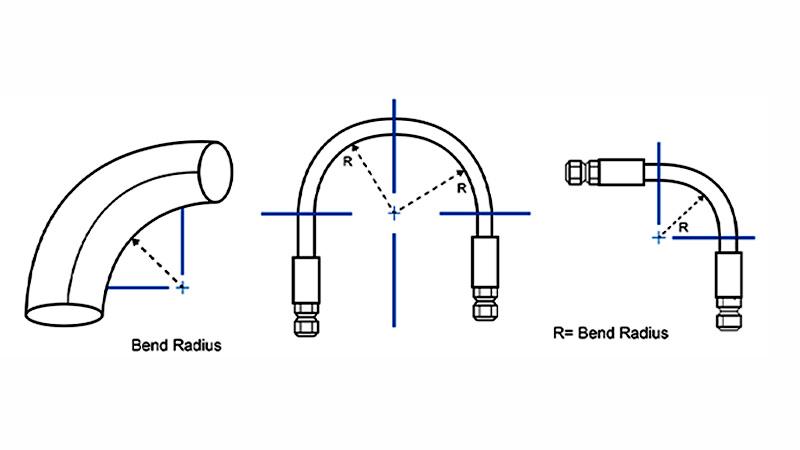
The actual bending radius still depends on the specific hose construction, so manufacturer specifications should always be checked before installation.
Now Turn Up the Pressure
This is where wire reinforcement typically enters the conversation.
Wire provides strong structural support and is widely used in hoses designed for higher-pressure hydraulic and industrial applications.
Textile reinforcement can also provide substantial pressure capability, particularly in applications involving lower or moderate working pressures.
However, when pressure requirements become more demanding, wire reinforcement is often selected because its construction can provide the additional strength needed for the application.
For example:
| Application requirement | Typical consideration |
| Low-pressure fluid transfer | Textile reinforcement may be suitable |
| Moderate-pressure service | Depends on hose construction |
| High-pressure hydraulic systems | Wire reinforcement is commonly considered |
| Flexible routing | Textile reinforcement can have an advantage |
| Heavy-duty pressure service | Wire reinforcement may be preferred |
The key word is “may.”
Reinforcement type alone does not establish a hose’s pressure rating. Diameter, reinforcement construction, materials, temperature, manufacturing quality, and other design factors all matter.
Where Does Textile Reinforcement Make Sense?
Textile reinforced hoses can be a practical option when the system values flexibility, manageable weight, and ease of handling.
Typical areas of use may include:
- Air and water delivery
- Low- to medium-pressure fluid transfer
- General industrial equipment
- Pneumatic systems
- Agricultural equipment
- Certain fuel or oil applications
- Flexible connection assemblies
For manufacturers such as Utigoflex, understanding how reinforcement construction affects flexibility and pressure capability is essential when matching hose designs to different operating requirements.
The main attraction?
Easy movement.
A hose that needs to be routed around equipment, moved during operation, or installed in a confined area can benefit from a flexible reinforcement structure.

Where Does Wire Reinforcement Shine?
Wire reinforced hose is commonly associated with applications where pressure resistance and structural durability are critical.
It is widely used in areas such as:
- Hydraulic systems
- Construction machinery
- Industrial machinery
- Heavy equipment
- High-pressure fluid systems
- Applications involving significant mechanical stress
The metallic reinforcement provides a strong internal structure that can help the hose withstand demanding operating conditions.
But there is a trade-off.
More reinforcement can mean more weight and reduced flexibility.
That makes wire reinforced hose highly capable—but not necessarily the most convenient choice for every installation.
Textile vs Wire — The Trade-Off in One View
Instead of asking which hose is “better,” consider what the system is asking the hose to do.
Textile Reinforced
Strengths
- Flexible
- Relatively lightweight
- Easy to handle
- Suitable for many low- and medium-pressure applications
- Convenient for flexible routing
Watch points
- May not be suitable for very high pressures
- Performance depends heavily on the reinforcement design
- Application-specific temperature and fluid compatibility still matter
Wire Reinforced
Strengths
- High structural strength
- Suitable for many high-pressure applications
- Strong support under demanding operating conditions
- Widely used in hydraulic and heavy-duty systems
Watch points
- Generally heavie
- Can be less flexible
- May require a larger bending radius
- Installation and handling can be more demanding
Conclusion
Textile reinforced hose and wire reinforced hose serve different purposes.
Textile reinforcement is often associated with flexibility, lighter weight, and applications where low- to medium-pressure performance is sufficient.
Wire reinforcement is commonly selected when higher pressure, greater structural support, and demanding industrial service are involved.
Neither construction is universally superior.
Need Help Choosing the Right Hose Reinforcement?
Not sure whether a textile reinforced hose or wire reinforced hose is right for your application? Share your required pressure, hose size, fluid, temperature, bend radius, and operating conditions with our team.
Utigoflex can help you identify a suitable hose construction based on your application requirements.

