
You are here: Home1 / Blog2 / Product Knowledge3 / Natural Rubber vs Synthetic Rubber Hose: What Are the Differences?
Natural Rubber vs Synthetic Rubber Hose: What Are the Differences?
When choosing a rubber hose for an industrial application, the material used to manufacture the hose is one of the most important factors to consider. Among the many options available, natural rubber and synthetic rubber are two common choices, but they offer different performance characteristics.
A hose that works well for water or air may not be suitable for oil, chemicals, outdoor environments, or high-temperature applications. Understanding the differences between natural rubber and synthetic rubber can therefore help you select a hose that delivers better performance, longer service life, and greater reliability.
So, what exactly makes natural rubber and synthetic rubber hoses different, and which one is the better choice for your application?
What Is Natural Rubber?
Natural rubber is a polymer obtained primarily from the latex of rubber trees. It has been used for industrial products for more than a century and remains valued for its excellent elasticity, flexibility, and mechanical strength.
One of the major advantages of natural rubber is its outstanding resilience. It can stretch and recover its original shape repeatedly, making it useful for applications where flexibility and dynamic movement are important.
Natural rubber also provides good resistance to abrasion and tearing. This makes it particularly useful in applications involving mechanical wear, repeated movement, or contact with abrasive materials.
However, natural rubber also has limitations. It generally has relatively poor resistance to petroleum-based oils, fuels, and some chemicals. It can also be affected by prolonged exposure to ozone, ultraviolet radiation, and weathering unless the hose is specifically formulated or protected for those conditions.
What Is Synthetic Rubber?
Synthetic rubber refers to elastomers that are produced through chemical processes rather than being obtained directly from natural latex. There are many types of synthetic rubber, and each is designed to provide particular performance characteristics.
Common synthetic rubber materials used in hose manufacturing include EPDM, nitrile rubber (NBR), neoprene, and silicone, among others. Their properties can vary considerably.
For example, nitrile rubber is widely used where resistance to petroleum-based oils and fuels is important. EPDM offers excellent resistance to weathering, ozone, water, and many chemicals. Silicone rubber can perform well across a broad temperature range and is commonly used where temperature flexibility is required.
This variety is one of the biggest advantages of synthetic rubber: the material can be selected or formulated according to the demands of the application.
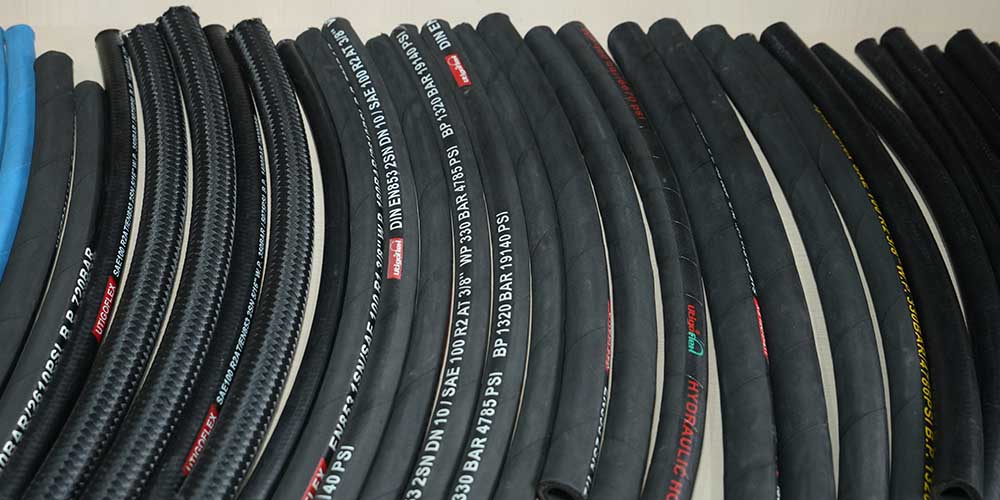
Synthetic Rubber Hose
Natural Rubber vs Synthetic Rubber: Key Differences
Although both materials can be used to manufacture high-quality hoses, their properties are not identical.
1. Flexibility and Elasticity
Natural rubber is well known for its excellent elasticity and flexibility. It can perform particularly well in applications where the hose is repeatedly bent, stretched, or moved.
Synthetic rubber can also be highly flexible, but its flexibility depends on the specific rubber formulation. Some synthetic elastomers are optimized for flexibility, while others prioritize chemical, temperature, or oil resistance.
For applications where mechanical flexibility and resilience are major priorities, natural rubber can be an attractive option. Utigoflex hose solutions may use different rubber constructions depending on the specific performance requirements of the application.
2. Abrasion Resistance
Natural rubber generally offers very good resistance to abrasion, making it suitable for demanding applications where the hose may experience repeated physical contact or wear.
This characteristic is particularly useful in applications involving the transfer of abrasive materials, heavy-duty industrial handling, and equipment subjected to frequent movement.
Certain synthetic rubbers can also provide excellent abrasion resistance, but performance varies according to the specific elastomer, compound, and hose construction.
Therefore, abrasion resistance should be evaluated based on the complete hose design rather than simply whether the hose is natural or synthetic rubber.
3. Oil and Fuel Resistance
This is an area where synthetic rubber often has a significant advantage.
Natural rubber is generally not the preferred material for prolonged contact with petroleum-based oils and fuels because these substances can cause swelling, deterioration, or loss of mechanical properties.
Nitrile rubber, on the other hand, is specifically valued for its resistance to mineral oils, fuels, and many petroleum-based fluids. As a result, synthetic rubber hoses are often selected for fuel transfer, oil handling, hydraulic applications, and other services involving petroleum-based products.
The exact compatibility still depends on the fluid, concentration, temperature, and exposure time.
4. Weather and Ozone Resistance
Outdoor applications can expose hoses to sunlight, oxygen, ozone, rain, and changing temperatures. These environmental factors can gradually degrade certain rubber compounds.
Natural rubber can be vulnerable to ozone and ultraviolet exposure, particularly when used continuously outdoors without appropriate formulation or protection.
Many synthetic rubbers are engineered to perform better in harsh outdoor environments. EPDM, for example, has excellent resistance to ozone, weathering, and UV exposure, making it widely used in outdoor and water-related applications.
For industrial hoses that will be exposed to demanding environmental conditions, Utigoflex can be considered when comparing hose constructions designed around different environmental and material requirements.
5. Temperature Resistance
Temperature performance is another important consideration.
Natural rubber generally performs well within a moderate operating-temperature range, but it is not the best choice for every high-temperature application.
Synthetic rubber offers a much broader range of possibilities because different elastomers have been developed for different temperature requirements. Silicone, for example, can maintain useful flexibility at both relatively low and high temperatures, while EPDM performs well in many hot-water and steam-related applications when the specific hose construction is designed for such service.
However, temperature ratings should always be checked against the manufacturer’s specifications. A hose’s maximum temperature is affected not only by the rubber itself but also by reinforcement, construction, pressure, and the medium being transported.
6. Chemical Resistance
Chemical compatibility can vary dramatically between different rubber materials.
Natural rubber is suitable for certain water, air, and general industrial applications, but it may not be appropriate for aggressive chemicals, petroleum products, or other specialized fluids.
Synthetic rubber provides more choices because different elastomers offer resistance to different chemical environments. EPDM, nitrile, neoprene, and other synthetic rubbers each have their own strengths and limitations.
When selecting a hose, never rely solely on the general term “synthetic rubber.” The specific elastomer and compound should be matched to the chemical being transferred.
Which Rubber Hose Should You Choose?
There is no universal winner between natural and synthetic rubber. The right choice depends on the working environment and performance requirements.
Natural rubber may be a good option when you need:
- Excellent elasticity and flexibility
- Good mechanical strength
- Strong abrasion resistance
- Good resilience under repeated movement
- Cost-effective performance for suitable non-oil applications
Synthetic rubber may be preferable when you need:
- Better oil or fuel resistance
- Improved weather and ozone resistance
- Specific chemical resistance
- Higher or lower temperature capability
- Specialized performance for demanding industrial environments
It is also possible for a hose to combine different materials in its tube, cover, and reinforcement layers. Therefore, hose selection should consider the complete construction rather than focusing on one material in isolation.

Synthetic Rubber Hose Application
Other Factors to Consider When Selecting a Rubber Hose
Material is only one part of the selection process. You should also consider the hose’s working pressure, temperature range, internal diameter, bend radius, reinforcement structure, abrasion resistance, and compatibility with the transported medium.
The operating environment matters as well. A hose used indoors may have different requirements from one exposed to sunlight, rain, chemicals, mechanical impact, or extreme temperatures.
For critical applications, manufacturers’ technical data and compatibility charts should always be consulted before installation. Utigoflex provides a useful reference point when evaluating rubber hose options according to application-specific requirements rather than choosing a hose based solely on appearance or material name.
Conclusion
Natural rubber and synthetic rubber each have distinct advantages. Natural rubber is particularly valued for its excellent elasticity, resilience, flexibility, and abrasion resistance. Synthetic rubber, meanwhile, offers a wider range of specialized properties, including improved resistance to oils, fuels, chemicals, ozone, weathering, and high temperatures, depending on the elastomer used.
Build Your Safe Systems with Utigoflex
With the right material and design, a rubber hose can provide reliable performance while reducing premature wear, maintenance requirements, and unexpected downtime. Utigoflex can be considered as part of this selection process when you need to compare hose solutions for different industrial applications.
[Contact Utigoflex Today] to request a specialized quote or download our complete technical assembly catalog.

