
• Facebook
  • Youtube
  • Instagram
  • WhatsApp
Give us a call now: 13510833230
Utigoflex
  • Home
  • About Us
    • Certification
  • Product
    • Hydraulic Hose
      • Braided Steel Wire Hydraulic Hose
        • SAE 100 R1 / DIN EN 853 1SN
        • SAE 100 R2 AT / DIN EN 853 2SN
        • SAE 100 R5 Steel Wire Braided Hydraulic Hose
        • SAE 100 R16 Steel Wire Braided Hydraulic Hose
        • SAE 100 R17 Steel Wire Braided Hydraulic Hose
        • EN 857 1SC Steel Wire Braided Hydraulic Hose
        • EN 857 2SC Steel Wire Braided Hydraulic Hose
      • Spiraled Steel Wire Hydraulic Hose
        • SAE 100 R9 Steel Wire Spiraled Hydraulic Hose
        • SAE 100 R12 Steel Wire Spiraled Hydraulic Hose
        • SAE 100 R13 Steel Wire Spiraled Hydraulic Hose
        • SAE 100 R15 Steel Wire Spiraled Hydraulic Hose
        • EN 856 4SH Steel Wire Spiraled Hydraulic Hose
        • EN 856 4SP Steel Wire Spiraled Hydraulic Hose
      • Thermoplastic Hydraulic Hose
        • SAE 100 R7 Thermoplastic Hydraulic Hose
        • SAE 100 R8 Thermoplastic Hydraulic Hose
        • SAE 100 R14 Stainless Steel Wire Braided with PT
      • Braided Textile Hydraulic Hose
        • SAE 100 R3
        • SAE 100 R4 Textile Braided Hydraulic Hose
        • SAE 100 R6
        • EN 854 1TE/2TE/3TE Textile Braided Hydraulic Hose
    • Rubber Hose
      • EPDM Air & Water Hose
      • Chemical Suction & Discharge Hose
      • Steam Hose
      • Fuel & Diesel Delivery Hose
      • Fuel & Diesel Suction Hose
      • LPG/CNG Rubber Hose
      • Drilling Hose
      • Air Compressor Hose
      • High pressure Washing Hose
      • Marine High Pressure Oil Conveying Hose
      • Sand Blast Rubber Hose
      • Suction & Discharge Hose
      • Concrete Delivery Hose
      • Composite Hose
      • Food Grade Hose
      • EPDM Hot Water Hose
      • Stainless Steel Flexible Hose
    • PVC Hose
      • PVC Garden Hose
      • PVC Layflat Hose
      • Multi–Purpose PVC Air Hose – Matt Surface
      • Multi–Purpose PVC Air Hose – Shining Surface
      • Smooth Surface PVC Steel Wire Hose
      • PVC Fiber Hose
      • PVC High Pressure Spray Hose
      • PVC Corrugated Suction Hose
      • PVC Grit Hose
      • PVC Kink–Proof Suction Hose
      • PVC Interlocked Hose
      • Fuel Drop Hose
    • Industrial Hose
      • ANFO Explosive Loading Hose
      • Air Hose
      • Fuel & Oil Delivery Hose
      • Chemical Hose
      • Layflat Fire Hose
      • Welding Hose
      • High Pressure Spray Hose
      • PU Suction Hose
      • PU Anti Static Suction Hose
      • PU Step Hose
      • Polypropylene Drain Hose
    • Air Duct Hose
      • PU Air Duct
      • PU Air Duct With Black Strip
      • PVC Air Duct
      • TPR (TPE) Air Duct
      • TPR (TPE) Air Duct With Green Strip
      • Silicone Coated Glass Fiber Duct
      • Portable Ventilation Duct
      • Clamped High Temperature Duct
      • Clamped Polyester Duct
      • Clamped Tarpaulin Duct
      • EPDM Fume Exhaust Hose
    • Food Grade Hose
      • Food Grade Rubber Hose
      • Smooth Surface PVC Spiral Hose
      • Smooth Surface PVC Steel Wire Hose
      • PVC Fiber Hose
    • Pneumatic Hose
      • Nylon tubing
      • PU Pneumatic Hose
    • Hydraulic Fittings
    • Hose Camlocks
    • Hose Clamps
    • Crimping/Cutting Machine
      • Crimping Machine
      • Cutting Machine
    • Rubber Sheet
  • Services
    • Agriculture Hose Solution
    • Construction Hose Solution
    • Oil & Fuel Hose Solution
    • Chemical Industry Hose Solutions
    • Mining Hose Solution
    • Food Grade Hose Solution
  • Resources
    • Download Center
    • Technical Guides
    • Blog
      • Product Knowledge
      • Company News
  • Contact Us
  • Search
  • Menu Menu
You are here: Home1 / Blog2 / Product Knowledge3 / What is the Difference Between Conductive and Non-Conductive Hoses?

What is the Difference Between Conductive and Non-Conductive Hoses?

The booming growth of the industrial sector has brought a steady stream of demand for industrial hoses, but it has also led to an increasing number of issues. It’s important to understand that choosing the wrong hose is not merely a technical error—it’s a serious safety hazard. As a seasoned international trade manager, I frequently encounter clients who are confused about the difference between conductive hoses and non-conductive hoses.

This blog post will provide a detailed analysis of their key differences, the underlying physical principles, and when to use each type.

What is the Difference Between Conductive and Non-Conductive Hoses?

1. Conductive Hoses: Managing Static Electricity

Conductive hoses are designed to dissipate static electricity generated by the friction of materials (especially dry powders or flammable liquids) flowing through the tube.

  • How they work: These hoses contain conductive materials like carbon black in the tube or a built-in static wire (copper wire) that connects to the couplings.

  • Key Application: Transferring fuel, chemicals, or grain. Without a path to the ground, static buildup can trigger a spark, leading to explosions in volatile environments.

  • Pro Tip (Experience): Always perform a “continuity test” after installing couplings on conductive hoses. In my experience, a poorly crimped coupling is the most common cause of a broken grounding path.
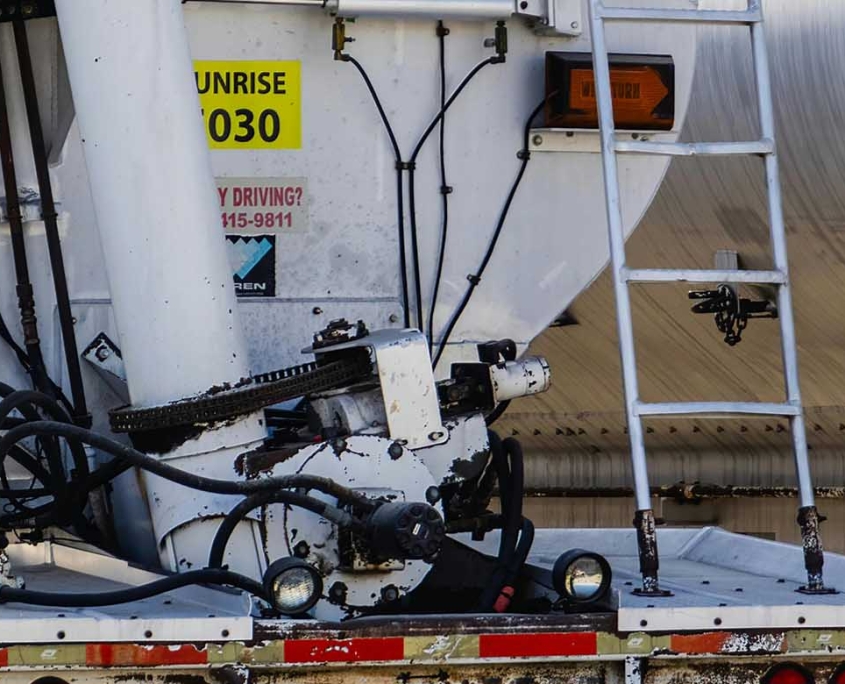
Conductive Hoses

2. Non-Conductive Hoses: Preventing Electrical Shock

While conductive hoses move electricity to the ground, non-conductive hoses are designed to block it. These are essential when working near high-voltage power lines or electrical equipment.

  • How they work: They are made from high-dielectric materials (like specific grades of rubber or PVC) and specifically omit any metal reinforcements or carbon black.

  • Key Application: Utility line maintenance (cherry pickers), furnace cooling in steel mills, and medical equipment.

  • Safety Standard: A true non-conductive hose must meet specific leakage current limits (typically less than 75 microamps per foot at high voltage) to be certified.

Understanding Conductive and Non-Conductive Hoses

Conductive Hoses: The Static Dissipator

How it works

Conductive hoses are manufactured with carbon black, specialized polymers, or embedded metal wires. These materials create a continuous pathway for electrical current.

Why you use it

The primary enemy here is static electricity. When a non-conductive fluid (like gasoline, solvents, or dry powders) flows through a hose, friction generates static buildup—a phenomenon called “flow electrification.”

If that static charge has nowhere to go, it will build up until it jumps to the nearest ground. That spark can ignite flammable vapors.

A conductive hose safely channels that static charge to a ground wire, preventing sparks.

Common Applications

  • Fuel transfer (gasoline, diesel, jet fuel)
  • Flammable chemical processing
  • Powder and pellet transfer (pneumatic conveying)

Safety Rule: If the material you are moving is flammable or can create a static spark, you generally need a conductive hose with proper grounding.

Non-Conductive Hoses: The Insulator

How it works

These hoses are made from pure dielectric materials—natural rubber, EPDM, PTFE (Teflon), or other polymers without conductive carbon fillers. They contain no metallic reinforcement (or use specially insulated wire braids).

Why you use it

The enemy here is external electrical hazards. Think high-voltage power lines, transformers, or electrical panels.

If you use a conductive hose near live electrical equipment, the hose could act like a wire. A stray current or a dropped power line could energize the hose, electrocuting the operator.

Non-conductive hoses act as a safety barrier, preventing current from passing through to the worker.

Common Applications

  • Industrial vacuum trucks working near power lines
  • Hydraulic lifts on utility vehicles
  • High-voltage transformer maintenance
  • Non-conductive lance hoses for tank cleaning (where operator holds the nozzle)

Safety Rule: If there is any risk of contacting live electricity (overhead lines, electrical substations), you must use a certified non-conductive hose.

Core Differences at a Glance

Feature Conductive Hose Non-Conductive Hose
Primary Goal Prevent static buildup/sparks Prevent electrical shock to operators
Material Contains carbon or metal wires High-dielectric synthetic materials
Common Use Fuel, solvents, powders Power line work, cooling systems
Safety Risk Explosion (if not grounded) Electrocution (if conductive)

Conclusion

Selecting the wrong hose is a high-stakes error. If your medium is flammable, go conductive and ground it. If you are working near live electricity, go non-conductive to stay insulated. According to the 2026 Industrial Safety Report, 30% of hose-related accidents stem from incorrect conductivity choices. Always consult your manufacturer’s technical data sheet to ensure the hose meets the required EETA (Experience, Expertise, Authoritativeness, Trustworthiness) safety benchmarks for your specific site.

byadministratorKathy/May 7, 2026/inProduct Knowledge

Recent
  • Industrial Hose Bend RadiusIndustrial Hose Bend Radius: Key Guide, Mistakes to Avoid...May 8, 2026 - 9:58 am
  • What is the Difference Between Conductive and Non-Conductive HosesWhat is the Difference Between Conductive and Non-Conductive...May 7, 2026 - 9:43 am
  • Which Hose Material is Best for High Temperature and High PressureWhich Hose Material is Best for High Temperature and High...April 30, 2026 - 7:35 am
  • How Should Hydraulic Hoses Be Stored ProperlyHow Should Hydraulic Hoses Be Stored Properly?April 29, 2026 - 7:36 am
  • How to Choose the Right Hose Clamp for Your IndustryHow to Choose the Right Hose Clamp for Your IndustryApril 24, 2026 - 7:13 am
  • PVC Air Duct Hose vs PU Air Duct HosePVC vs. PU Duct Hose: Which One Is Right for Your Appli...April 22, 2026 - 8:49 am
  • What is an Air Duct HoseWhat is an Air Duct Hose? A Complete Guide to Flexible ...April 21, 2026 - 8:00 am
  • High Pressure Hose Buying GuideHigh Pressure Hose Buying Guide: Key Factors to Consider...April 10, 2026 - 9:21 am
Popular
  • Engineering PlasticsApril 18, 2024 - 9:54 am
  • Factory informationApril 18, 2024 - 9:58 am
  • Hydraulic hose workshopApril 18, 2024 - 10:00 am
  • Hydraulic hosesApril 18, 2024 - 10:01 am
  • Packaging & WarehouseApril 18, 2024 - 10:01 am
  • Production lineApril 18, 2024 - 10:02 am
  • Layflat Discharge Hoses: The Future of Lightweight Fluid...October 24, 2025 - 9:43 am
  • How to Choose the Right Industrial Hose for Your Applic...March 20, 2025 - 2:18 am
Comments
  • Awaiting check payment Order status changed from Pending...December 19, 2022 - 2:54 am by WooCommerce
  • Awaiting check payment Order status changed from Pending...December 12, 2022 - 2:14 pm by WooCommerce
  • Awaiting check payment Order status changed from Pending...December 12, 2022 - 1:37 pm by WooCommerce
  • Order cancelled by customer. Order status changed from Pending...November 16, 2022 - 11:59 am by WooCommerce
  • Awaiting check payment Order status changed from Pending...October 30, 2022 - 7:20 am by WooCommerce
  • Unpaid order cancelled - time limit reached. Order status...October 14, 2022 - 8:46 am by WooCommerce
  • Unpaid order cancelled - time limit reached. Order status...September 6, 2022 - 7:40 pm by WooCommerce
  • Awaiting check payment Order status changed from Pending...September 6, 2022 - 5:49 pm by WooCommerce
Tags

Categories

  • Blog
  • Company News
  • Product Knowledge
  • Technical Guidance
  • Uncategorized
  • Facebook
  • X
  • LinkedIn
  • Youtube
  • Instagram
  • steven@utigoflexhose.com
  • FACEBOOK
  • Instagram
  • YOUTUBE
  • 13510833230

Company

    • About Us
    • Products
    • Resources
    • Contact Us

Product

  • Hydraulic Hose
  • Rubber Hose
  • PVC Hose
  • Industrial Hose
  • Air Duct Hose
  • Food Grade Hose
  • Pneumatic Hose

Technical Support

    • Plastic Hoses Catalogue
    • Rubber Hose Catalogue
    • Hydraulic Fittings Catalogue
    • Privacy Policy

Follow Us

Copyright @ Utigoflex | All rights reserved
Which Hose Material is Best for High Temperature and High Pressure?Which Hose Material is Best for High Temperature and High PressureIndustrial Hose Bend RadiusIndustrial Hose Bend Radius: Key Guide, Mistakes to Avoid & Selection ...
Scroll to top

This site uses cookies. By continuing to browse the site, you are agreeing to our use of cookies.

Agree & ContinueSettingsReject

Cookie and Privacy Settings


How we use cookies

We may request cookies to be set on your device. We use cookies to let us know when you visit our websites, how you interact with us, to enrich your user experience, and to customize your relationship with our website.

Click on the different category headings to find out more. You can also change some of your preferences. Note that blocking some types of cookies may impact your experience on our websites and the services we are able to offer.

Essential Website Cookies

These cookies are strictly necessary to provide you with services available through our website and to use some of its features.

Because these cookies are strictly necessary to deliver the website, refusing them will have impact how our site functions. You always can block or delete cookies by changing your browser settings and force blocking all cookies on this website. But this will always prompt you to accept/refuse cookies when revisiting our site.

We fully respect if you want to refuse cookies but to avoid asking you again and again kindly allow us to store a cookie for that. You are free to opt out any time or opt in for other cookies to get a better experience. If you refuse cookies we will remove all set cookies in our domain.

We provide you with a list of stored cookies on your computer in our domain so you can check what we stored. Due to security reasons we are not able to show or modify cookies from other domains. You can check these in your browser security settings.

Google Analytics Cookies

These cookies collect information that is used either in aggregate form to help us understand how our website is being used or how effective our marketing campaigns are, or to help us customize our website and application for you in order to enhance your experience.

If you do not want that we track your visit to our site you can disable tracking in your browser here:

Other external services

We also use different external services like Google Webfonts, Google Maps, and external Video providers. Since these providers may collect personal data like your IP address we allow you to block them here. Please be aware that this might heavily reduce the functionality and appearance of our site. Changes will take effect once you reload the page.

Google Webfont Settings:

Google Map Settings:

Google reCaptcha Settings:

Vimeo and Youtube video embeds:

Other cookies

The following cookies are also needed - You can choose if you want to allow them:

Privacy Policy

You can read about our cookies and privacy settings in detail on our Privacy Policy Page.

Privacy Policy
Accept settingsHide notification only
Skip to content
Open toolbar Accessibility Tools

Accessibility Tools

  • Increase TextIncrease Text
  • Decrease TextDecrease Text
  • GrayscaleGrayscale
  • High ContrastHigh Contrast
  • Negative ContrastNegative Contrast
  • Light BackgroundLight Background
  • Links UnderlineLinks Underline
  • Readable FontReadable Font
  • Reset Reset