
You are here: Home1 / Blog2 / Product Knowledge3 / PVC vs. PU Duct Hose: Which One Is Right for Your Application?
PVC vs. PU Duct Hose: Which One Is Right for Your Application?
When setting up a dust collection system, ventilation line, or fume exhaust, choosing the right duct hose is critical for efficiency, safety, and longevity. Two of the most common materials on the market are PVC (Polyvinyl Chloride) and PU (Polyurethane) duct hoses.
While they might look similar at first glance, their chemical compositions lead to significant differences in flexibility, durability, temperature resistance, and cost. In this article, we’ll break down the key differences to help you make the right choice.
1. Material Composition & Build
- PVC Air Duct Hose: Made from a rigid vinyl compound. It is often reinforced with a rigid PVC spiral or a metal wire helix. It tends to be stiffer and less “springy” than PU.
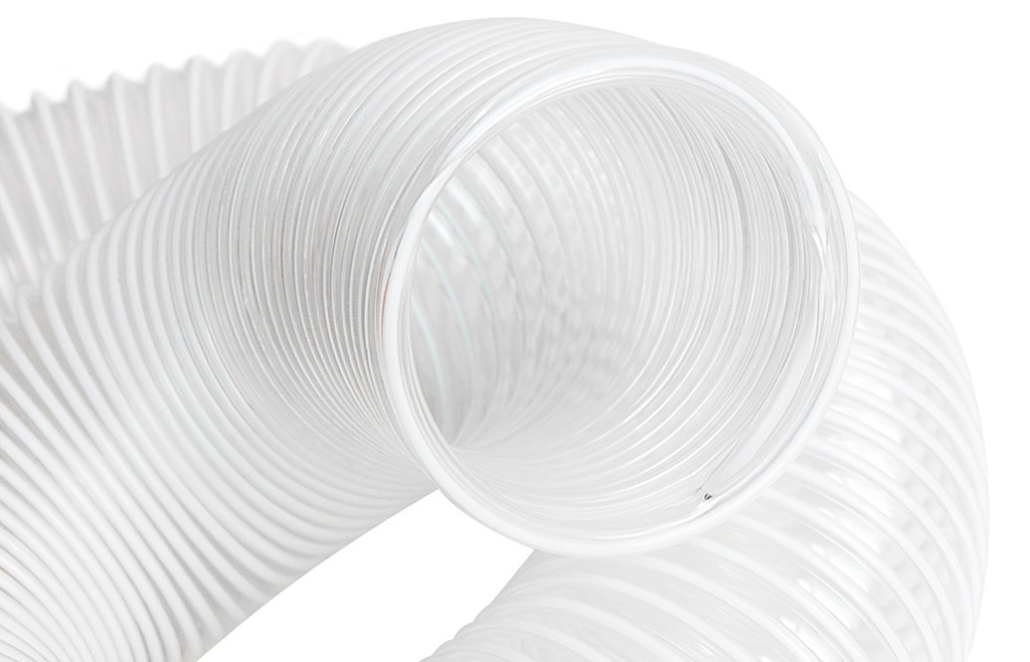
PVC Air Duct Hose
- PU Air Duct Hose: Made from polyurethane, a more elastic polymer. It usually features a copper-plated or stainless steel wire helix. PU hoses are often translucent, allowing you to see the material flow inside.
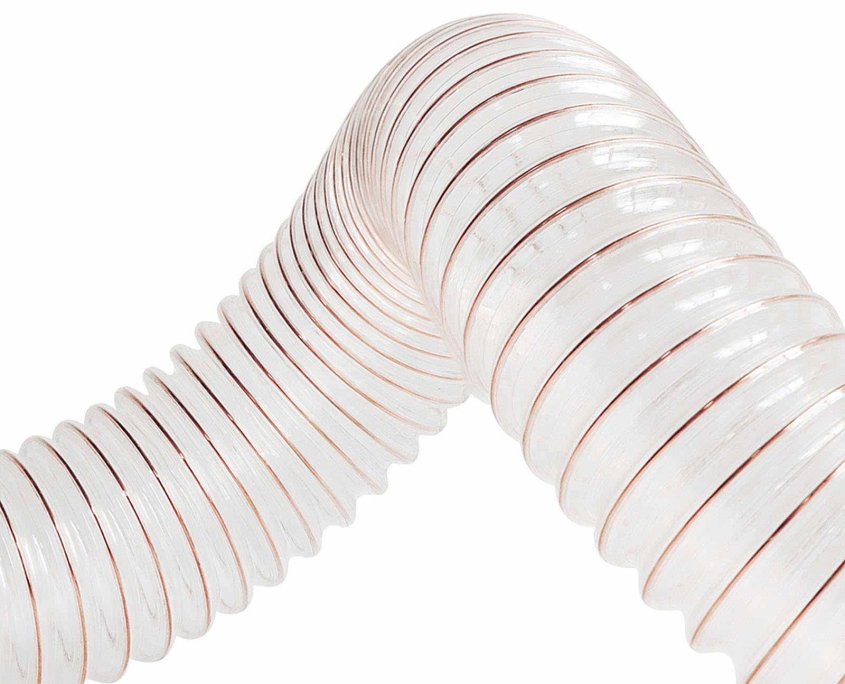
PU Air Duct Hose
2. Flexibility & Handling
- PVC Air Duct Hose: PVC hoses are generally stiffer. In cold environments, they become hard and brittle, making them difficult to maneuver around tight corners.
- PU Air Duct Hose: PU remains flexible even at sub-zero temperatures (often down to -40°C). It has excellent “memory,” meaning it springs back to its original shape after being bent or kinked. This makes it ideal for robotic arms or tight spaces.
3. Abrasion Resistance (Durability)
- PVC Air Duct Hose: PVC offers decent abrasion resistance for light dust, but it will wear down quickly when moving sharp materials like metal shavings, sand, or gravel.
- PU Air Duct Hose: PU has a much higher tear and abrasion resistance (often 3-5x better than PVC). It is the standard choice for moving heavy, abrasive granules, powders, or wood chips.
4. Temperature Range
- PVC Air Duct Hose: Generally rated for -20°C to +70°C (Short time to 80°C). It becomes brittle in freezing weather and softens in high heat.
- PU Air Duct Hose: Generally rated for -40°C to +90°C (Short time to 125°C). PU handles extreme cold far better, but specific flame-retardant ratings vary by grade.
5. Chemical Resistance
- PVC Air Duct Hose: Excellent resistance to acids, alkalis, and inorganic chemicals. However, it swells when exposed to oils, solvents, or hydrocarbons (gasoline/diesel).
- PU Air Duct Hose: Excellent resistance to oils, greases, fuels, and hydrocarbons. However, it degrades in strong acids, hot alkalis, and certain steam environments.
Rule of thumb: Use PU for oil/fuel mist; use PVC for chemical fumes/acids.
6. Cost & Value
- PVC Air Duct Hose: Significantly cheaper to manufacture. If you are moving dry air, light sawdust, or need a temporary vent, PVC is very cost-effective.
- PU Air Duct Hose: Higher initial cost. However, because it lasts much longer in abrasive applications, the total cost of ownership is often lower for industrial use.
Which One Should You Buy?
-
Buy PVC Duct Hose if:
You are on a tight budget.
You are moving air, light dust, or smoke.
The hose will be used indoors in a stable temperature.
You need resistance to strong acids or alkalis.
The application is temporary or short-term.
-
Buy PU Duct Hose if:
You are moving sharp or heavy materials (gravel, sand, pellets, metal chips).
The hose is used in a cold warehouse or outdoor winter environment.
You need to see the material flow (visibility).
The hose will be dragged across rough floors (high mechanical stress).
You are handling oil mist, fuel vapors, or grease.

