
You are here: Home1 / Blog2 / Product Knowledge3 / What is an Air Duct Hose? A Complete Guide to Flexible Ventilation
What is an Air Duct Hose? A Complete Guide to Flexible Ventilation
As one of the most common types of hoses used in industrial and commercial systems, air duct hoses are capable of conveying media such as gases, flue gases, dust, or lightweight materials. Their primary functions include ventilation, exhaust, air supply, and dust removal, facilitating air circulation between indoor and outdoor environments or reducing indoor air pollution. They are commonly found in the ventilation systems of various commercial and residential buildings, chemical plants, and homes.
To ensure the system operates normally and stably, thereby maintaining an environment that meets standards, it is essential to select the appropriate air duct hose based on specific requirements, taking into account factors such as material, dimensions, and length.
Drawing on our professional knowledge and experience, Utigoflex has compiled this guide on air duct hoses to help you select the one that best suits your application needs.
What are the Components of a Air Duct Hose?
Although air duct hose has a relatively limited range of applications, there are some variations in its structural composition depending on specific requirements. It is typically composed of three layers:
- Inner tube: Used to transport the medium. To ensure good flow, the inner tube’s surface must be smooth.
- Reinforcement Layer: During the intake or exhaust of gases, pressure differentials can cause the hose to collapse. To prevent this, spiral metal wires are embedded within the hose wall to maintain its shape.
- Outer Layer: As the outermost layer, it must resist abrasion, chemical exposure, and temperature fluctuations to ensure the hose’s long-term operational reliability.
Materials for Air Duct Hose
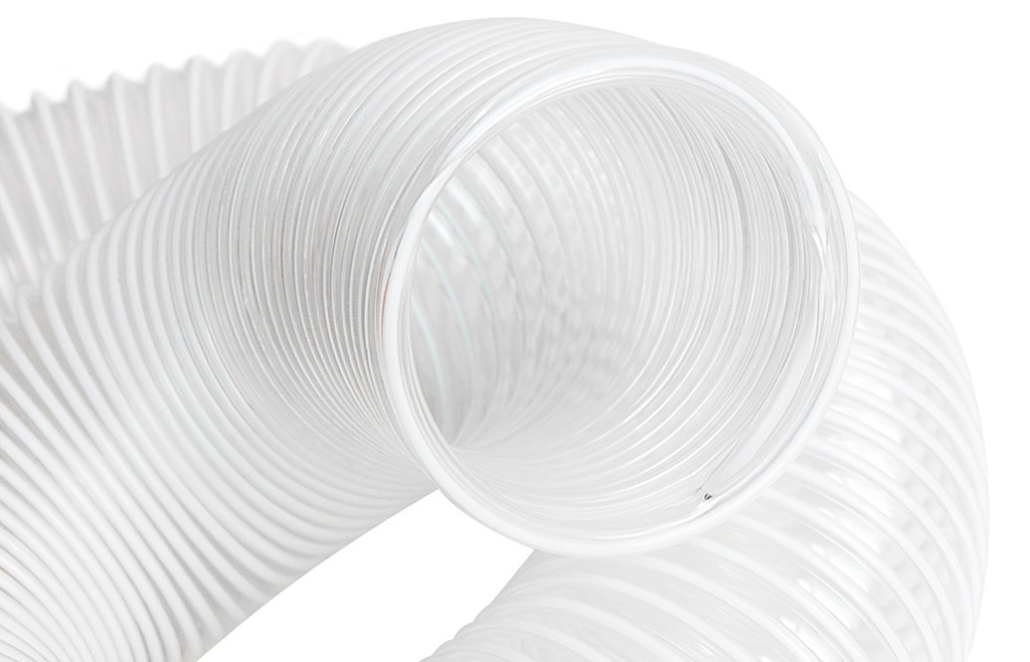
1. PVC Air Duct Hose
PVC air duct hoses offer outstanding value for money. They are lightweight and flexible, making installation quick and easy. Resistant to moisture, acids, and alkalis, they are ideal for everyday ventilation applications such as indoor air conditioning, fresh air supply, and exhaust of exhaust gases at room temperature. With a long service life, they are reliable and durable in normal temperature environments, making them the top choice for flexible ducting in residential and light-duty industrial ventilation systems.
2. PU Air Duct Hose
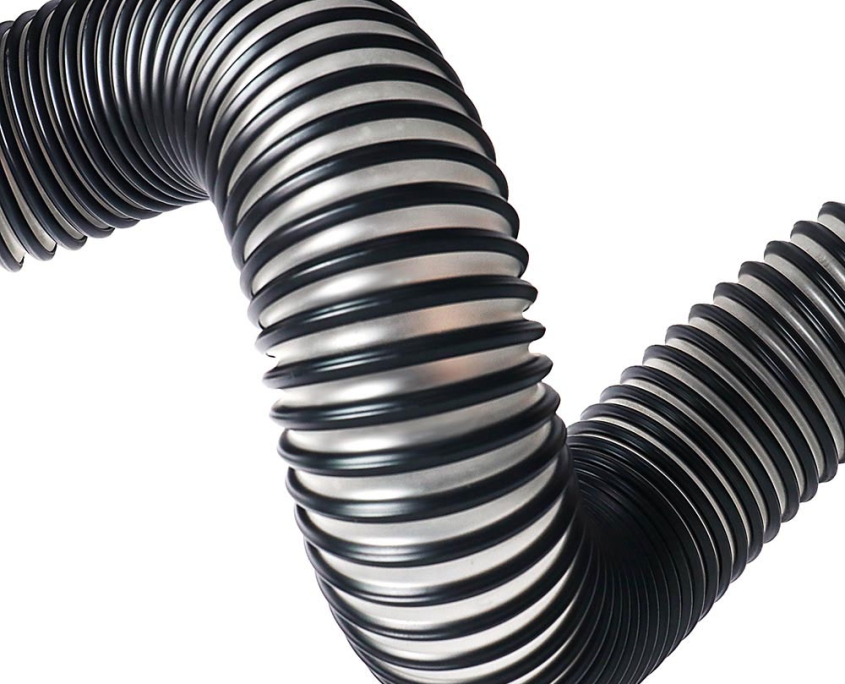
PU air duct hoses feature excellent abrasion resistance. Their smooth inner walls ensure unobstructed airflow, while their high flexibility makes them resistant to damage and kinking. They also offer strong resistance to negative pressure. Widely used for woodworking dust extraction, workshop dust suction, and the conveyance of particulate materials, these hoses resist aging and cracking even under long-term, high-frequency use, making them a premium choice for industrial dust extraction and ventilation applications.
3. Rubber Air Duct Hose
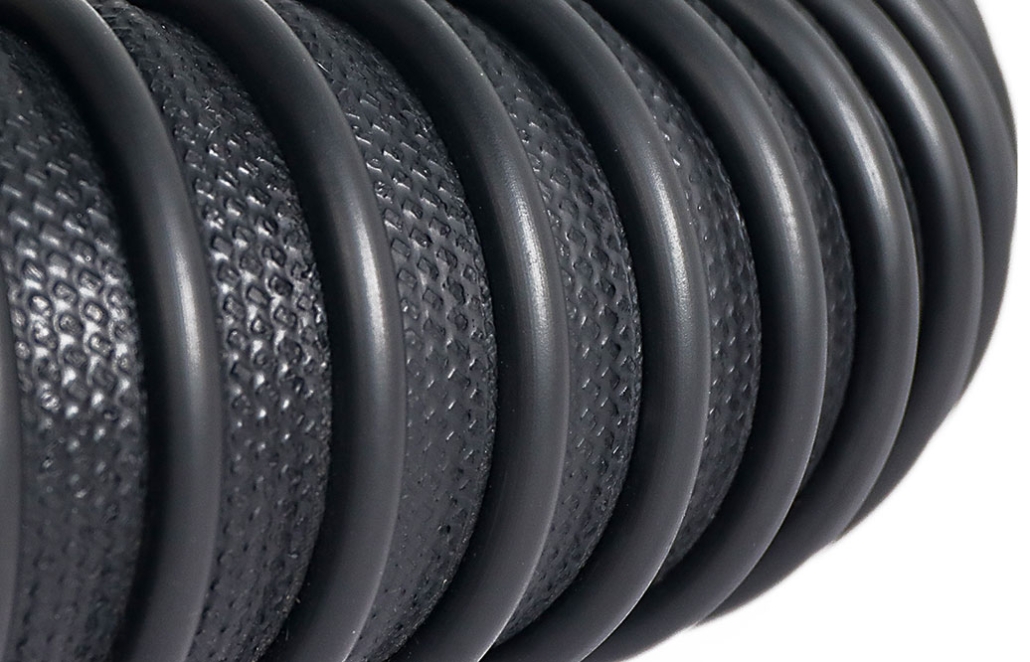
Rubber air duct hoses are robust and durable, resistant to compression, crushing, and tearing, and resistant to deformation. They withstand aging in outdoor environments, adapt well to high and low temperatures, and have excellent negative pressure tolerance. They are suitable for mine tunnel ventilation, heavy-duty workshop exhaust, and heavy industrial smoke and dust extraction, remaining stable and durable even under harsh operating conditions.
4. Silicone Air Duct Hose
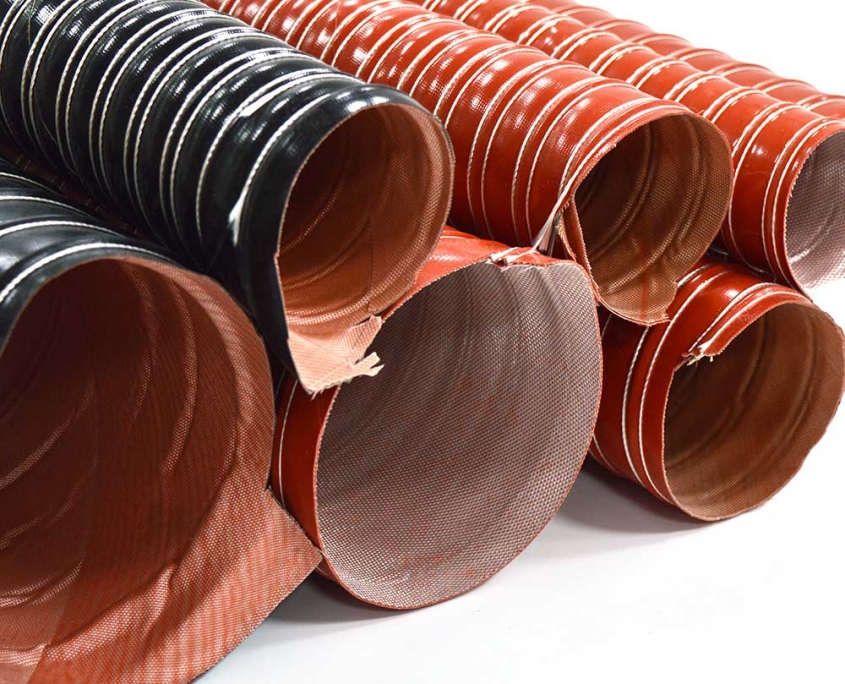
Silicone air duct hoses offer outstanding high-temperature resistance and slow aging even under alternating hot and cold conditions. They are eco-friendly, odorless, flexible, and easily bendable and expandable. Specifically designed for high-temperature hot air conveyance, boiler flue gas exhaust, and high-temperature heat dissipation and exhaust from equipment, they remain resistant to deformation and embrittlement during long-term high-temperature operation, making them a high-quality air duct solution for high-temperature ventilation applications.
| Pipe fittings | temperature-resistant | wearproof | Resistant to negative pressure | Price | Key scenarios |
|---|---|---|---|---|---|
| Rubber Air Duct Hose | Medium to high temperatures | Excellent | Extremely Strong | Excessive | Mining, heavy industry, and heavy-duty outdoor ventilation |
| PU Air Duct Hose | at room temperature | Top-tier | Strong | Intermediate | Dust, woodworking, particle extraction |
| PVC Air Duct Hose | Low temperature | General | General | Lowest | Air conditioning fresh air supply and standard indoor exhaust ventilation |
| Silicone Air Duct Hose | Extremely high temperatures | General | Medium | the Most Expensive | Hot air, high-temperature flue gas, high-temperature exhaust gas for environmental protection |
Common Applications of Air Duct Hoses
1. Household Dryers
The silver, crinkly hose connecting your clothes dryer to the wall vent is an air duct hose. It allows the dryer to vibrate and shift slightly without cracking the rigid wall pipe.
2. Grow Tents & Hydroponics
Indoor gardeners use duct hoses to vent hot air out of a grow tent and bring fresh, cool CO2 in. It allows them to position fans and carbon filters exactly where needed.
3. Industrial Fume Extraction
In factories or workshops (welding, laser cutting, chemical labs), duct hoses suck dangerous fumes, smoke, and dust away from the worker’s breathing zone and out of the building.
4. Portable Air Conditioning
Those window kits for portable AC units? That’s a specialized air duct hose. It exhausts the hot air generated by the compressor outside.
5. Marine & Automotive
Used to ventilate engine rooms on boats or to direct heat away from brake systems and engines in race cars.
How to Choose the Right Air Duct Hose
Choosing a suitable air duct hose is very simple. First, check your working temperature. Use PVC duct hose for normal room temperature ventilation, PU hose for dust and particle suction, rubber duct hose for heavy industrial and outdoor harsh environments, and silicone flexible duct for high temperature hot air exhaust.
Second, consider air pressure and bending distance. Flexible lightweight hoses fit small space ventilation, while thick reinforced hoses can resist large negative pressure and avoid collapsing during use.
At the same time, choose wear-resistant materials according to frequent friction working conditions, and select waterproof and corrosion-resistant duct hose for humid and dusty workshops. Proper size, good softness and long service life can greatly improve your ventilation efficiency and reduce later maintenance costs.

