
You are here: Home1 / Blog2 / Product Knowledge3 / Guide to SAE 100 Hydraulic Hose Standards (R1 to R17)
SAE 100 Hydraulic Hose Standards Explained: The Ultimate B2B Selection Guide
In modern industrial and mobile fluid power systems, hydraulic hoses serve as the critical backbone. Whether powering heavy-duty excavators on construction sites, forklifts in logistics hubs, agricultural tractors, high-capacity industrial presses, or precision aircraft controls, these flexible conduits ensure that fluid moves safely and efficiently under extreme pressure.
However, with dozens of different technical specifications available, selecting the exact hose for your machinery can feel overwhelming. That is where the SAE 100 series (SAE J517) standards become essential.
Developed by SAE International, these universal standards classify hydraulic hoses from R1 to R17 based on structural construction, pressure capabilities, bend radius, temperature resistance, fluid compatibility, and intended applications . Understanding these standards is the key to improving system safety, reducing unexpected downtime, and extending equipment life.
In this comprehensive B2B guide, Utigoflex breaks down every major SAE hydraulic hose standard to streamline your procurement process.
1. Why Do SAE 100 Standards Matter?
Hydraulic systems typically operate under intensely high pressures. A single hose assembly failure can lead to catastrophic business and safety risks:
- Dangerous Safety Hazards: High-pressure leaks can cause severe fluid injection injuries through human skin or cause workplace accidents.
- Expensive Equipment Damage: Ruptured lines can starve hydraulic pumps or damage surrounding mechanical components.
- Costly Operational Downtime: When a critical machine stops on a job site, it halts production lines and drains profitability.
- Environmental & Efficiency Losses: Oil leaks lead to environmental contamination and drastically reduce hydraulic efficiency.
The SAE 100 standards solve these industrial challenges by enforcing consistent manufacturing and testing requirements across the global fluid power industry.
Key Benefits of SAE Standardization
- Interchangeability: An SAE 100R2 hose from one certified manufacturer will perform similarly to another brand’s R2 hose, ensuring supply chain flexibility.
- Strict Safety Compliance: Certified hoses must pass rigorous factory testing for burst pressure, impulse cycles, temperature resistance, flexibility, and pressure endurance .
- Reliable System Compatibility: Standardized dimensions simplify the process of choosing matching hydraulic fittings, ferrules, and adapters during routine maintenance.
2. Understanding Hydraulic Hose Construction Layers
Before choosing a specific standard, it is vital to understand how these high-pressure conduits are built. Most industrial hydraulic hoses are engineered using a specialized three-layer anatomy:
- Inner Tube: The innermost layer that directly carries the hydraulic fluid. It must possess excellent chemical compatibility with mineral oils, bio-oils, or synthetic fluids to prevent degradation.
- Reinforcement Layer: The structural heart of the hose that handles all system pressure. It can consist of wire braid, spiral wire, textile braid, or thermoplastic fiber . The stronger this reinforcement layer, the higher the pressure capability.
- Outer Cover: The external shield that protects the internal reinforcement from abrasion, oil splashes, ozone, harsh weather, and corrosive chemicals.
3. Comprehensive Breakdown of SAE 100 Hose Standards (R1 to R17)
Category A: Wire-Braided Rubber Hoses (Medium to High Pressure)
SAE 100 R1 – Single Wire Braid Hose
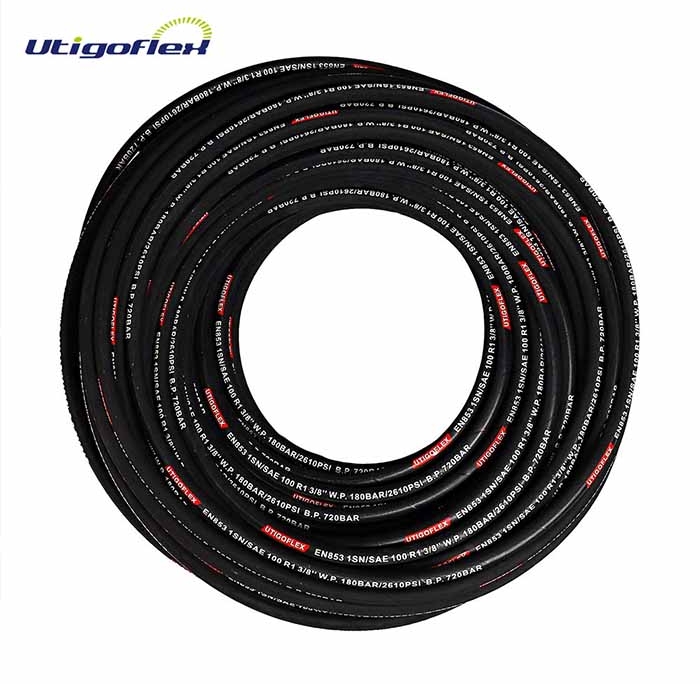
SAE 100 R1 / DIN EN 853 1SN
- Construction: Formulated with an oil-resistant synthetic rubber inner tube, one layer of high-tensile steel wire braid reinforcement, and a weather-resistant outer cover.
- Pressure Profile: Tailored for medium-pressure systems. A standard 1/4-inch R1 hose supports approximately 3,260 PSI.
- Common Applications: Widely utilized in agricultural equipment, hydraulic return lines, small industrial machines, and light construction equipment .
- B2B Advantage: Highly flexible, easy to route in tight spaces, widely available, and highly economical .
SAE 100 R2 – Double Wire Braid Hose
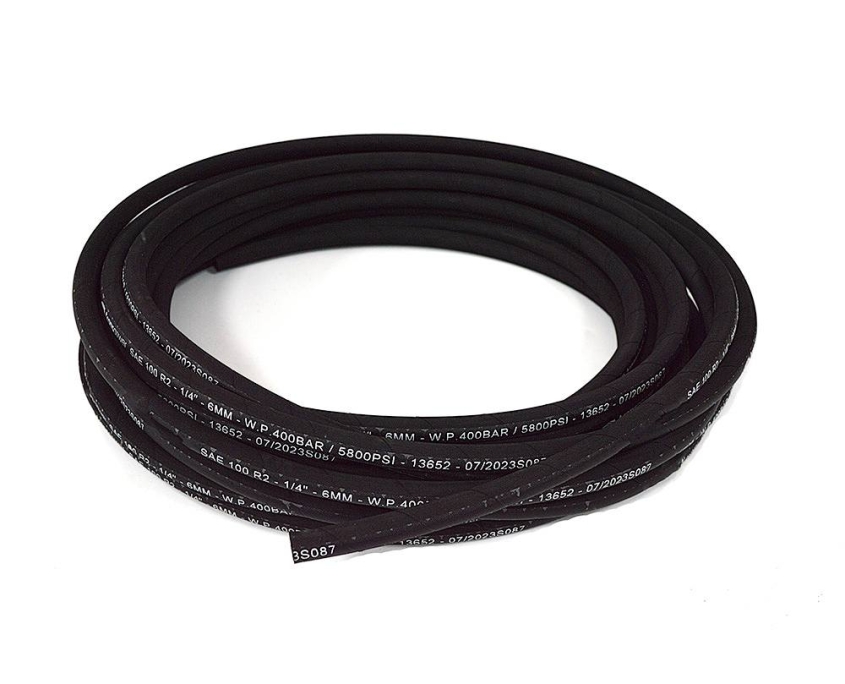
- Construction: Features two steel wire braid reinforcement layers embedded between the synthetic rubber inner tube and an abrasion-resistant outer cover.
- Pressure Profile: Engineered for high-pressure industrial systems. A typical 1/4-inch R2 hose delivers approximately 5,800 PSI working pressure.
- Common Applications: Considered the undisputed industry “workhorse,” it is the primary choice for excavators, general industrial hydraulics, mobile heavy equipment, and hydraulic lifts.
- Why It Leads: Compared to R1, it delivers substantially higher pressure capacity, improved impulse resistance, and an extended field service life.
SAE 100 R5 – Textile Covered Hose
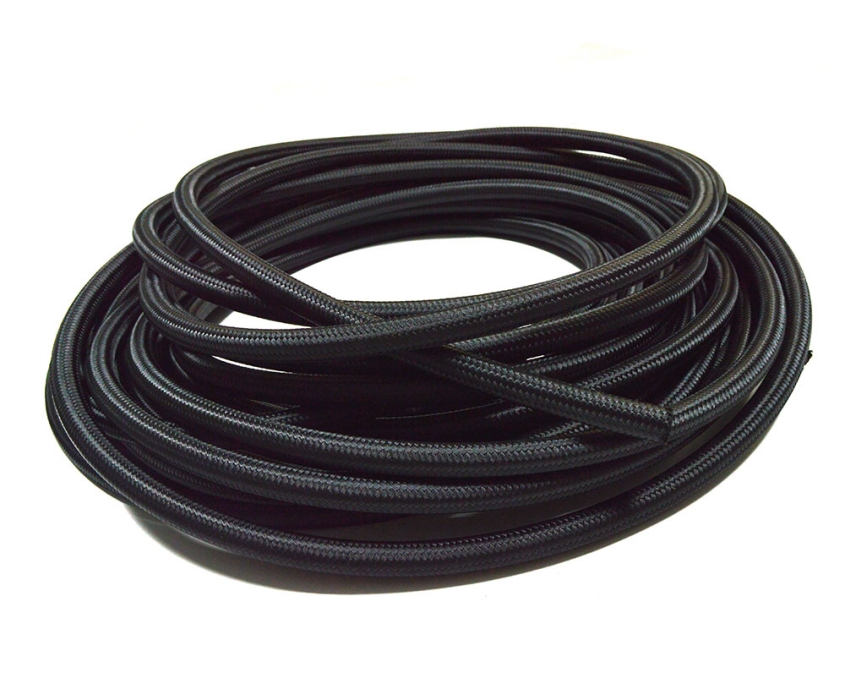
- Construction: Built with a synthetic rubber tube, a single wire braid reinforcement layer, and a unique textile braided outer cover.
- Common Applications: Heavily utilized in air brake systems, power steering lines, fuel transfer lines, and transportation machinery.
- B2B Advantage: Delivers a highly compact outer diameter, lightweight design, and exceptional flexibility for automotive engine bays where installation space is severely restricted
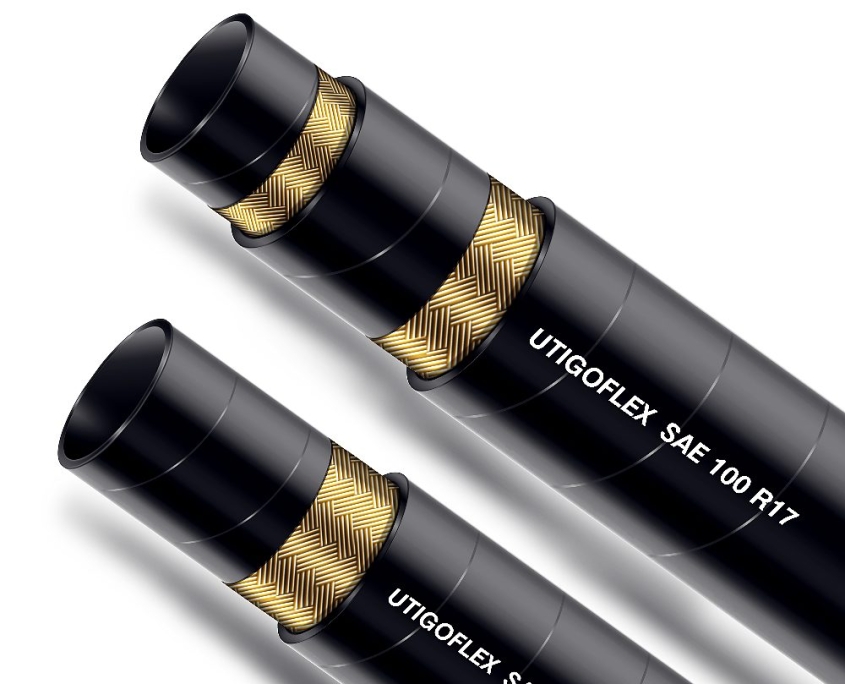
SAE 100 R16 & SAE 100 R17 – Compact & Ultra-Compact Hoses
- SAE 100 R16: Features a compact braided design that offers an approximately 50% tighter bend radius compared to standard R2 hoses, making it an ideal upgrade for modern tight engine compartments
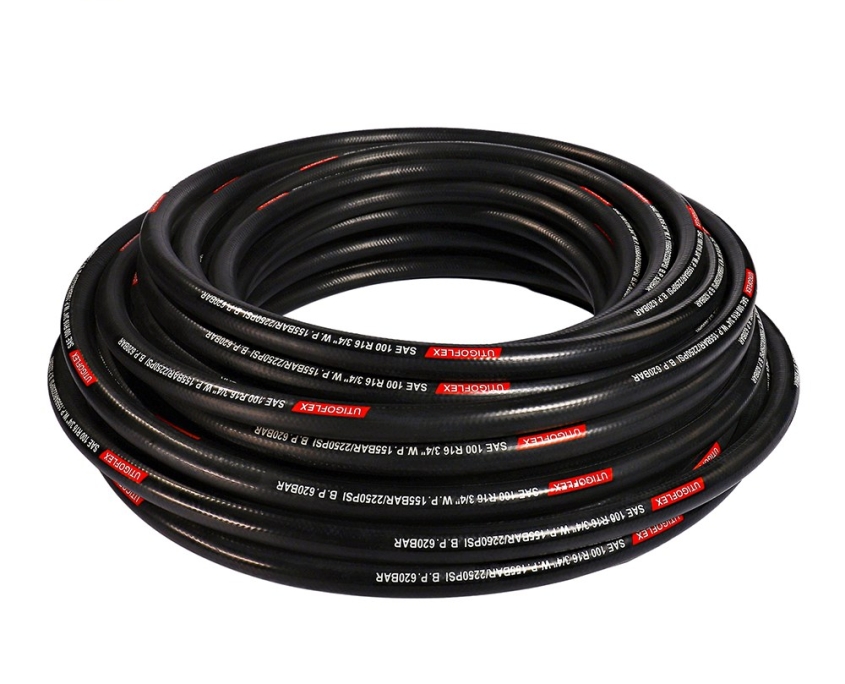
- SAE 100 R17: An ultra-compact design utilizing one or two wire braid layers to support stable working pressures up to 3,045 PSI . It is perfect for modern automation systems and compact cylinders where an R2 hose simply cannot fit
Category B: Spiral Wire Rubber Hoses (Heavy-Duty & Extreme Impulse)
When heavy machinery subjects lines to continuous, severe pressure spikes (impulses), braided hoses can suffer wire fatigue. Heavy-duty spiral wire configurations are engineered to prevent this.
SAE 100 R12 – Heavy-Duty 4-Spiral Hose
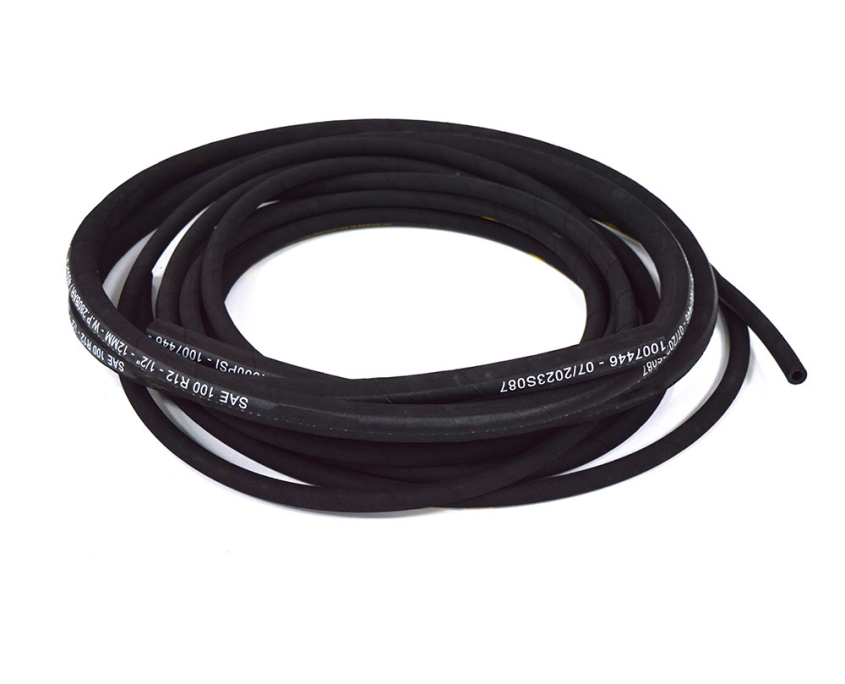
- Construction: Built with four layers of heavy, alternating spiral-wound steel wire reinforcement .
- Pressure Profile: Delivers very high working pressures, typically ranging between 2,540 and 4,060 PSI.
- Common Applications: Specially designed for heavy mining machinery, large construction equipment, heavy industrial hydraulic power units, and long fluid lines prone to intense pressure surges .
SAE 100R13 & R15 – Ultra High-Pressure Giants
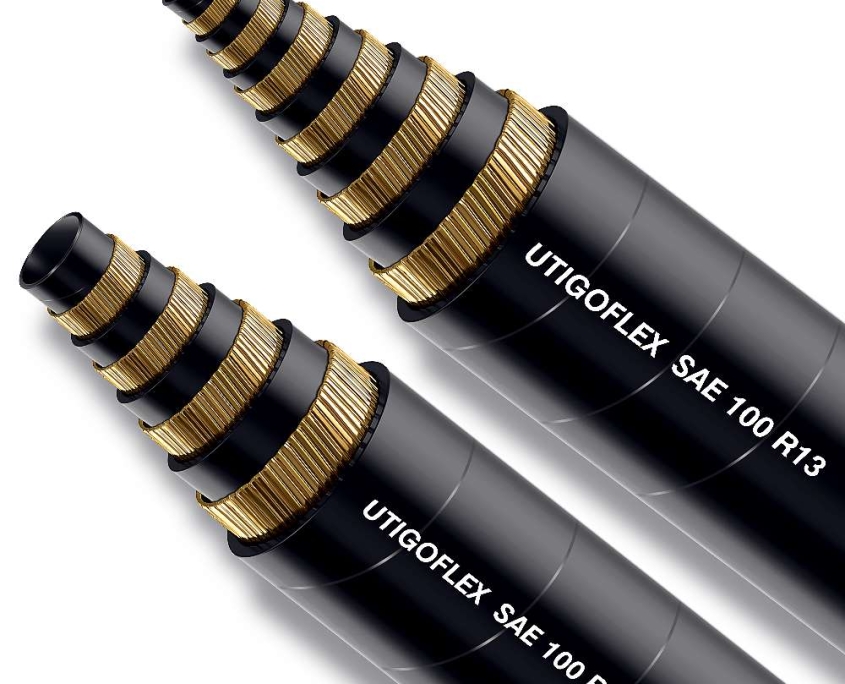
- SAE 100 R13: Utilizes multiple heavy spiral wire layers to deliver extreme pressure capabilities and superior impulse cycle life in the toughest environments like steel mills, offshore platforms, and ultra-heavy excavators .
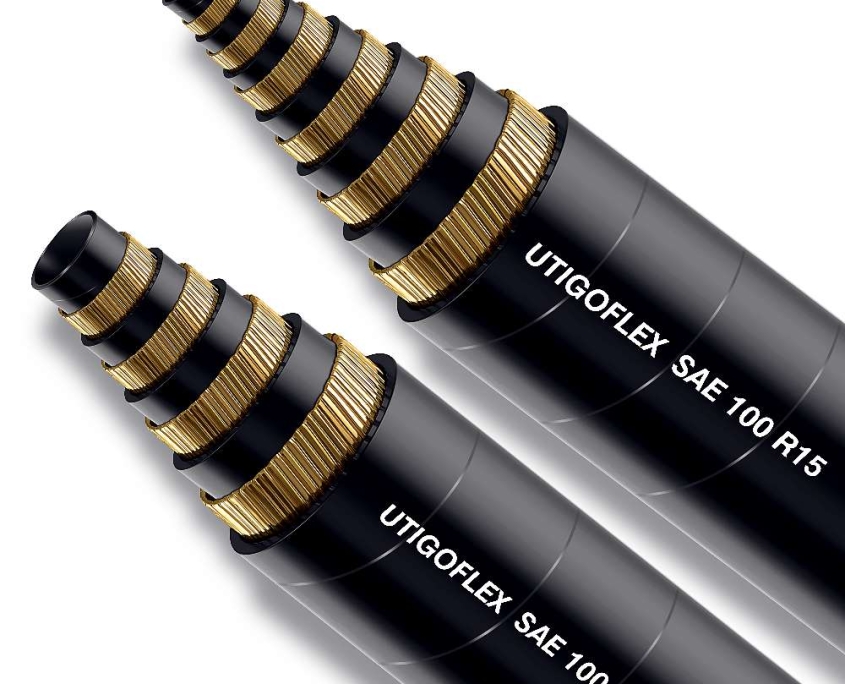
- SAE 100 R15: Combines the extreme pressure capabilities of R13 with a highly compact outer diameter profile . It is ideal for confined high-pressure installations on offshore drilling rigs and heavy lifting systems .
Category C: Thermoplastic & Specialty Hoses
SAE 100R7 & R8 – Thermoplastic Innovations
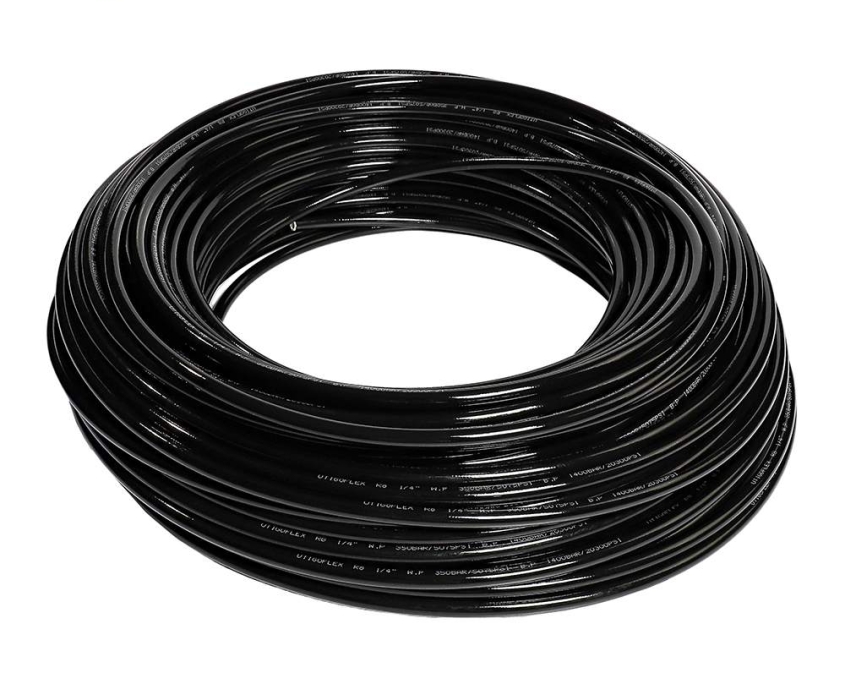
- SAE 100 R7: Constructed with a thermoplastic nylon inner tube, synthetic fiber reinforcement, and a smooth polyurethane cover . It provides a medium-to-high pressure profile, excellent chemical resistance, a small bend radius, and is widely available in non-conductive options for robotics and utility line trucks.
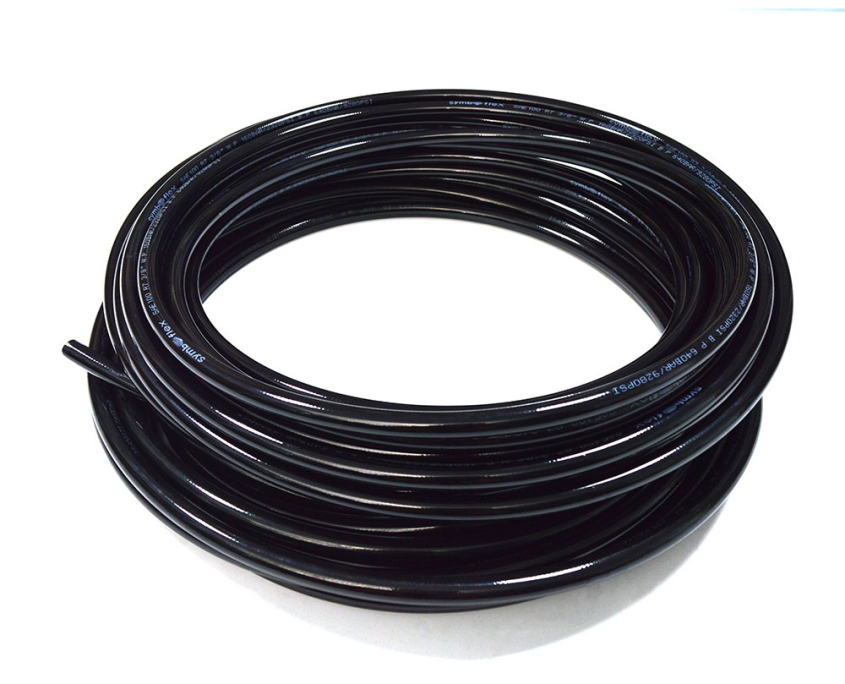
- SAE 100 R8: A reinforced thermoplastic line that offers high-pressure capabilities comparable to R2 rubber hoses, but with major weight reduction and a much tighter bend radius for forklifts and high-speed industrial automation tools.
SAE 100R14 – PTFE (Teflon) Specialty Hose
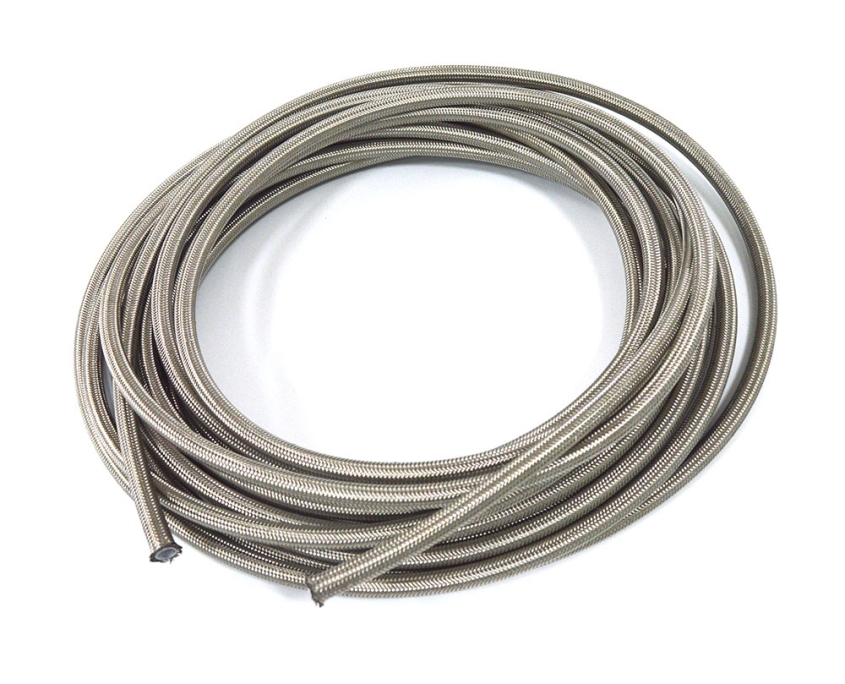
- Construction: Features a chemically inert PTFE (Teflon) inner tube reinforced with an external high-tensile stainless steel wire braid.
- Temperature Spectrum: Offers an incredibly wide operating temperature window from -54°C to +204°C.
- Common Applications: The premier choice for aggressive chemical transfer, high-temperature steam lines, and highly corrosive operating environments .
Category D: Low-Pressure, Suction, & Lubrication Hoses
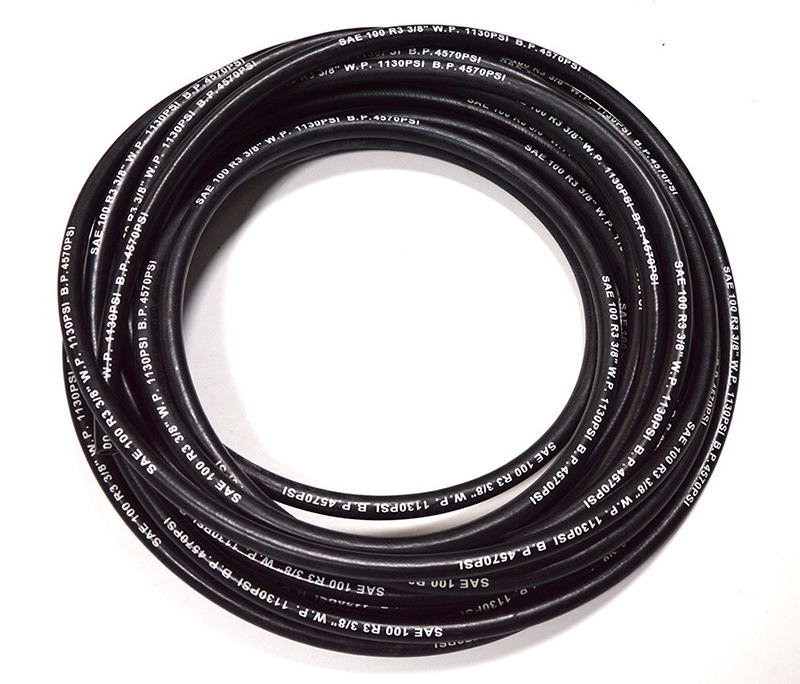
- SAE 100 R3: Utilizes textile fiber braid reinforcement for low-to-medium pressure return lines, fuel transfer, and lubrication systems .
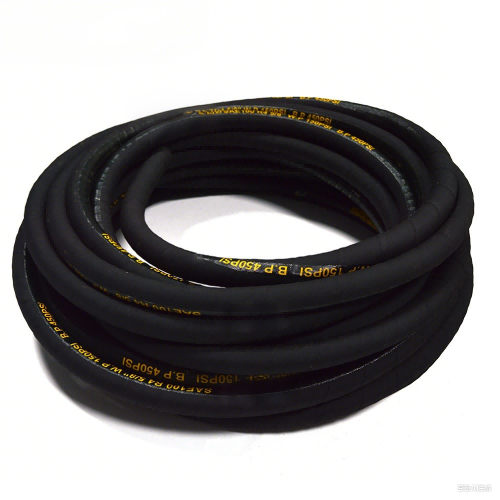
- SAE 100 R4: Features an embedded steel wire helix within the synthetic rubber tube . This specialized design prevents hose collapse under high negative pressure, making it the industry standard for hydraulic suction lines and vacuum service.
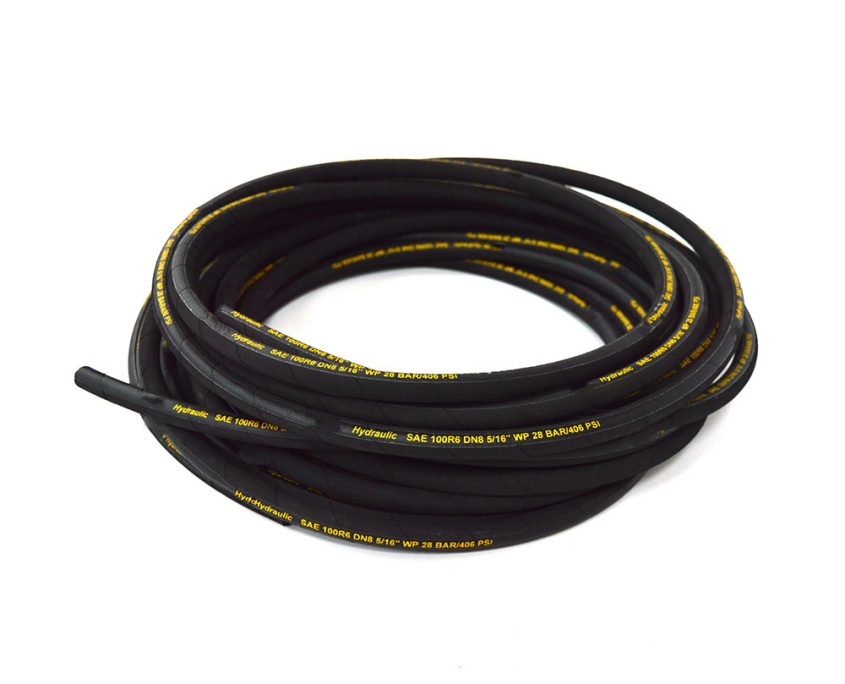
- SAE 100 R6: A lightweight, highly economical, non-steel textile braided line optimized purely for low-pressure lubrication and standard return lines .
4. Quick Reference Matrix: SAE 100 Comparison Table
| SAE Standard Type | Reinforcement Material & Type | Pressure Level | Bend Radius Profile | Primary Industrial Application |
| R1 |
Single Steel Wire Braid |
Medium |
Standard |
General hydraulics & return lines |
| R2 |
Double Steel Wire Braid |
High |
Standard |
Heavy industrial machinery & excavators |
| R3 |
Textile Fiber Braid |
Medium-Low |
Good |
Low-pressure return & air lines |
| R4 |
Embedded Steel Wire Helix |
Low / Vacuum |
Large |
Hydraulic suction & vacuum systems |
| R5 |
Single Steel Wire + Textile Braid |
Medium |
Good |
Air brakes & transportation systems |
| R6 |
Single Textile Braid Only |
Low |
Excellent |
Plant lubrication & low-pressure transfer |
| R7 |
Thermoplastic / Synthetic Fiber |
Medium-High |
Excellent |
Plant robotics & mobile automation lines |
| R8 |
High-Strength Fiber Thermoplastic |
High |
Excellent |
Hydraulic tools & compact forklifts |
| R12 |
Four-Layer Heavy Spiral Wire |
Very High |
Moderate |
Mining machinery & heavy construction |
| R13 |
Multiple Heavy Spiral Wire Layers |
Extreme |
Moderate |
Steel mills & ultra-heavy fluid power |
| R14 |
PTFE Tube + Stainless Steel Braid |
Medium-High |
Good |
Chemical transfer & high-temperature steam |
| R15 |
Compact Heavy Spiral Wire Layers |
Extreme |
Tight |
Offshore drilling & confined high-pressure |
| R16 |
Compact Steel Wire Braid |
High |
Tight |
Compact loaders & tight engine bays |
| R17 |
Ultra-Compact Steel Wire Braid |
Medium-High |
Ultra-Tight |
Automated cylinders & tight component routing |
5. Five Critical Factors for Choosing the Right Hose
To avoid premature system failures, procurement managers and engineers should evaluate these five core variables based on the SAE framework:
- Working Pressure: Always choose a hose with a maximum working pressure rating equal to or higher than your system’s peak operating pressure, keeping in mind sudden surges.
- Bend Radius Limitations: Measure your physical routing space. If installation paths require sharp curves, opt for compact alternatives like R16 or R17 to prevent kinking.
- Temperature Dynamics: Continuous extreme heat weakens standard rubber covers. If handling high-temperature fluids or working near steam, select specialized materials such as R14 PTFE lines.
- Fluid Compatibility: Ensure that the inner tube elastomer is chemically compatible with the media being transferred to prevent inner wall degradation or system contamination.
- Impulse Cycles: For heavy machinery subject to continuous, violent pressure shocks, always specify heavy-duty spiral wire options (like R12 or R13) rather than standard braided hoses.
6. Maintenance & Inspection: Preventing Costly Hose Failures
Most field failures stem from preventable operating conditions:
- Abrasion Damage: Continuous rubbing against metal brackets wears down outer covers and exposes steel wires.
- Improper Installation: Over-bending, twisting, or stretching lines during assembly drastically shortens service lifespan.
- Pressure Spikes: Sudden hydraulic surges can easily burst an undersized or incorrectly rated hose.
Preventive Action Checklist:
To maximize your factory uptime, enforce these routine maintenance tips:
- Inspect all high-pressure lines regularly for external cuts or weeping fittings.
- Replace any worn or blistered hoses immediately before a catastrophic rupture occurs.
- Implement protective sleeves or guards to mitigate continuous mechanical abrasion.
- Always match hoses with precision-calibrated fittings and adhere strictly to manufacturer pressure guidelines.
Conclusion: Partner with Utigoflex for Certified Fluid Power Excellence
Choosing the correct hydraulic hose according to global SAE standards ensures heightened plant safety, optimized machine efficiency, longer equipment lifespans, and reduced routine maintenance costs . Whether you are designing an automated assembly system from scratch or replacing heavy construction lines in the field, knowing your SAE 100 standards helps you make smarter, data-driven decisions.
One-Stop Hydraulic Solutions from Utigoflex:
At Utigoflex, we manufacture a versatile selection of premium hydraulic hoses that strictly comply with international SAE 100 standards. Leveraging over 17 years of expertise in producing Eaton-standard hydraulic fittings, adapters, and ferrules, we provide fully integrated, perfectly calibrated hose assembly systems that eliminate the risk of field blow-offs.
Related Engineering Resources (Topic Cluster Link)
Once you have selected the proper SAE standard for your hose material, calculating the physical dimension is your next critical step. Read our master companion guide to eliminate pressure drops:
[How to Choose the Right Industrial Hose for Your Application]
Need a Technical Cross-Reference Sheet or a Bulk Quote?
Our technical support engineering team is standing by to help you cross-reference part numbers and match the exact fittings to your hose lines. [Contact Utigoflex Today] to request our complete product catalog or secure a custom quotation for your project.

