
You are here: Home1 / Blog2 / Product Knowledge3 / Understanding Hose Pressure Ratings: Low, Medium, and High Pressure Cl...
Understanding Hose Pressure Ratings: Low, Medium, and High Pressure Classification
Choosing the right hose for your application starts with understanding pressure ratings. Not all hoses are built the same—and using a hose below your system’s pressure is a recipe for bursts, while overspecifying wastes money and reduces flexibility. This guide breaks down low, medium, and high pressure classifications—and shows how Utigoflex helps you pick the perfect match.
1. What Do Pressure Ratings Mean?
Every industrial hose has three key pressure numbers:
- Working Pressure (WP) : The maximum continuous pressure the hose can handle safely.
- Burst Pressure: The pressure at which the hose will fail (typically 3–4× the working pressure).
- Test Pressure: The pressure used for factory quality checks (usually 1.5–2× WP).
Utigoflex tip: We clearly label WP and burst pressure on every hose, so you never guess.
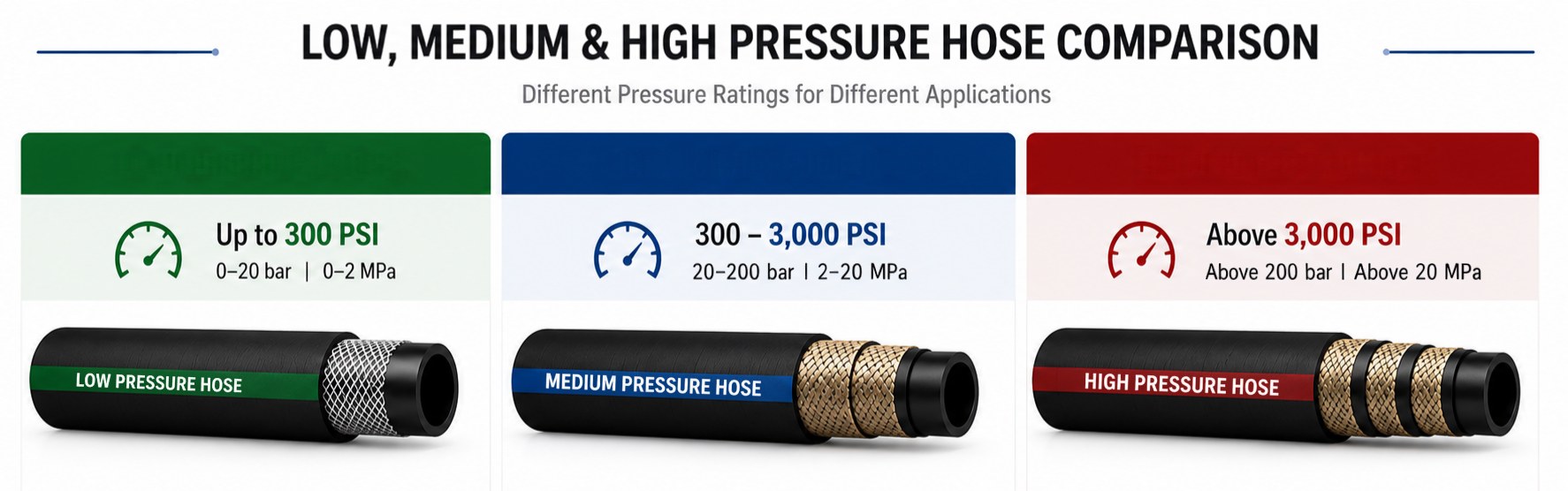
2. Low – Pressure Hoses (Typically ≤ 300 psi / ≤ 20 bar)
Characteristics:
- Reinforcement: Textile or light synthetic yarn (no steel wire).
- Construction: Thin walls, highly flexible, lightweight.
- Temperature range: Usually -20°C to +80°C (depending on material).
Common Applications:
- Return lines in hydraulic systems
- Coolant and water circulation
- Pneumatic air lines
- Lubrication lines
- Low – pressure suction hoses
Selection Tip: Always check that the hose can handle occasional surges—low – pressure hoses have less margin for spikes.
Utigoflex offering: Our PVC and rubber low – pressure hoses feature textile reinforcement and are available in multiple sizes. Perfect for workshop air, water transfer, and return oil lines.
3. Medium – Pressure Hoses (Typically 300–3,000 psi / 20–200 bar)
Characteristics:
- Reinforcement: One or two layers of high – tensile steel wire braid (e.g., SAE 100R1, R2 / EN 853 1SN, 2SN).
- Construction: Stronger than low – pressure, still reasonably flexible.
- Temperature range: -40°C to +100°C (extendable with special compounds).
Common Applications:
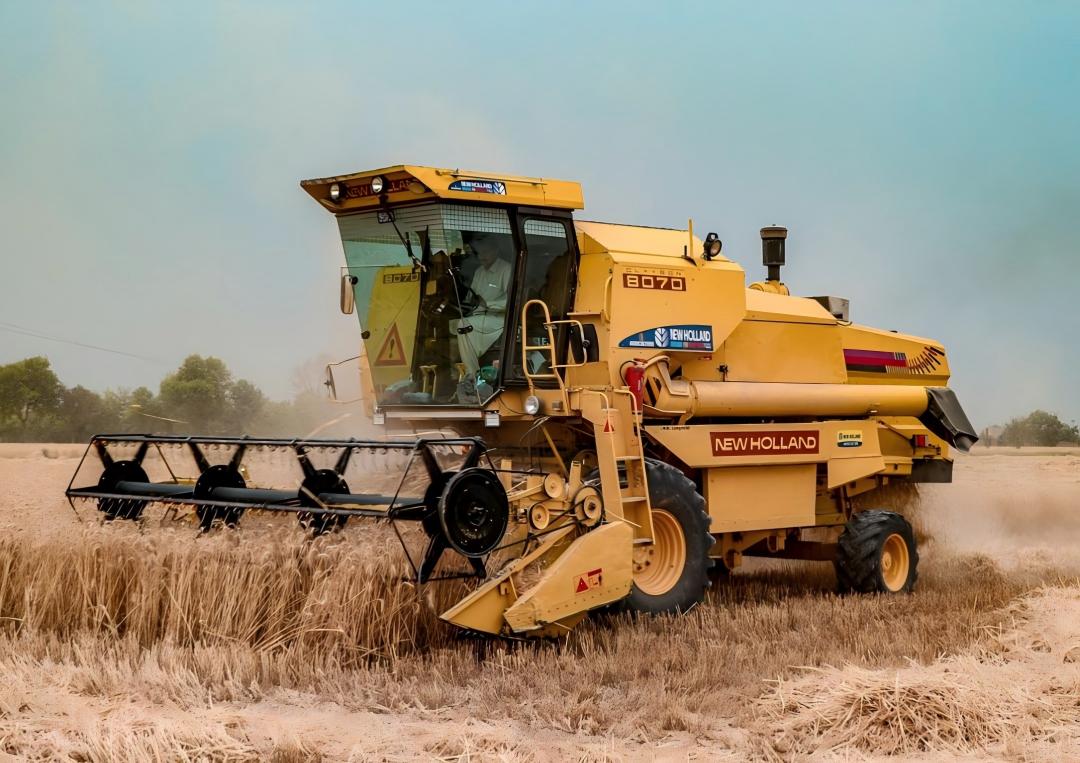
- Agricultural machinery (tractors, harvesters)
- Mobile equipment (forklifts, loaders)
- Industrial power units
- Hydraulic tools (breakers, crimpers)
- Medium – pressure chemical transfer
Selection Tip: If your system has frequent pressure spikes, choose a 2 – wire braid (R2) over a 1 – wire for extra safety.
Utigoflex advantage: Our medium – pressure series includes both 1 – wire and 2 – wire hoses with excellent bend radii. We offer color – coded covers for easy identification on site.
4. High – Pressure Hoses (Typically > 3,000 psi / > 200 bar, up to 6,000+ psi)
Characteristics:
- Reinforcement: Multiple layers of spiral steel wire (e.g., SAE 100R12, R13, R15 / EN 856 4SP, 4SH).
- Construction: Thick walls, less flexible, but extremely durable.
- Temperature range: -40°C to +121°C (special compounds available).
Common Applications:
- Excavators, bulldozers, and mining equipment
- Heavy – duty hydraulic presses
- Offshore and marine hydraulics
- High – pressure water jetting
- Very high – force actuators
Selection Tip: For pressures above 5,000 psi, always use spiral-wire hoses (not braided). Check impulse cycle ratings—high – pressure hoses are tested to 400,000+ cycles.
Utigoflex premium line: Our 4 and 6 – spiral hoses handle extreme pressures with a 4:1 safety factor. We also offer flame – retardant covers for mining and offshore applications.
5. How to Choose the Right Pressure Class
Follow this simple decision tree:
- Determine your maximum system pressure (including surges).
- Add a safety margin – choose a hose with WP at least 1.5× your system max.
- Consider temperature – high heat reduces WP (use de – rating charts).
- Think about impulse – frequent pressure cycles need higher – grade hoses.
- Check your machine’s specification – follow the OEM recommendation.
Utigoflex support: We provide free sizing and pressure – rating advice. Send us your system parameters—we recommend the exact class and model.
6. Common Mistakes to Avoid
- Using a low – pressure hose in a high – pressure circuit – instant burst risk.
- Over – specifying – a high – pressure hose is stiff and hard to route, increasing installation cost.
- Ignoring temperature de – rating – a 300 – psi hose at 23°C may only be 180 – psi at 100°C.
- Forgetting surge pressure – quick – closing valves can spike pressure above the WP.
Utigoflex guarantee: Every hose is pressure – tested and comes with a clear data sheet, including de – rating tables.
Conclusion
Understanding pressure classifications—low, medium, and high—is the first step to a safe and efficient hydraulic system. Low pressure hoses are flexible and economical for return lines and air; medium-pressure braided hoses handle most mobile equipment; high pressure spiral hoses are essential for heavy machinery and extreme forces.
Always match the hose’s working pressure to your system’s maximum, account for temperature and surges, and never compromise on safety.
Build Your Safe Systems with Utigoflex
Utigoflex offers a complete range of pressure-rated hoses—from textile-reinforced low-pressure to 6-spiral high-pressure lines. Every product is clearly labelled, fully traceable, and backed by expert support. Choose Utigoflex and never worry about pressure again.
[Contact Utigoflex Today] to request a specialized quote or download our complete technical assembly catalog.

