
You are here: Home1 / Blog2 / Product Knowledge3 / How to Identify Hydraulic Hose Fitting Threads: A Complete Guide
How to Identify Hydraulic Hose Fitting Threads: A Complete Guide
1. Introduction
Choosing the correct hydraulic hose fitting is essential for creating a secure, leak-free connection in hydraulic systems. However, identifying fitting threads can be challenging because different standards often look similar. A small difference in thread diameter, pitch, or sealing design can cause compatibility problems, fluid leakage, and even equipment failure.
Whether you are replacing an existing fitting, assembling a new hydraulic hose, or purchasing components for industrial equipment, understanding thread identification is an important skill.
In this guide, we will explain how to identify hydraulic hose fitting threads, introduce the most common thread types, and share practical tips for selecting compatible fittings.
2. Why Is Hydraulic Thread Identification Important?
Hydraulic fittings connect hoses, pipes, valves, pumps, and other components. Their threads help secure the connection, while the sealing surface prevents hydraulic fluid from escaping.
Using an incorrect thread can lead to several problems:
- Fluid leakage: Mismatched threads may prevent proper sealing.
- Connection failure: Incorrect engagement can damage threads or loosen under vibration.
- Equipment downtime: Leaks and damaged fittings can interrupt production.
- Safety risks: High-pressure hydraulic fluid can cause serious injection injuries.
For these reasons, identifying the thread type should always come before selecting or installing a replacement fitting.
3. Tools Needed to Identify Hydraulic Fitting Threads
Before starting, prepare a few basic measuring tools:
- Vernier caliper: Measures the outside diameter of male threads or the inside diameter of female threads.
- Thread pitch gauge: Identifies thread pitch or threads per inch (TPI).
- Thread angle gauge: Helps identify the angle of the thread profile or sealing cone.
- Flashlight: Makes it easier to inspect thread conditions, sealing surfaces, and O-rings.
These tools allow you to compare physical measurements with standard fitting specifications rather than relying on visual appearance alone.
4. How to Identify Hydraulic Hose Fitting Threads Step by Step
Follow these five steps to identify an unknown hydraulic fitting.
Step 1: Check the Fitting Markings
Start by inspecting the fitting for stamped codes, manufacturer marks, or size information. Markings such as JIC, BSP, NPT, ORFS, and Metric can provide useful clues.
The equipment’s country of origin may also help narrow down the possibilities, although it should never be treated as definitive proof.
Step 2: Determine Whether the Thread Is Straight or Tapered
Look closely at the thread profile.
- Straight threads: Maintain approximately the same diameter along their length.
- Tapered threads: Gradually increase in diameter toward the fitting body.
- This distinction helps separate parallel-thread connections, such as BSPP and JIC, from tapered connections, such as NPT and BSPT.
Step 3: Measure the Thread Diameter
Use a vernier caliper to measure the thread diameter.
For male fittings, measure across the outermost thread crests. For female fittings, measure the internal thread diameter where accessible.
Compare the result with a reliable hydraulic fitting identification chart. Remember that tapered threads require careful measurement because their diameter changes along the thread length.
Step 4: Measure the Thread Pitch
Thread pitch describes the distance between adjacent thread crests. It is expressed in millimeters for metric threads, while inch-based threads are commonly identified by threads per inch (TPI).
Place the appropriate blade of a thread pitch gauge against the threads. The correct blade should fit closely without visible gaps.
Never identify a fitting based on diameter alone. Different thread systems can have similar diameters but different pitches.
Step 5: Inspect the Sealing Surface
The sealing structure is often the most important clue.
Check whether the fitting has a cone seat, flat sealing face, O-ring, bonded washer, or tapered thread. Even if two fittings have matching thread dimensions, their sealing mechanisms may be completely different.
5. Common Types of Hydraulic Hose Fitting Threads
Understanding the characteristics of common thread standards makes identification much easier.
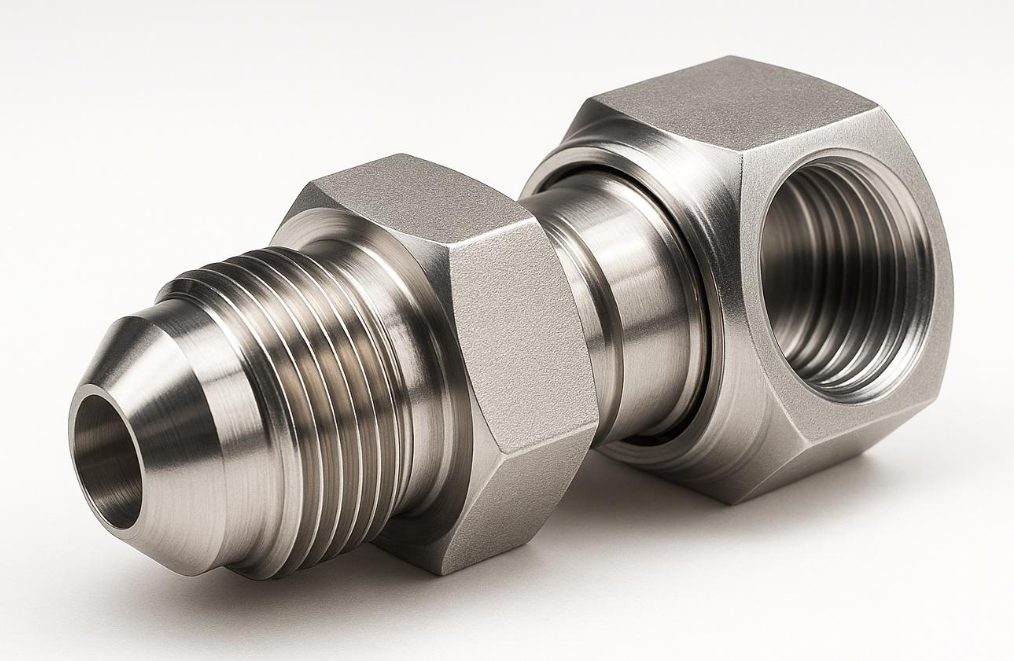
JIC 37° Flare
JIC fittings use a 37-degree flared sealing surface and straight UN/UNF threads. They create a metal-to-metal seal between matching cone surfaces.
They are widely used in mobile hydraulic systems, industrial machinery, and high-pressure applications. JIC fittings are commonly identified by their dash sizes.
NPT (National Pipe Taper)
NPT fittings feature tapered threads with a 60-degree thread angle. The connection relies on thread interference and an appropriate sealing method.
They are frequently found in North American hydraulic and industrial piping systems. NPT should not be confused with BSPT because their thread profiles and pitches differ.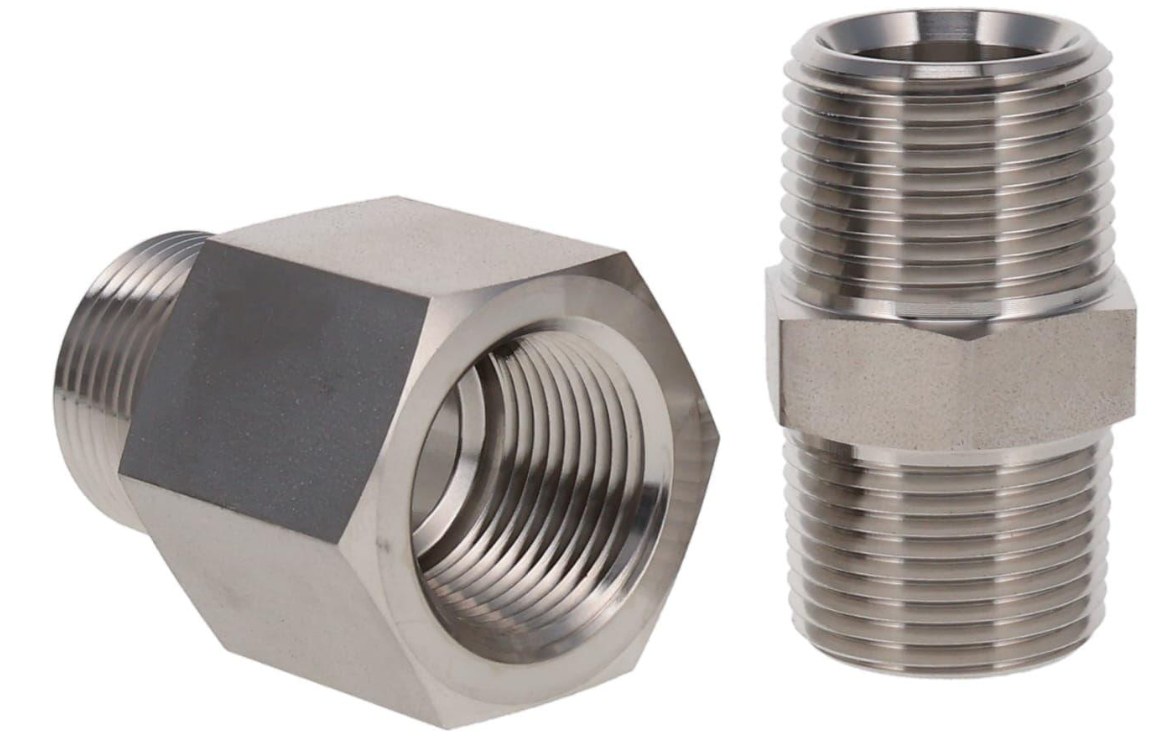
BSP (British Standard Pipe)
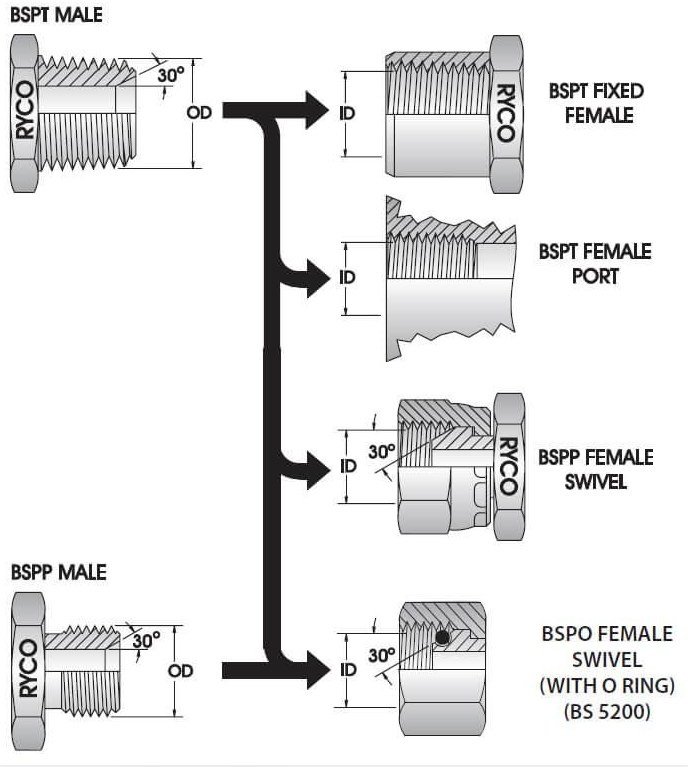
BSP fittings are commonly divided into two categories:
- BSPP: Parallel threads, generally sealing through an O-ring, bonded washer, or other designated sealing surface.
- BSPT: Tapered threads, which seal through thread interference with a suitable sealing method.
- BSP threads have a 55-degree thread angle and are widely used in European, Asian, and other international markets.
ORFS (O-Ring Face Seal)
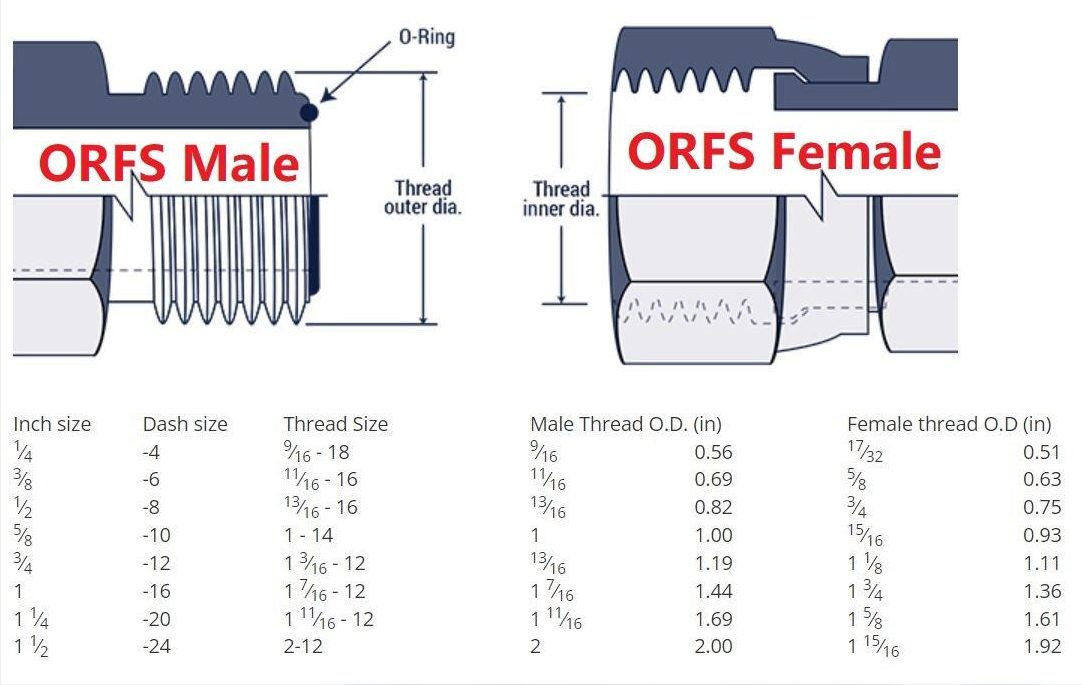
ORFS fittings use straight threads and an O-ring positioned in a groove on the male fitting’s flat face. When tightened against the matching female face, the O-ring creates a reliable seal.
This design is particularly suitable for hydraulic systems where leakage control and vibration resistance are important.
Metric Threads
Metric hydraulic fittings use metric thread dimensions, typically identified by an M designation, such as M18 × 1.5.
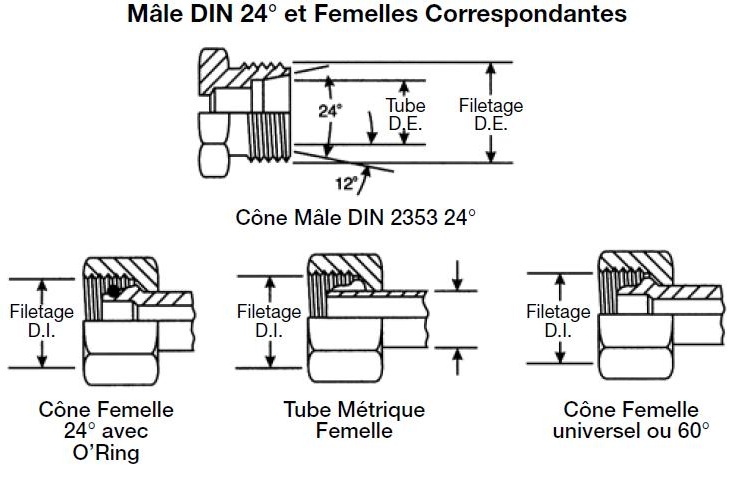
DIN 2353 fittings commonly use a 24-degree cone sealing system and are available in Light (L) and Heavy (S) series. They are widely used in European machinery and industrial hydraulic equipment.
6. Common Mistakes When Identifying Hydraulic Threads
Even experienced technicians can make identification mistakes. Here are some problems worth avoiding:
- Measuring only the diameter: Diameter alone cannot confirm a thread type. Always check pitch and sealing structure.
- Confusing BSP and NPT: Their dimensions may appear similar, but their thread angles and specifications differ.
- Ignoring the sealing method: Matching threads do not guarantee a leak-free connection.
- Mixing different fitting standards: JIC, ORFS, BSP, and Metric fittings should not be interchanged without confirming full compatibility.
- Reusing damaged fittings: Worn threads, scratched sealing faces, and damaged O-rings can compromise connection performance.
For reliable results, always compare measurements with the manufacturer’s technical specifications before installation.
7. How to Choose the Right Hydraulic Hose Fittings
Correct thread identification is only the first step. When selecting hydraulic hose fittings, consider the following factors:
- Working pressure: Ensure the fitting is rated for the system’s maximum operating pressure and applicable pressure spikes.
- Hose compatibility: Match the fitting to the hose type, inner diameter, construction, and manufacturer’s assembly requirements.
- Material: Carbon steel, stainless steel, and brass fittings serve different environmental and application requirements.
- Thread standard: Confirm that the fitting matches the equipment connection, including its sealing design.
- Operating environment: Consider temperature, vibration, corrosion exposure, and hydraulic fluid compatibility.
At Utigoflex, hydraulic hose fittings are available in carbon steel, stainless steel, and brass, with connection options including NPT, BSPP, BSPT, JIC, SAE, ORFS, and Metric. Selecting the correct combination helps create dependable hydraulic hose assemblies for different industrial applications.
8. Frequently Asked Questions (FAQ)
Q1: Can two hydraulic fittings with the same thread diameter be connected?
Not necessarily. They may have different thread pitches, thread profiles, or sealing designs. Always verify all connection dimensions before installation.
Q2: What is the difference between BSPP and BSPT?
BSPP has parallel threads and generally seals through a separate sealing surface, such as an O-ring or bonded washer. BSPT has tapered threads and seals through thread interference.
Q3: What tools are best for identifying hydraulic fitting threads?
A vernier caliper and thread pitch gauge are the essential tools. A suitable seat-angle gauge can provide additional confirmation.
Q4: Why do hydraulic fittings leak even when their threads match?
The sealing surfaces may be incompatible, damaged, or incorrectly assembled. Matching thread dimensions alone do not guarantee a proper seal.
9. Conclusion
Identifying hydraulic hose fitting threads requires more than simply checking their appearance or measuring their diameter. You need to examine thread geometry, pitch, diameter, and sealing structure to ensure complete compatibility.
Whether you are working with JIC, NPT, BSP, ORFS, or Metric connections, accurate identification helps prevent leakage, reduce maintenance costs, and improve hydraulic system reliability.
Utigoflex provides hydraulic hoses, fittings, and complete hose assembly solutions for various industrial applications. If you are looking for reliable hydraulic components or customized fitting solutions, contact Utigoflex to discuss your requirements.
[Contact Utigoflex Today] to request a specialized quote or download our complete technical assembly catalog.

