
You are here: Home1 / Blog2 / Product Knowledge3 / Mining Hose Requirements: Pressure, Abrasion & Safety
Mining Hose Requirements: Pressure, Abrasion & Safety
Mining operations place some of the toughest demands on industrial hoses. From transporting abrasive mineral slurries to powering heavy machinery with hydraulic systems, hoses must withstand high pressure, continuous friction, vibration, and harsh working environments. Choosing the wrong hose can lead to premature wear, unexpected leakage, equipment downtime, and serious safety risks.
So, what should mining companies consider when selecting industrial hoses? Three essential factors are pressure resistance, abrasion resistance, and operational safety.
1. Understanding Hose Requirements in Mining Operations
Mining environments involve different applications, and each requires specific hose characteristics.
Common mining hose applications include:
- Slurry transportation:Moving mixtures of water, sand, minerals, and other abrasive particles.
- Hydraulic systems:Supplying hydraulic fluid to excavators, drilling machines, loaders, and other heavy equipment.
- Water suction and discharge:Supporting mine drainage, dewatering, and water transfer.
- Compressed air delivery:Supplying pneumatic tools and underground equipment.
- Chemical transfer:Conveying industrial chemicals used in mineral processing.
Each application has different pressure, temperature, material compatibility, and flexibility requirements. Therefore, hose selection should always begin with an assessment of the actual operating conditions.
2. Pressure Resistance: Handling Demanding Operating Conditions
Pressure resistance is one of the most important considerations when selecting mining hoses, particularly for hydraulic systems and slurry discharge lines.
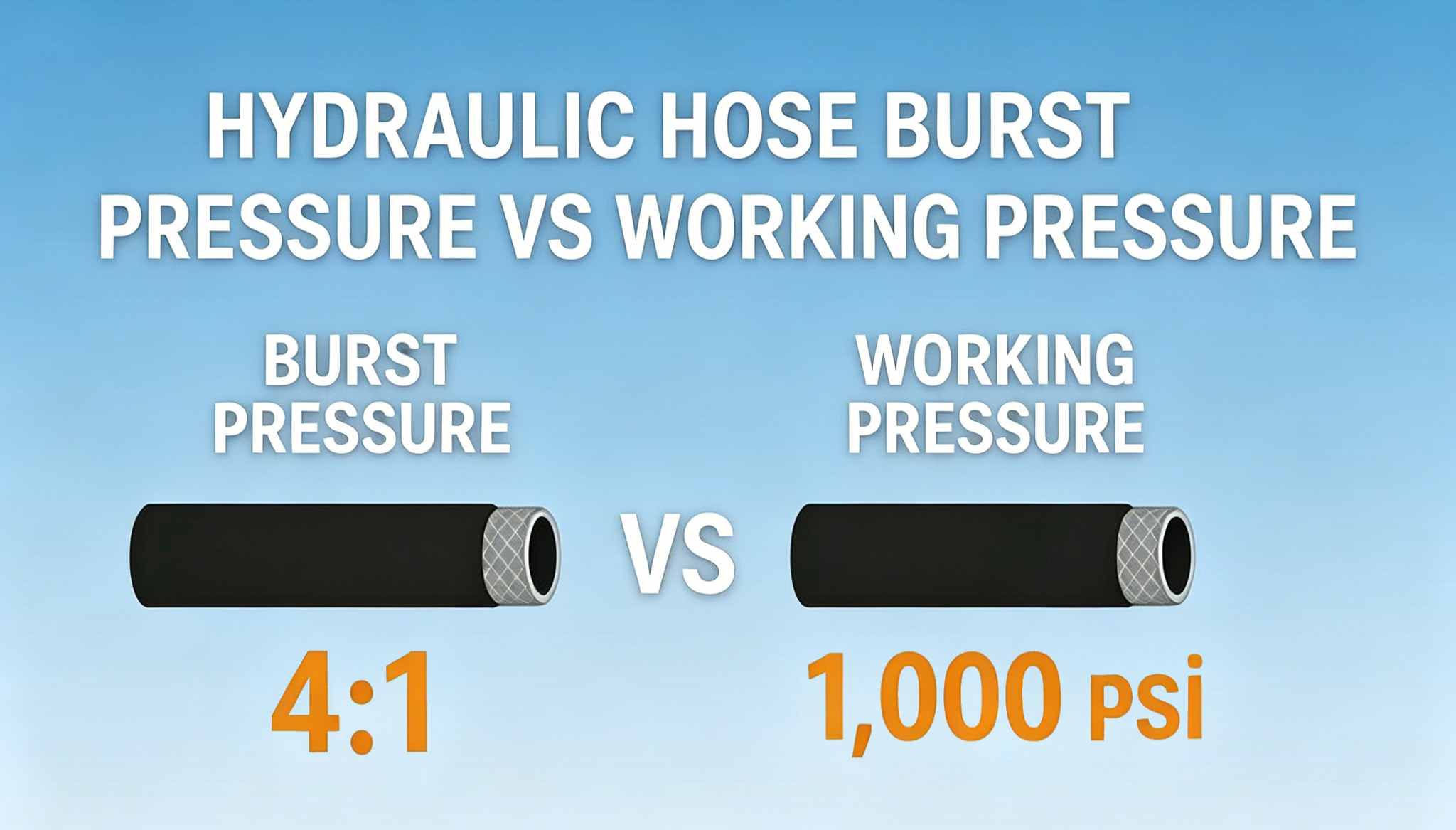
Working Pressure vs. Burst Pressure
Working pressure refers to the maximum pressure a hose is designed to withstand during normal operation. Burst pressure represents the pressure at which the hose may fail.
These two specifications should never be confused. Selecting a hose based only on its burst pressure does not guarantee safe operation.
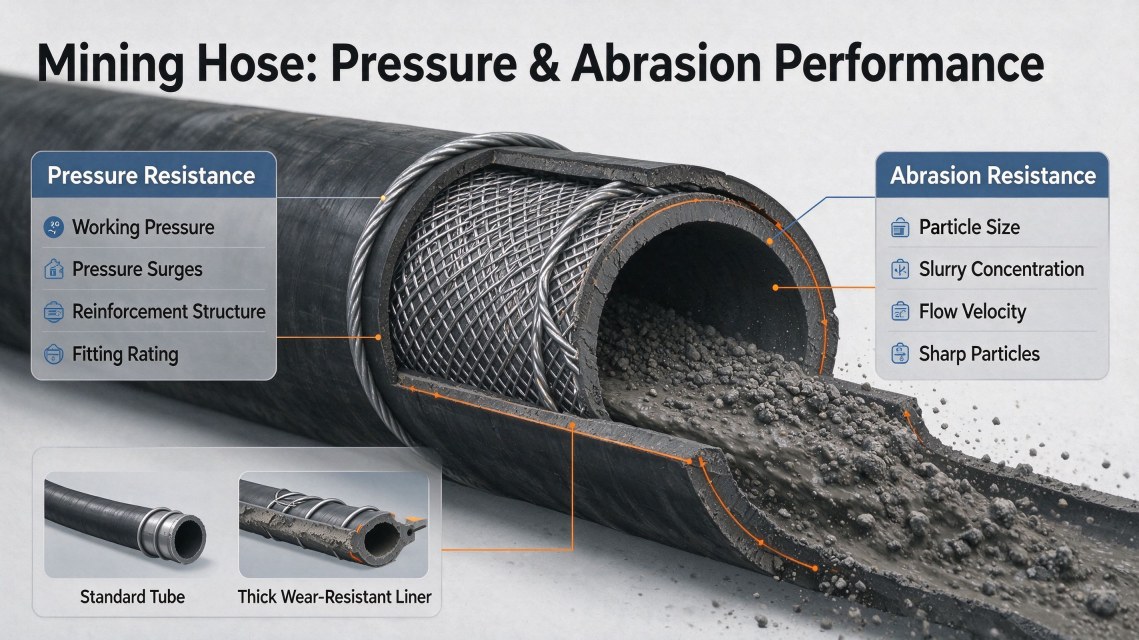
Mining equipment often experiences pressure fluctuations caused by pump startup, sudden valve closure, hydraulic impulses, and changes in operating loads. These pressure surges must be considered when specifying a hose assembly.
Buyers should evaluate:
- Maximum system operating pressure.
- Potential pressure spikes and pulsations.
- Operating temperature.
- Hose reinforcement structure.
- Pressure ratings of fittings and connections.
For hydraulic applications, steel wire braided and spiral-reinforced hoses are commonly used to provide the required pressure capacity. The correct construction depends on the equipment and pressure conditions.
Choosing the Right Reinforcement
Hose reinforcement plays a critical role in pressure performance.
Textile reinforcement is suitable for certain lower-pressure applications, while steel wire braided reinforcement provides greater pressure resistance. Multiple steel wire spiral layers are commonly used in demanding high-pressure hydraulic applications.
For mining machinery operating under heavy loads and frequent pressure cycles, the complete hose assembly must be selected according to the manufacturer’s specifications.
3. Abrasion Resistance: Protecting Hoses from Continuous Wear
Abrasion is a major challenge in mining operations. When sand, gravel, crushed rock, and mineral particles move through a hose, they continuously contact the inner tube.
Over time, this friction can reduce the tube thickness, weaken the hose structure, and eventually cause leakage or failure.
Why Abrasion Resistance Matters
The severity of internal wear depends on several factors:
- Particle size and hardness.
- Slurry concentration.
- Flow velocity.
- Material shape and sharpness.
- Operating temperature and chemical composition.
For example, transporting coarse mineral slurry creates different wear conditions from transferring water containing fine particles.
Selecting Abrasion-Resistant Materials
Natural rubber is widely used for mining slurry hoses because of its excellent flexibility and abrasion resistance. Other rubber compounds, such as SBR and specialized polyurethane materials, may also be suitable depending on the application.
For demanding material-handling operations, buyers should consider:
- Thick, wear-resistant inner tubes.
- Durable outer covers.
- Suitable reinforcement layers.
- Protective sleeves in high-friction areas.
- Specialized liners for severe abrasion conditions.
Utigoflex offers industrial hose solutions for different material-handling requirements. Selecting an appropriate hose structure and rubber compound helps improve durability and reduce unnecessary replacement costs.
4. Safety Requirements: Preventing Hose-Related Failures
Hose failure in mining environments can have serious consequences. A burst hydraulic hose may release high-pressure fluid, while a damaged slurry hose can cause material leakage and interrupt production.
Safety should therefore be considered throughout the entire hose lifecycle, from selection and installation to inspection and replacement.
Correct Hose and Fitting Selection
The hose, fittings, and couplings must be compatible and rated for the intended operating conditions.
Incorrect fitting combinations, improper crimping, or unsuitable connections can cause leakage or hose-end separation.
Mining companies should ensure that hose assemblies are manufactured and installed according to the relevant manufacturer’s instructions and applicable industry standards.
Proper Installation and Routing
Incorrect installation can significantly shorten hose service life.
Important precautions include:
- Avoiding excessive bending and twisting.
- Maintaining the manufacturer’s minimum bend radius.
- Preventing hoses from rubbing against sharp edges or moving machinery.
- Using suitable clamps and protective sleeves.
- Allowing sufficient length for equipment movement.
- Keeping hoses away from excessive heat sources.
Hoses should also be routed to minimize vibration and mechanical interference.
Regular Inspection and Maintenance
Routine inspections help identify potential problems before they develop into serious failures.
Operators should check for:
- Cracks, cuts, and visible abrasion.
- Bulging or deformation.
- Oil or fluid leakage.
- Exposed reinforcement wires.
- Corrosion around fittings.
- Loose connections and damaged couplings.
Any hose showing signs of structural damage should be removed from service and evaluated by qualified personnel. Never attempt to repair a damaged high-pressure hose with temporary clamps or improvised connections.
5. Additional Factors When Selecting Mining Hoses
Pressure, abrasion, and safety are essential, but several other factors also influence hose performance.
Temperature Resistance: Mining environments may involve hot equipment, cold underground conditions, and temperature fluctuations. The hose material must remain suitable throughout the expected operating temperature range.
Chemical Compatibility: Mining processes may involve oils, fuels, acids, alkaline solutions, and other chemicals. The inner tube material must be compatible with the specific medium.
Flexibility: Hoses connected to moving machinery require sufficient flexibility to accommodate movement without excessive bending or stress.
Diameter and Flow Capacity: The correct internal diameter helps maintain the required flow rate while avoiding excessive pressure loss and unnecessary material wear.
Environmental Resistance: Outdoor mining operations expose hoses to sunlight, ozone, moisture, and changing weather conditions. A suitable outer cover can help protect against premature aging and damage.
6. How to Choose the Right Mining Hose
Before purchasing a mining hose, engineers and procurement teams should prepare a clear specification.
A practical selection checklist includes:
- Identify the application: hydraulic, slurry transfer, suction, discharge, or compressed air.
- Determine the working pressure and possible pressure surges.
- Identify the conveyed material and its chemical properties.
- Evaluate abrasion, vibration, and mechanical stress.
- Confirm the required hose diameter and flow rate.
- Check temperature and environmental conditions.
- Verify hose, fitting, and assembly compatibility.
- Review applicable safety requirements and manufacturer test documentation.
Utigoflex understands that mining applications require reliable hose performance under demanding conditions. Matching hose specifications to actual operating requirements is essential for improving equipment reliability and reducing maintenance costs.
Mining operations require industrial hoses that can withstand demanding pressure conditions, continuous abrasion, and challenging working environments. Choosing the right hose involves more than checking a single technical specification. Pressure ratings, reinforcement structures, rubber compounds, fitting compatibility, installation methods, and regular maintenance all contribute to overall performance and safety.
By evaluating these factors before purchasing, mining companies can reduce unexpected failures, improve operational efficiency, and extend hose service life.
Build Your Safe Systems with Utigoflex
Utigoflex provides industrial hose solutions for various demanding applications. Contact our team to discuss your requirements and find suitable hose products for your mining equipment and material-handling systems.
[Contact Utigoflex Today] to request a specialized quote or download our complete technical assembly catalog.

