
What Are the Most Common Hose Failures?
Industrial hoses are the lifelines of many operations—from hydraulic systems to chemical transfer. Yet they fail more often than necessary. The good news is that most failures are predictable and preventable. Understanding the root causes helps you choose better products, install correctly, and schedule maintenance wisely. Here are the six most common hose failures—and how Utigoflex engineers solutions for every one.
1. Abrasion – The Silent Wear
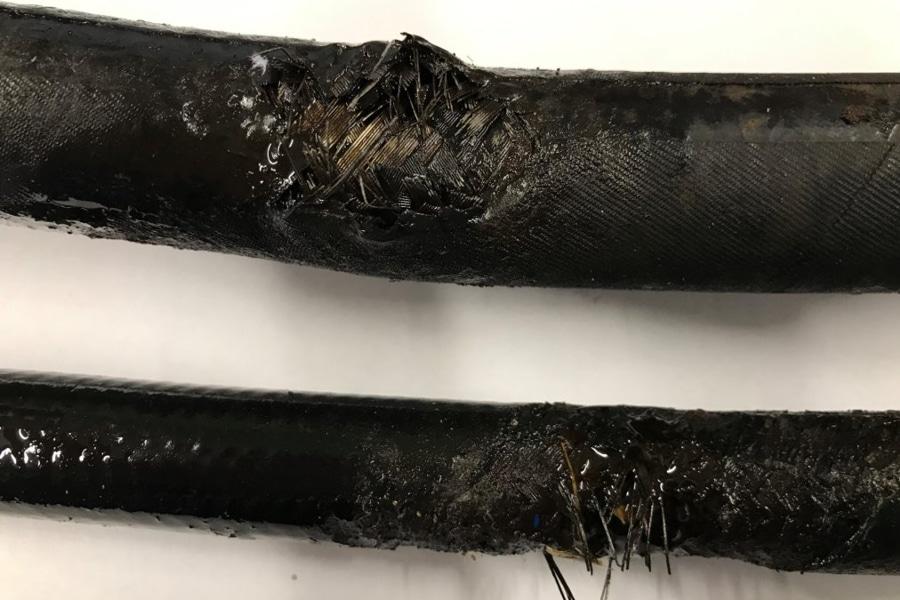
Abrasion is the leading cause of outer cover damage. Hoses rub against sharp edges, metal structures, concrete floors, or moving machine parts. Over time, the cover wears thin, exposing the reinforcement layer. Once the steel wire or textile braid is visible, moisture and contaminants enter, causing corrosion and weakening. Eventually, the hose bursts under normal pressure.
How to prevent it: Use hoses with thick, abrasion resistant covers. Add spiral guards or nylon sleeves in high wear zones. Route hoses away from sharp edges.
Utigoflex solution: Our hoses feature extra thick, compounded covers that resist cutting and scuffing. For extreme abrasion, we supply optional PVC or PP spiral protectors that extend service life dramatically.
2. Improper Bending – Kinking and Collapse
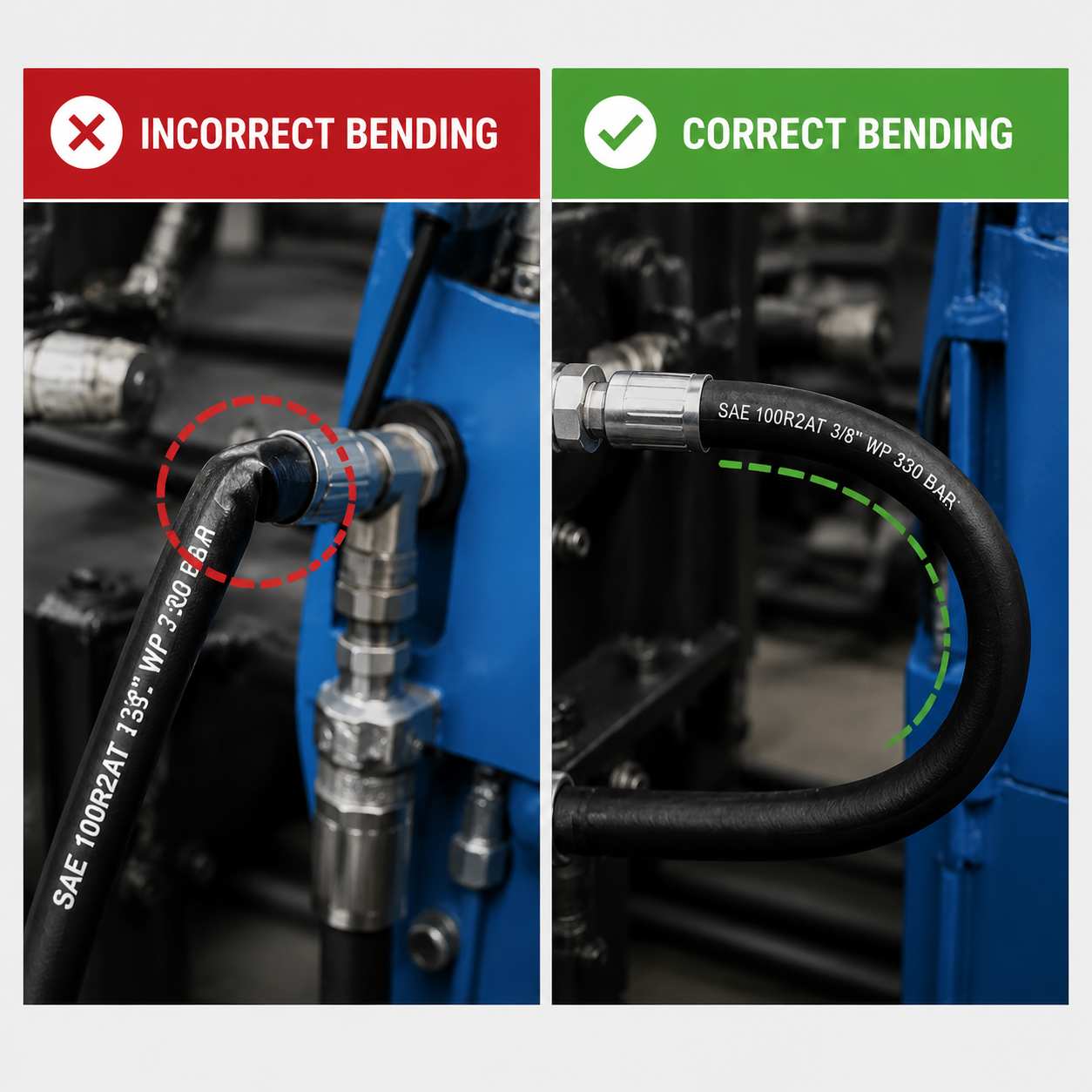
Every hose has a minimum bend radius. Bending tighter than this value causes two problems: kinking (pinching the tube, reducing flow) and internal collapse (especially in suction hoses, where the tube is sucked flat). Kinking also weakens the reinforcement, leading to premature rupture.
How to prevent it: Always check the manufacturer’s bend radius data. Use longer hoses to create gentle loops. In tight spaces, choose compact bend hose series.
Utigoflex advantage: We publish clear bend radius charts for every hose—both static and dynamic. Our tight bend series reduces the required radius by up to 30%, making installation in cramped equipment much easier.
3. Over – Pressurization – The Burst Risk
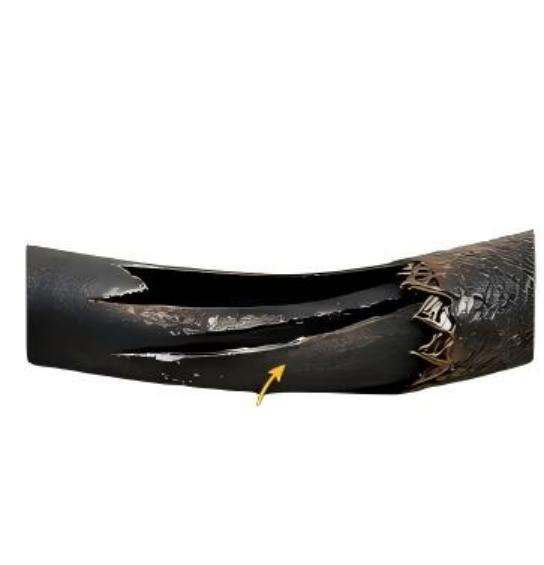
Pressure spikes are common in hydraulic systems, especially when valves close quickly or pumps start abruptly. Even a momentary surge above the hose’s working pressure can rupture the inner tube or separate the reinforcement layers. Many operators mistakenly think “it can handle a little more”—but that little extra is often fatal.
How to prevent it: Install pressure relief valves. Use hoses with a safety factor of at least 4:1. Always select a working pressure higher than your maximum system pressure, including surges.
Utigoflex tip: Every Utigoflex hose is clearly stamped with both working pressure and burst pressure (usually 4× working). Our high – pressure series, like 4 – spiral wire hoses, handle extreme surges without failure.
4. Extreme Temperatures – Heat and Cold
Temperature affects hoses in two ways. High heat softens the tube, reduces pressure capacity, and accelerates oxidation (aging). A hose rated for 300 psi at 23°C may only handle 180 psi at 100°C. Extreme cold hardens the cover and tube, making the hose brittle. Bending a frozen hose causes cracks that leak immediately or soon after.
How to prevent it: Always specify both media temperature and ambient temperature. Use de rating charts to adjust pressure limits. For cold environments, choose Arctic – grade compounds.
Utigoflex support: We provide detailed de – rating tables and can formulate special compounds for both high – heat steam lines and freezing outdoor installations.
5. Chemical Incompatibility – Tube Swelling
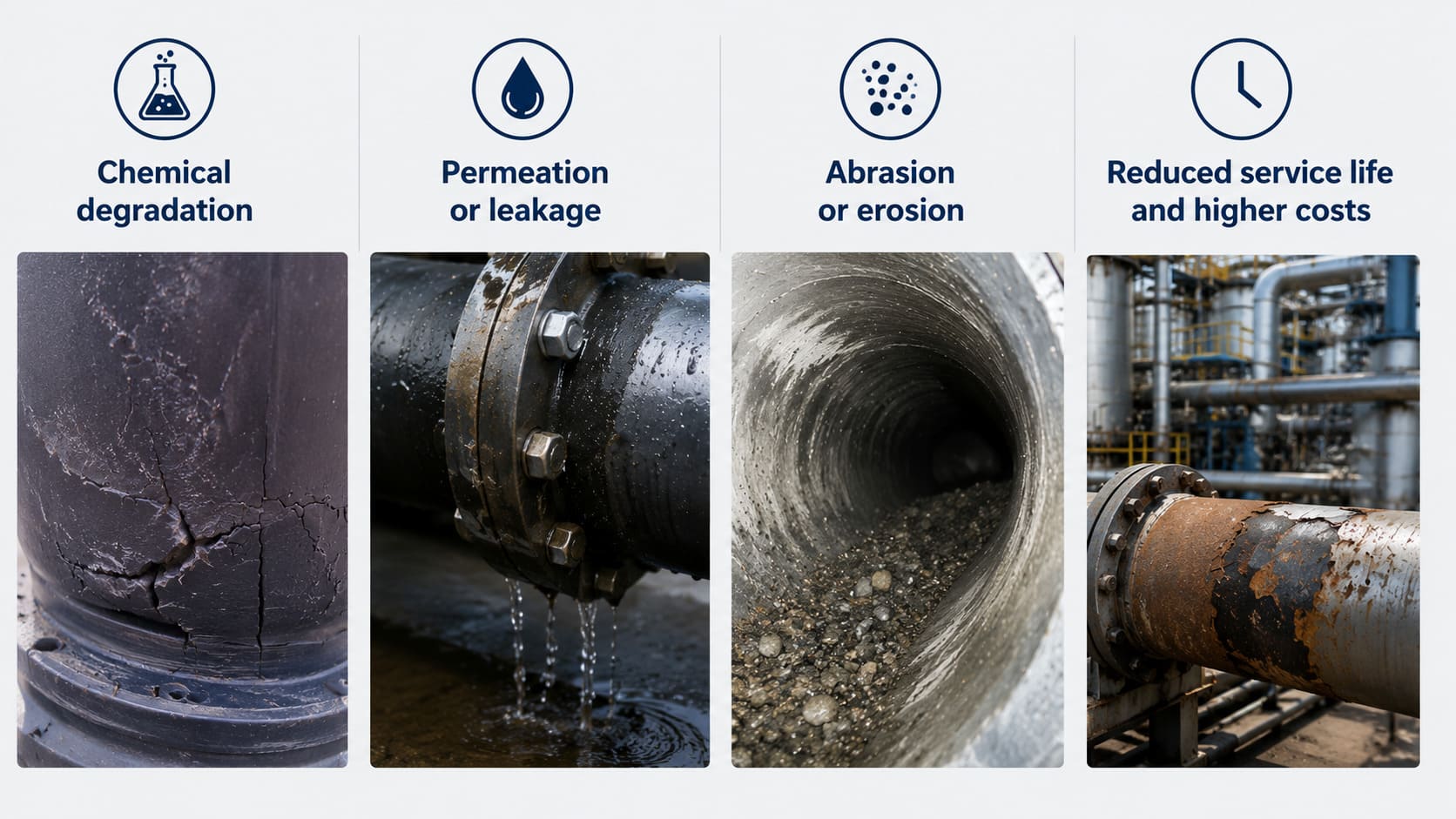
Using a hose whose inner tube is not compatible with the conveyed fluid is a recipe for rapid failure. Chemicals can cause swelling, softening, hardening, or leaching. Swelling reduces the inner diameter, increases pressure drop, and weakens the tube. Hardening leads to cracking at the first flex.
How to prevent it: Match the tube material to your media. Common compounds include NBR (oil), EPDM (water/steam), UHMWPE (acids), and PTFE (aggressive chemicals). Check chemical resistance charts.
Utigoflex expertise: We stock multiple tube materials and offer free chemical compatibility advice. Simply tell us your fluid—we recommend the correct tube compound and verify it with our in – house tests.
6. Poor Fitting Installation – Leaks and Blow – offs
Even a perfect hose fails if the fittings are wrong. Common fitting errors include: wrong dash size, mismatched threads (NPT vs. BSP), incorrect crimping pressure, or reusing old fittings. Poorly attached fittings leak, loosen, or blow off under pressure—creating both safety hazards and environmental spills.
How to prevent it: Always use new, matched fittings from the same manufacturer. Crimp with calibrated machines. Verify thread compatibility with your equipment ports.
Utigoflex solution: We deliver pre – crimped, pressure – tested assemblies with fittings exactly matched to your hose and port types—JIC, BSP, NPT, ORFS, or flange. Every assembly is tested to 150% of working pressure before shipping.
Conclusion
Hose failures are not random—they follow predictable patterns: abrasion, bending, over – pressure, temperature extremes, chemical attack, and fitting mistakes. By understanding these six culprits, you can take proactive steps to prevent downtime, injuries, and costly repairs.
Utigoflex is committed to building hoses that address every failure mode. From abrasion – proof covers and tight – bend designs to chemical – resistant tubes and pre – matched fittings, we engineer reliability into every product. We also provide clear documentation, de – rating charts, and expert support to help you select, install, and maintain your hoses correctly.
Build Your Safe Systems with Utigoflex
Don’t wait for a failure to learn its cause. Choose Utigoflex for hoses that last longer and perform safer.
[Contact Utigoflex Today] to request a specialized quote or download our complete technical assembly catalog.

