
• Facebook
  • Youtube
  • Instagram
  • WhatsApp
Give us a call now: 13510833230
Utigoflex
  • Home
  • About Us
    • Certification
  • Product
    • Hydraulic Hose
      • Braided Steel Wire Hydraulic Hose
        • SAE 100 R1 / DIN EN 853 1SN
        • SAE 100 R2 AT / DIN EN 853 2SN
        • SAE 100 R5 Steel Wire Braided Hydraulic Hose
        • SAE 100 R16 Steel Wire Braided Hydraulic Hose
        • SAE 100 R17 Steel Wire Braided Hydraulic Hose
        • EN 857 1SC Steel Wire Braided Hydraulic Hose
        • EN 857 2SC Steel Wire Braided Hydraulic Hose
      • Spiraled Steel Wire Hydraulic Hose
        • SAE 100 R9 Steel Wire Spiraled Hydraulic Hose
        • SAE 100 R12 Steel Wire Spiraled Hydraulic Hose
        • SAE 100 R13 Steel Wire Spiraled Hydraulic Hose
        • SAE 100 R15 Steel Wire Spiraled Hydraulic Hose
        • EN 856 4SH Steel Wire Spiraled Hydraulic Hose
        • EN 856 4SP Steel Wire Spiraled Hydraulic Hose
      • Thermoplastic Hydraulic Hose
        • SAE 100 R7 Thermoplastic Hydraulic Hose
        • SAE 100 R8 Thermoplastic Hydraulic Hose
        • SAE 100 R14 Stainless Steel Wire Braided with PT
      • Braided Textile Hydraulic Hose
        • SAE 100 R3
        • SAE 100 R4 Textile Braided Hydraulic Hose
        • SAE 100 R6
        • EN 854 1TE/2TE/3TE Textile Braided Hydraulic Hose
    • Rubber Hose
      • EPDM Air & Water Hose
      • Chemical Suction & Discharge Hose
      • Steam Hose
      • Fuel & Diesel Delivery Hose
      • Fuel & Diesel Suction Hose
      • LPG/CNG Rubber Hose
      • Drilling Hose
      • Air Compressor Hose
      • High pressure Washing Hose
      • Marine High Pressure Oil Conveying Hose
      • Sand Blast Rubber Hose
      • Suction & Discharge Hose
      • Concrete Delivery Hose
      • Composite Hose
      • Food Grade Hose
      • EPDM Hot Water Hose
      • Stainless Steel Flexible Hose
    • PVC Hose
      • PVC Garden Hose
      • PVC Layflat Hose
      • Multi–Purpose PVC Air Hose – Matt Surface
      • Multi–Purpose PVC Air Hose – Shining Surface
      • Smooth Surface PVC Steel Wire Hose
      • PVC Fiber Hose
      • PVC High Pressure Spray Hose
      • PVC Corrugated Suction Hose
      • PVC Grit Hose
      • PVC Kink–Proof Suction Hose
      • PVC Interlocked Hose
      • Fuel Drop Hose
    • Industrial Hose
      • ANFO Explosive Loading Hose
      • Air Hose
      • Fuel & Oil Delivery Hose
      • Chemical Hose
      • Layflat Fire Hose
      • Welding Hose
      • High Pressure Spray Hose
      • PU Suction Hose
      • PU Anti Static Suction Hose
      • PU Step Hose
      • Polypropylene Drain Hose
    • Air Duct Hose
      • PU Air Duct
      • PU Air Duct With Black Strip
      • PVC Air Duct
      • TPR (TPE) Air Duct
      • TPR (TPE) Air Duct With Green Strip
      • Silicone Coated Glass Fiber Duct
      • Portable Ventilation Duct
      • Clamped High Temperature Duct
      • Clamped Polyester Duct
      • Clamped Tarpaulin Duct
      • EPDM Fume Exhaust Hose
    • Food Grade Hose
      • Food Grade Rubber Hose
      • Smooth Surface PVC Spiral Hose
      • Smooth Surface PVC Steel Wire Hose
      • PVC Fiber Hose
    • Pneumatic Hose
      • Nylon tubing
      • PU Pneumatic Hose
    • Hydraulic Fittings
    • Hose Camlocks
    • Hose Clamps
    • Crimping/Cutting Machine
      • Crimping Machine
      • Cutting Machine
  • Services
    • Agriculture Hose Solution
    • Construction Hose Solution
    • Oil & Fuel Hose Solution
    • Chemical Industry Hose Solutions
    • Mining Hose Solution
    • Food Grade Hose Solution
  • Resources
    • Download Center
    • Blog
      • Product Knowledge
      • Company News
  • Contact Us
  • Search
  • Menu Menu
You are here: Home1 / Blog2 / Product Knowledge3 / What Is a Drilling Hose?

What Is a Drilling Hose? Types, Applications, and Key Features

Drilling hoses are essential components in modern oil and gas drilling operations. Designed to transport high-pressure drilling fluids between equipment, these flexible hoses help connect different parts of a drilling system while accommodating movement, vibration, and changes in equipment position. Compared with rigid piping, drilling hoses provide greater flexibility and can help improve the efficiency and safety of demanding drilling operations.

This article explains what a drilling hose is, the main types available, where they are used, and the key features to consider when selecting one.

What Is a Drilling Hose?

A drilling hose is a flexible, high-pressure hose specifically designed for use in drilling systems. It is commonly used to convey drilling mud, cement, and other fluids under high pressure. In oil and gas applications, drilling hoses must withstand not only high internal pressures but also mechanical stress, vibration, temperature variations, and exposure to harsh working environments.

A typical drilling hose consists of several layers. The inner tube is selected to provide compatibility with the fluid being transported. Reinforcement layers, often made from high-strength steel wire, provide pressure resistance and mechanical strength. The outer cover protects the hose from abrasion, weather, oil, and other environmental hazards.

The exact construction depends on the hose’s intended application and required pressure rating. For example, hoses used in high-pressure mud circulation systems require substantially different performance characteristics from hoses designed for lower-pressure auxiliary applications.
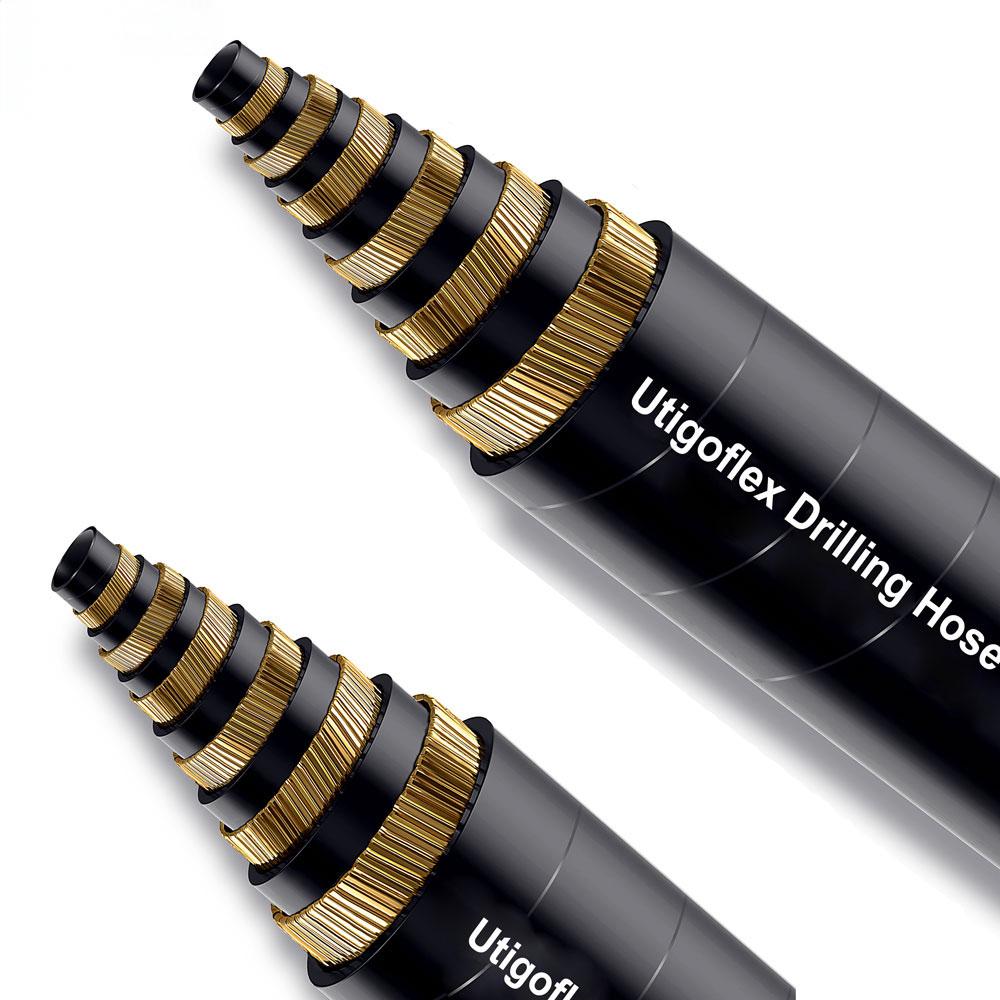
Drilling Hose

How Does a Drilling Hose Work?

During drilling, drilling fluid is continuously circulated through the wellbore. The fluid performs several important functions, including cooling and lubricating the drill bit, carrying rock cuttings to the surface, and helping control formation pressure.

Drilling hoses provide flexible connections between components in this circulation system. One common application is the connection between the standpipe and the swivel or top drive. Because drilling equipment can move during operation, a rigid connection would be difficult to use and could be subjected to excessive mechanical stress.

The flexibility of a drilling hose allows it to accommodate movement while maintaining a secure fluid connection. At the same time, its reinforced construction enables it to operate safely under demanding pressure conditions.

Main Types of Drilling Hoses

Drilling hoses can be classified according to their application, construction, and operating requirements. Some of the most common types include the following.

1. Rotary Drilling Hoses

Rotary drilling hoses are widely used to transfer drilling fluids in rotary drilling systems. They are designed to handle high pressure while remaining flexible enough to accommodate movement and vibration.

These hoses are commonly installed between the standpipe and swivel or top drive. Their ability to withstand repeated mechanical movement makes them an important part of the drilling fluid circulation system.

2. Choke and Kill Hoses

Choke and kill hoses are used in well-control systems. They are designed for demanding high-pressure applications and play an important role in controlling well pressure during drilling operations.

Because well-control equipment can be exposed to extreme pressure and potentially aggressive fluids, these hoses require appropriate pressure ratings, material compatibility, and robust construction.

3. Cementing Hoses

Cementing hoses are designed to transport cement slurry during well-cementing operations. They need to handle abrasive and relatively dense fluids while maintaining reliable pressure performance.

Depending on the application, cementing hoses may be used to connect cementing equipment or facilitate the transfer of cement slurry between different components of the system.

4. Flexible Mud Hoses

Flexible mud hoses are used to transfer drilling mud and other drilling fluids. Their construction is designed to provide a balance between flexibility, pressure resistance, abrasion resistance, and chemical compatibility.

For manufacturers such as Utigoflex, engineering these performance characteristics is particularly important because drilling environments can vary significantly in pressure, temperature, fluid composition, and mechanical loading.

Applications of Drilling Hoses

Drilling hoses are primarily associated with oil and gas drilling, but their applications can extend to other demanding drilling environments.

Oil and Gas Drilling

In oil and gas operations, drilling hoses are used in drilling-fluid circulation systems, well-control systems, cementing operations, and other high-pressure fluid-transfer applications.

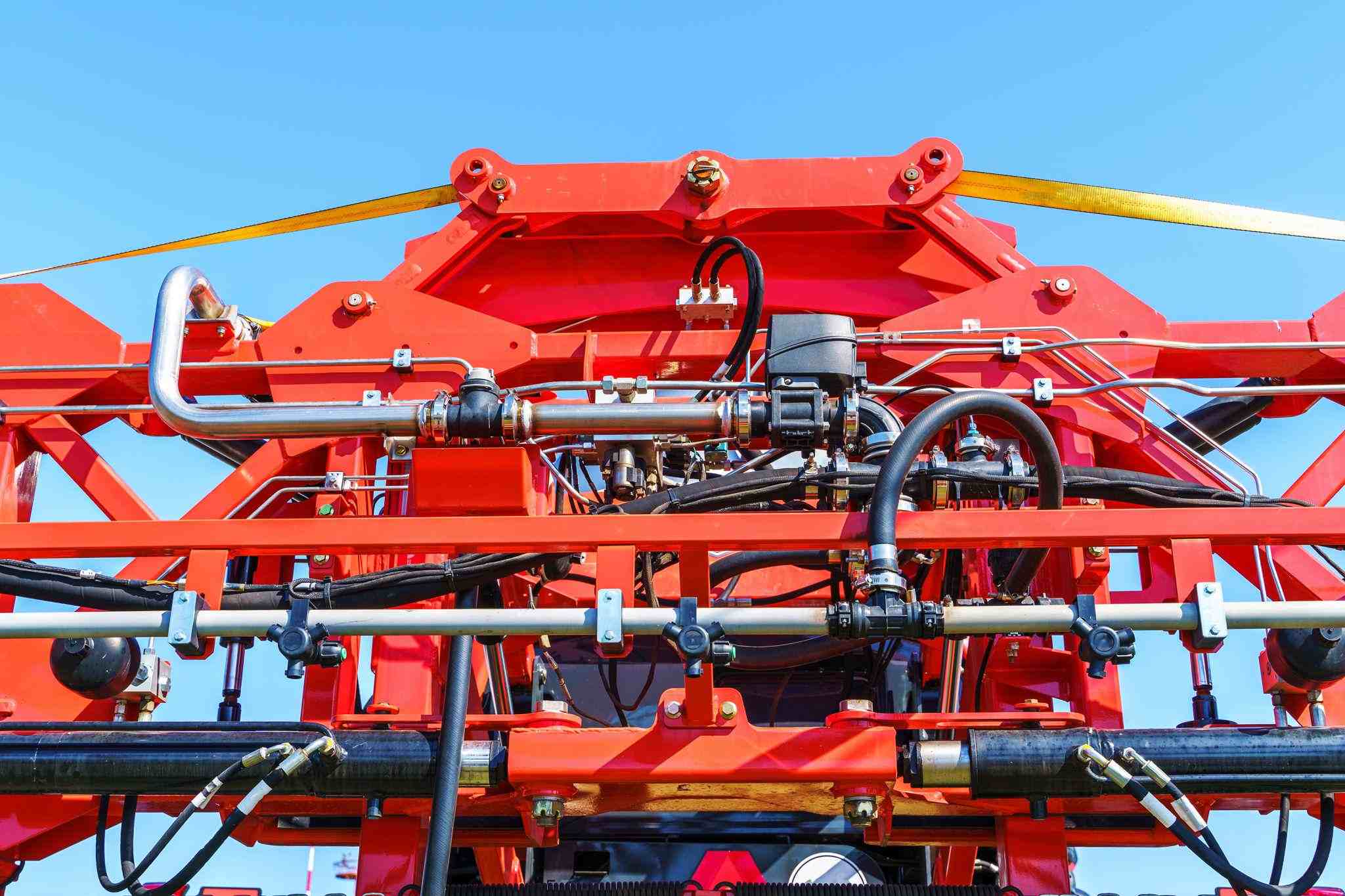
Offshore drilling platforms can be particularly demanding because equipment is exposed to saltwater, weather, vibration, and limited working space. Flexible hoses can simplify equipment connections while allowing for movement between components.

Geothermal Drilling

Geothermal wells require equipment capable of handling high temperatures and challenging geological conditions. Depending on the specific system, appropriately rated drilling hoses can be used for fluid transfer and related operations.

Mining and Industrial Drilling

Certain mining and industrial drilling applications also require flexible, high-pressure fluid-transfer solutions. The exact hose construction must be selected according to the pressure, temperature, fluid, and mechanical conditions of the application.
Key Features of a High-Quality Drilling Hose

Selecting the right drilling hose requires more than simply checking its size. Several technical factors should be considered.

High Pressure Resistance

Pressure capability is one of the most important characteristics. A hose should have a rated working pressure appropriate for the application, with consideration given to operating conditions and applicable industry requirements.

The working pressure should never be exceeded, and users should also consider pressure surges that may occur during operation.

Flexibility

A drilling hose needs to bend sufficiently to accommodate equipment movement without developing excessive stress. However, flexibility must be balanced with pressure resistance and mechanical strength.

The hose should also be installed with an appropriate bend radius to prevent premature damage.

Abrasion Resistance

Drilling environments can expose hoses to equipment contact, movement, dirt, and abrasive materials. A durable outer cover helps protect the reinforcement and internal layers from external wear.

Temperature Resistance

Temperature can affect the performance and service life of a hose. The hose materials must therefore be suitable for the expected operating and ambient temperatures.

Fluid Compatibility

Drilling fluids may contain water, oil, chemicals, weighting agents, and other additives. The hose’s inner tube and other materials must be compatible with the fluids being transported.

Reinforcement and Durability

High-pressure drilling hoses typically use multiple reinforcement layers to provide the required strength. Proper reinforcement design helps the hose withstand internal pressure as well as bending and mechanical loading.

How to Select the Right Drilling Hose

Before purchasing a drilling hose, operators should evaluate several parameters, including working pressure, hose size, operating temperature, fluid type, required length, bend radius, connection type, and environmental conditions.

It is also important to verify applicable standards and manufacturer specifications. A hose that is suitable for one drilling application may not be appropriate for another, even if the dimensions appear similar.

Regular inspection is equally important. Operators should look for visible damage, abrasion, cracks, deformation, leakage, exposed reinforcement, or other signs of deterioration. Hoses showing significant damage should be removed from service and evaluated by qualified personnel.

Conclusion

Drilling hoses provide a critical flexible connection for high-pressure fluid-transfer systems used in drilling operations. Their ability to combine flexibility with pressure resistance makes them particularly valuable in environments where equipment movement, vibration, and demanding operating conditions are unavoidable.

From rotary drilling and well-control systems to cementing and mud circulation, different types of drilling hoses are designed for different applications. Choosing the right hose requires careful consideration of pressure, temperature, fluid compatibility, flexibility, abrasion resistance, reinforcement, and operating environment.

Build Your Safe Systems with Utigoflex

Utigoflex focuses on the engineering requirements that help flexible hose solutions perform reliably in demanding industrial environments, making careful product selection an important part of any drilling system.

[Contact Utigoflex Today] to request a specialized quote or download our complete technical assembly catalog.

byadministratorSkila/August 24, 2026/inBlog, Product Knowledge
Recent
  • What Is a Drilling Hose?August 24, 2026 - 7:05 am
  • How to Choose High-Temp Ducting Hoses for VentilationAugust 20, 2026 - 1:39 am
  • How to Choose Hydraulic Hose Fittings: JIC, NPT, BSP &...August 14, 2026 - 7:26 am
  • Why Buy Industrial Hoses Directly from China Manufactur...August 12, 2026 - 8:52 am
  • What Information Should You Provide When Ordering Custom...August 7, 2026 - 3:23 am
  • Best Practices for Rubber Hose Cleaning and MaintenanceJuly 31, 2026 - 8:18 am
  • Working Pressure vs Burst Pressure: Understanding Hose Pressure...July 29, 2026 - 6:54 am
  • How to Choose the Right Hose Material?July 27, 2026 - 6:34 am
Popular
  • Engineering PlasticsApril 18, 2024 - 9:54 am
  • Factory informationApril 18, 2024 - 9:58 am
  • Hydraulic hose workshopApril 18, 2024 - 10:00 am
  • Hydraulic hosesApril 18, 2024 - 10:01 am
  • Packaging & WarehouseApril 18, 2024 - 10:01 am
  • Production lineApril 18, 2024 - 10:02 am
  • Layflat Discharge Hoses: The Future of Lightweight Fluid...October 24, 2025 - 9:43 am
  • How to Choose the Right Industrial Hose for Your Applic...March 20, 2025 - 2:18 am
Comments
  • Awaiting check payment Order status changed from Pending...December 19, 2022 - 2:54 am by WooCommerce
  • Awaiting check payment Order status changed from Pending...December 12, 2022 - 2:14 pm by WooCommerce
  • Awaiting check payment Order status changed from Pending...December 12, 2022 - 1:37 pm by WooCommerce
  • Order cancelled by customer. Order status changed from Pending...November 16, 2022 - 11:59 am by WooCommerce
  • Awaiting check payment Order status changed from Pending...October 30, 2022 - 7:20 am by WooCommerce
  • Unpaid order cancelled - time limit reached. Order status...October 14, 2022 - 8:46 am by WooCommerce
  • Unpaid order cancelled - time limit reached. Order status...September 6, 2022 - 7:40 pm by WooCommerce
  • Awaiting check payment Order status changed from Pending...September 6, 2022 - 5:49 pm by WooCommerce
Tags

Categories

  • Blog
  • Company News
  • Product Knowledge
  • Uncategorized
  • Facebook
  • X
  • LinkedIn
  • Youtube
  • Instagram
  • steven@utigoflexhose.com
  • FACEBOOK
  • Instagram
  • YOUTUBE
  • 13510833230

Company

    • About Us
    • Products
    • Resources
    • Contact Us

Product

  • Hydraulic Hose
  • Rubber Hose
  • PVC Hose
  • Industrial Hose
  • Air Duct Hose
  • Food Grade Hose
  • Pneumatic Hose

Technical Support

    • Plastic Hoses Catalogue
    • Rubber Hose Catalogue
    • Hydraulic Fittings Catalogue
    • Privacy Policy

Follow Us

Copyright @ Utigoflex | All rights reserved
How to Choose High-Temp Ducting Hoses for Ventilation
Scroll to top

This site uses cookies. By continuing to browse the site, you are agreeing to our use of cookies.

Agree & ContinueSettingsReject

Cookie and Privacy Settings


How we use cookies

We may request cookies to be set on your device. We use cookies to let us know when you visit our websites, how you interact with us, to enrich your user experience, and to customize your relationship with our website.

Click on the different category headings to find out more. You can also change some of your preferences. Note that blocking some types of cookies may impact your experience on our websites and the services we are able to offer.

Essential Website Cookies

These cookies are strictly necessary to provide you with services available through our website and to use some of its features.

Because these cookies are strictly necessary to deliver the website, refusing them will have impact how our site functions. You always can block or delete cookies by changing your browser settings and force blocking all cookies on this website. But this will always prompt you to accept/refuse cookies when revisiting our site.

We fully respect if you want to refuse cookies but to avoid asking you again and again kindly allow us to store a cookie for that. You are free to opt out any time or opt in for other cookies to get a better experience. If you refuse cookies we will remove all set cookies in our domain.

We provide you with a list of stored cookies on your computer in our domain so you can check what we stored. Due to security reasons we are not able to show or modify cookies from other domains. You can check these in your browser security settings.

Google Analytics Cookies

These cookies collect information that is used either in aggregate form to help us understand how our website is being used or how effective our marketing campaigns are, or to help us customize our website and application for you in order to enhance your experience.

If you do not want that we track your visit to our site you can disable tracking in your browser here:

Other external services

We also use different external services like Google Webfonts, Google Maps, and external Video providers. Since these providers may collect personal data like your IP address we allow you to block them here. Please be aware that this might heavily reduce the functionality and appearance of our site. Changes will take effect once you reload the page.

Google Webfont Settings:

Google Map Settings:

Google reCaptcha Settings:

Vimeo and Youtube video embeds:

Other cookies

The following cookies are also needed - You can choose if you want to allow them:

Privacy Policy

You can read about our cookies and privacy settings in detail on our Privacy Policy Page.

Privacy Policy
Accept settingsHide notification only
Skip to content
Open toolbar Accessibility Tools

Accessibility Tools

  • Increase TextIncrease Text
  • Decrease TextDecrease Text
  • GrayscaleGrayscale
  • High ContrastHigh Contrast
  • Negative ContrastNegative Contrast
  • Light BackgroundLight Background
  • Links UnderlineLinks Underline
  • Readable FontReadable Font
  • Reset Reset