
What Will Influence Hose Prices? A Buyer’s Guide to Cost Factors
If you’ve ever shopped for hydraulic hoses, industrial tubing, or even garden hoses, you know the price range can be shocking. One hose costs $15, while another that looks nearly identical costs $150. Why the huge gap? And more importantly—what will make hose prices go up or down in the next year?
Whether you are a maintenance manager, a contractor, or a purchasing agent, understanding the hidden drivers behind hose pricing is the only way to avoid overpaying. Let’s break down the seven critical factors that actually influence hose costs.
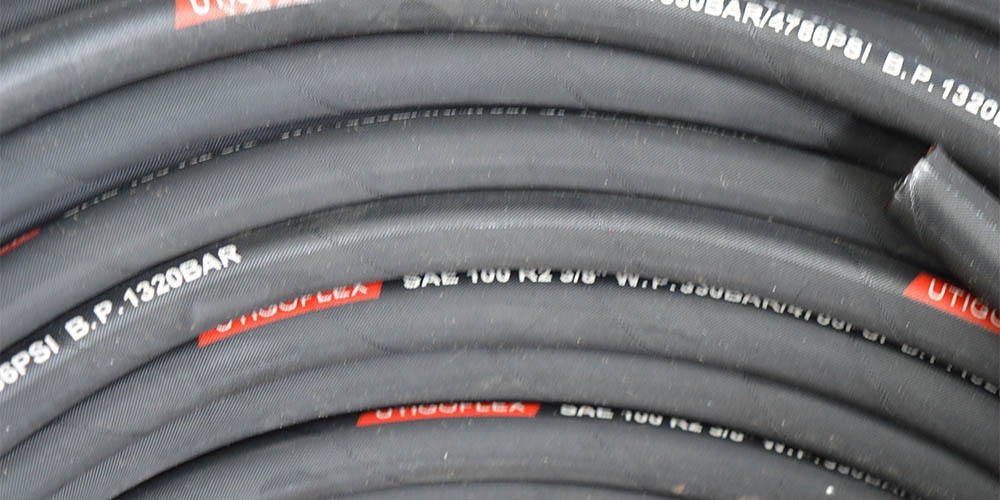
1. Raw Material Costs (The Biggest Driver)
Hoses are mostly compounded from three foundational elements: rubber (synthetic or natural), plastic (such as PVC or polyurethane), and steel used for structural braiding or spiraling. Because synthetic rubber is a direct petroleum derivative, global crude oil fluctuations heavily drive raw material pricing, with downstream hose prices reacting within a 60-to-90-day window. Concurrently, the steel wire reinforcement used to secure hydraulic structural ratings is bound to global steel tariffs and furnace energy pricing, while vital compounds like Carbon Black (which grants UV resistance and deep black color) can face supply shocks that cause abrupt baseline price adjustments. Failing to trace commodity price shifts exposes procurement teams to inflated quotation traps during market stabilization windows.
2. Reinforcement Layers (Wire vs. Textile)
The mechanical force a hose assembly must safely hold mandates the complexity and execution density of its internal structural reinforcement layers. Engineering low-pressure systems relies on simple textile braids, which keep costs down and remain flexible but are structurally limited. Scaling up to medium-pressure barriers demands integrated single-wire or double-wire high-tensile steel braiding to resist deformation. For extreme high-pressure environments, heavy steel wire must be laid in multiple counter-directional spiral layers to prevent fatigue and burst failures. These multi-layered steel architectures add manufacturing complexity and material mass, significantly multiplying production costs compared to baseline textile hoses. Choosing a heavy spiral hose where a braid suffices burns capital unnecessarily.
3. Size Matters (ID & Length, But Not How You Think)
Scaling a hose’s dimension is not a simple linear calculation; inside diameter (ID) increases material consumption geometrically. Because the internal surface area scales with the square of the radius, a 1″ ID hose requires roughly four times the raw material compounding mass of a 1/2″ ID hose, sharply driving up costs. Furthermore, when system layouts dictate extra-long uninterrupted configurations (typically over 50 feet), manufacturing processes must change. Producing continuous long lengths requires large specialized curing ovens, continuous mandrel handling equipment, and precise vulcanization monitoring, adding to manufacturing costs. These factors limit production speeds and introduce manufacturing premiums that short, batch-cured runs avoid.
4. Chemical & Temperature Compatibility (The “Specialty” Tax)
While a standard water hose uses economical, general-purpose rubber or PVC compounds, aggressive chemical and severe thermal environments demand advanced polymers. Conveying 400°F saturated steam, 98% concentrated sulfuric acid, or maintaining sterile food-grade processing requires elite material engineering. PTFE (Teflon) liners offer excellent chemical inertness and high thermal resistance but come with a major price premium, costing 5-10x more than rubber. Similarly, UHMWPE liners handle highly abrasive slurry transport but are difficult and costly to compound. Compliance with cleanroom processing and documentation for FDA/USDA food-grade safety certifications adds a 20-40% price markup due to strict regulatory oversight.
5. Manufacturing Tolerances & Testing
Budget-priced hoses often lower costs by reducing or skipping stringent quality control and verification procedures. Premium, reputable manufacturers protect industrial uptime by testing every batch to confirm performance. This includes proof testing every assembly at 1.5 times the rated working pressure, which requires dedicated testing equipment and labor. Long-term durability is verified through destructive impulse testing that simulates years of severe pressure cycling over a few days, adding to R&D costs. Laser-marking permanent batch numbers and date codes to ensure full component traceability also adds tracking and compliance costs. Skipping these quality steps saves upfront capital but increases the risk of early failure in the field.
6. Supply Chain & Logistics (Where You Live)
Industrial hose pricing varies significantly based on regional geography, shipping lanes, and local distribution channels. Because bulk fluid hoses are high-density and heavy, transoceanic freight costs from international manufacturing hubs add substantial logistics costs per container, a reality that has worsened post-COVID. Import tariffs, such as Section 301 duties on rubber and steel goods, can quickly add unexpected costs to foreign-sourced products. Finally, sourcing through local brick-and-mortar distributors offers convenience like same-day pickup and cut-to-length services, but incorporates a 30% to 50% retail markup over direct factory orders to cover local overhead.
7. Quantity & Customization (The Economy of Scale)
Industrial hose manufacturing relies heavily on volume efficiency; mass-producing standard coils (like 50-foot or 100-foot standard lengths) optimizes factory run times and lowers the per-foot cost. Conversely, requesting low-volume, cut-to-length lines with pre-crimped fittings changes the labor profile. Each individual fitting choice requires changing mechanical die sets, resetting crimping machines, and dedicating manual labor. Orders of fewer than 10 pieces carry high per-unit setup charges and labor costs. Furthermore, custom aesthetics—such as matching a specific yellow safety color code—requires halting lines for dedicated custom production runs, adding color-change cleaning premiums to small orders.
The 3 Practical Tips to Help You Effectively Control Hose Costs
- Don’t overspec. Using a 6,000 PSI spiral hose on a 1,500 PSI system is burning money.
- Buy standard lengths and cut in-house if you have a crimper.
- Annual contracts. If you use volume, sign a quarterly pricing agreement to avoid spot-market spikes.
The 3 Practical Tips to Help You Effectively Control Hose Costs
- Don’t overspec. Using a 6,000 PSI spiral hose on a 1,500 PSI system is burning money.
- Buy standard lengths and cut in-house if you have a crimper.
- Annual contracts. If you use volume, sign a quarterly pricing agreement to avoid spot-market spikes.

