
You are here: Home1 / Blog2 / Product Knowledge3 / Working Pressure vs Burst Pressure: Understanding Hose Pressure Rating...
Working Pressure vs Burst Pressure: Understanding Hose Pressure Ratings
Every industrial hose comes with two critical pressure numbers: working pressure and burst pressure. Confusing them can be dangerous—or even fatal. This guide explains the difference, why safety factors matter, and how Utigoflex helps you choose the right hose for your system.
1. What Is Working Pressure (WP)?
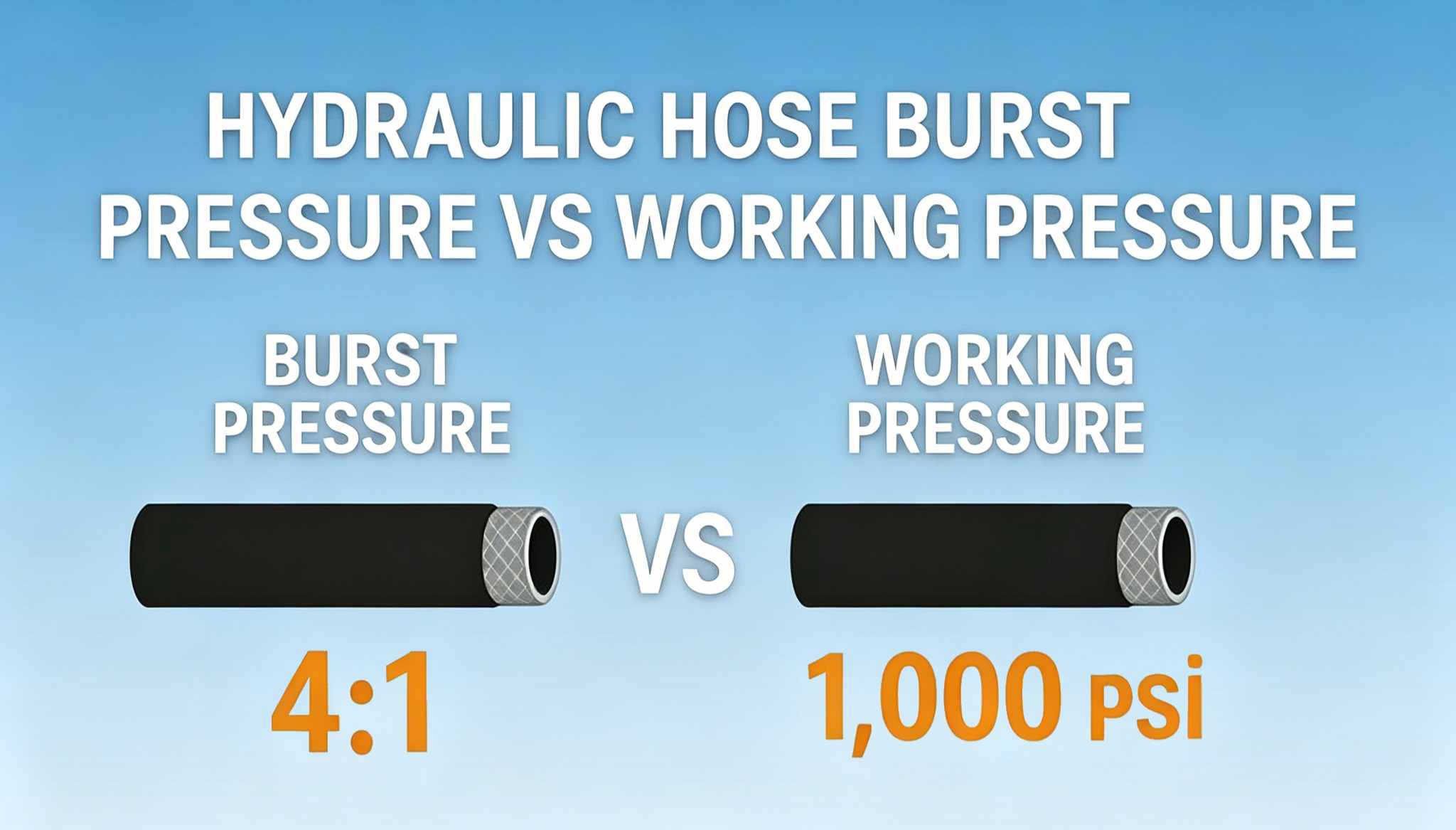
Working pressure (also called rated pressure) is the maximum continuous pressure a hose can safely handle during normal operation. It is determined by the hose’s construction, reinforcement, and material.
Expressed in psi, bar, or MPa.
Based on a standard temperature (usually +23°C / +73°F).
Includes a safety margin—but that margin is not for exceeding the rating.
Utigoflex tip: Our hoses clearly display the working pressure on the cover, so you always know the limit.
2. What Is Burst Pressure?
Burst pressure is the pressure at which the hose will rupture or fail. It is a destructive test value, not an operating limit.
Typically 3 to 4 times the working pressure (a 4:1 safety factor).
Measured by pressurizing the hose until it bursts.
Provides a safety buffer for unexpected pressure spikes.
Utigoflex guarantee: Every hose is burst tested during development to confirm its safety factor.
3. The Safety Factor – Why 4:1 Matters
The ratio between burst pressure and working pressure is called the safety factor. A 4:1 ratio means the hose bursts at four times its working pressure.
3:1: Common in low pressure industrial hoses.
4:1: Standard for most hydraulic and high pressure hoses.
Higher factors: Used in critical applications (mining, offshore, aerospace).
A higher safety factor means more tolerance for pressure surges, but also a thicker, stiffer hose.
Utigoflex standard: We design all hydraulic hoses with a minimum 4:1 safety factor—and many specialty hoses exceed that.
4. How Temperature Affects Pressure Ratings
Temperature is the silent killer of pressure ratings. As temperature rises, the hose material softens, reducing its ability to hold pressure.
A hose rated at 300 psi at 23°C may only handle 180 psi at 100°C.
Always use the manufacturer’s de-rating chart to adjust WP for high-temperature service.
Utigoflex solution: We provide temperature de rating tables for every hose, so you never accidentally over pressurize a hot line.
5. Why You Should Never Exceed Working Pressure
Exceeding working pressure—even briefly—can:
Stretch the reinforcement, permanently weakening the hose.
Cause the tube to swell or delaminate.
Lead to burst failure during a subsequent pressure surge.
Remember: Burst pressure is not a “safety margin” you can use. It is a destruction limit. Always keep your operating pressure below the working pressure.
Utigoflex recommendation: Choose a hose whose WP is at least 20% higher than your system’s maximum steady pressure to account for minor surges.
6. How Utigoflex Ensures Reliable Pressure Ratings
- Clear labelling: WP and burst pressure are printed on every hose.
- Full traceability: Each production batch is tested and documented.
- De-rating support: We supply temperature and ageing correction factors.
- Custom engineering: Need a special safety factor? We build it for you.
Conclusion
Working pressure is your safe operating limit; burst pressure is the point of destruction. Never use burst pressure as a guideline—always respect the working pressure, account for temperature, and apply an appropriate safety factor. Misunderstanding these ratings can lead to catastrophic failures, injuries, and costly downtime.
Build Your Safe Systems with Utigoflex
Utigoflex takes the guesswork out of pressure selection. With clearly marked ratings, comprehensive de-rating charts, and a proven 4:1 safety factor, our hoses give you confidence and reliability. Choose Utigoflex for safety that works.
[Contact Utigoflex Today] to request a specialized quote or download our complete technical assembly catalog.

